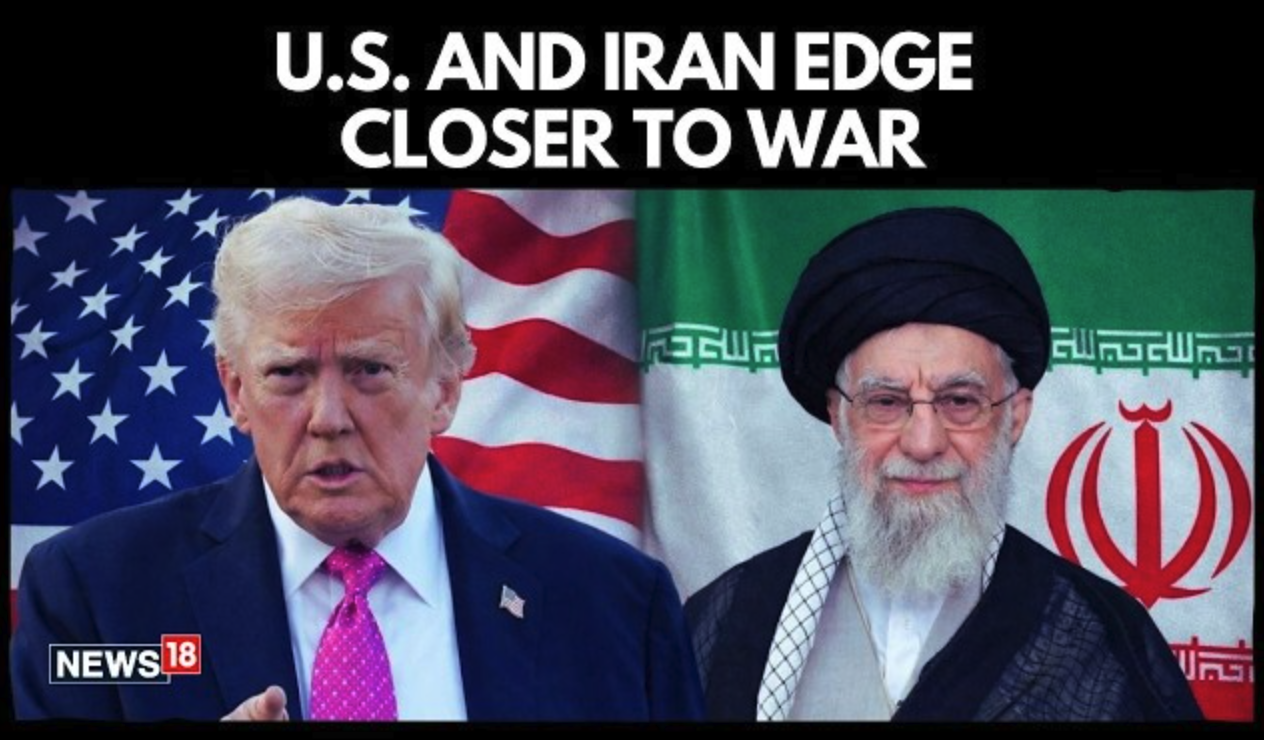
Global financial markets are currently gripped by a palpable sense of unease, largely attributed to the persistent lack of a verifiable de-escalation framework in the Middle East. With no material breakthrough in Iran-US talks, every asset class is pricing in a different facet of the same risk tree, suggesting that markets are now trading probabilities, not mere narratives. Investors searching for iran us war news or an iran us war update will find that the current environment is defined by continued geopolitical stress, acting as a live risk clock for a full cross-asset market outcome.
The Enduring War Risk Premium
The consistent message from the market over the past two days is clear: the absence of a verified de-escalation framework and a clean catalyst to durably reprice risk lower means the system remains fragile. This is no longer merely a headline-driven geopolitical story but a full cross-asset risk regime. The ongoing 'no-deal' news keeps a firm floor under oil and gold while simultaneously capping risk appetite across equities, high-beta FX, and credit markets. Those concerned about stock market war scenarios or bitcoin war risk should pay close attention to this cross-asset volatility.
Why Markets Remain Wary When US-Iran Talks Deliver No Progress
The core concern for markets isn't simply whether discussions continue, but whether these discussions yield concrete, verifiable terms on critical issues. Key points include enrichment limits, the sequencing of sanctions relief, compliance verification, and the ever-present enforcement and snapback risk. Without tangible progress on these hard points, financial markets find it impossible to remove the embedded war-risk premium. Soft diplomatic headlines might trigger temporary relief rallies, but without binding advancements, these moves often fade quickly as military or retaliation risk headlines resurface. This creates a challenging environment characterized by headline relief juxtaposed against structural uncertainty.
Commodities: First Responders to Geopolitical Shocks
The most direct transmission channel for this geopolitical setup is undoubtedly the commodity market. The oil price iran war connection means Brent and WTI can reprice in minutes if conflict probability rises. Traders don't wait for confirmed supply losses; they price in expected disruption, especially with the critical Strait of Hormuz remaining an active risk channel. Observing the crude oil curve shape is crucial: a stronger front-month premium signals markets are pricing immediate disruption risk, while a flatter or weaker front curve suggests a more contained event. Also, refined products, particularly diesel and jet fuel, could see tougher movements than crude during escalation phases due to freight, insurance, and logistics pass-through costs.
Similarly, the gold price war behavior continues to align with geopolitical stress and policy uncertainty. When diplomatic closure remains elusive, gold typically retains a structural bid as a safe haven asset. Silver may follow, though with increased sensitivity to global growth and higher volatility. In essence, gold acts as a hedge against confidence risk, while silver hedges with a more cyclical tilt. Traders looking at XAUUSD price live data will notice this dynamic playing out in real-time.
Forex: The Pure Stress Translator and Safe Haven Play
In the foreign exchange market, an early move under escalation risk is typically characterized by a firmer USD due to funding demand. The CHF and JPY also see bids as safe haven currencies, while EM FX and high-carry currencies come under pressure. If oil prices climb amid high uncertainty, oil importer currencies tend to struggle, and external balance concerns quickly resurface for weaker economies. Conversely, a genuine breakthrough in talks could trigger a violent reversal: the USD safety premium might fade, and high-beta/carry currencies could rebound, albeit with uneven performance depending on balance-sheet quality and energy exposure. This underscores that the correct framework is not one-directional forex, but rather sequencing and dispersion. The USD safe haven narrative is especially prevalent in these times.
Rates and Bonds: A Tug-of-War Between Growth and Inflation
In this regime, bond markets are pulled in opposing directions. Risk-off headlines often support duration, signalling fear of slower growth. However, persistent energy and shipping risks can push inflation expectations higher, leading to a tug-of-war. A growth shock would typically lower yields, but an inflation shock would lift the term premium. The net result is increased rates volatility and unreliable directional conviction, chopping macro books. Many investors are trading one side of the rates narrative, while the market is pricing in both tails, leading to significant market dislocation. Monitoring the US10Y will be key.
Equities, Credit, and Crypto: Broader Market Implications
Stock market war reactions rarely manifest as an immediate, straight-line crash. Instead, the initial phase often involves sector rotation. Energy, defense-linked, and selected defensive sectors may find relative support, while travel, fuel-sensitive industries, and cyclical beta face pressure. High-multiple duration sectors are vulnerable if rates volatility remains elevated. A key risk is that narrowing leadership masks deeper stress in market breadth, small caps, and credit-sensitive sectors. If talks continue to yield no progress, market leadership could narrow further before headline indices fully reflect the underlying macro pressure.
Credit markets serve as a crucial confirmation layer. In a contained scenario, spreads widen modestly before stabilizing, and primary issuance remains functional. In an escalation scenario, high yield widens rapidly, refinancing-sensitive names underperform, and liquidity thins as repricing accelerates. If oil and gold continue to rise while credit spreads drift wider, this sends a stronger macro warning than equity headlines alone.
Finally, the bitcoin war risk behavior is increasingly tied to global liquidity and positioning, moving beyond purely ideological drivers. The typical pattern involves an initial risk-off deleveraging phase, followed by price action heavily dependent on dollar strength, rates volatility, and policy confidence. While crypto can recover swiftly during relief phases, sustained 'no-deal' escalation often sees it trade as a liquidity-sensitive risk proxy. Those keeping an eye on crypto war risk understand that the Bitcoin price live performance is less about digital gold and more about global financial stability.
Three Scenarios from Here
The path forward holds three primary scenarios:
- Talks Continue, Still No Progress: This signifies a high-volatility baseline, with oil and gold retaining their geopolitical premium. Equities would likely rotate defensively, and FX would remain defensive with episodic squeezes.
- Verifiable Framework Breakthrough: This would lead to a compression of oil risk premium, cooling gold prices, and a rally in risk assets. High-beta FX and crypto would rebound, and credit markets would stabilize.
- Escalation Event: A strike or major retaliation would result in a sharp oil spike, surging USD, gold, and volatility. Equities and EM FX would de-risk rapidly, credit widening would confirm regime stress, and rates volatility would remain elevated.
What to Watch Next
Investors should closely monitor real progress on core negotiation points, not just procedural optimism. Changes in military posture, Strait of Hormuz closure risk headlines, and shipping/insurance signals are critical. The behavior of the Brent front curve versus headline spot moves, along with gold and the USD moving in tandem (a classic stress marker), will provide key insights. Further, the divergence between credit spreads and equity index resilience, coupled with any unwind pressure on EM FX and carry trades, and funding/positioning stress in crypto during risk-off periods, will be crucial indicators. The current iran us war update shows no progress on talks, meaning the conflict premium remains. The durable market moves will be confirmed by cross-asset signals across oil, gold, the dollar, and credit.