The global financial markets are grappling with a seismic shift as the prospect of peace between the US and Iran has evaporated, replaced by active military engagement. What diplomatic efforts had recently signaled as a path towards de-escalation has now devolved into a direct confrontation, fundamentally altering the risk calculus for investors worldwide.
Only 24 hours prior, diplomatic rhetoric painted a starkly different picture. Oman’s foreign minister had indicated a peace deal was within reach, touting a breakthrough in nuclear talks that suggested Iran might forgo uranium stockpiling. This news offered a glimmer of hope to markets, hinting at a potential avoidance of full military escalation. Yet, that fragile optimism shattered today, Saturday, February 28, 2026.
The Shift: From Diplomacy to Direct Conflict
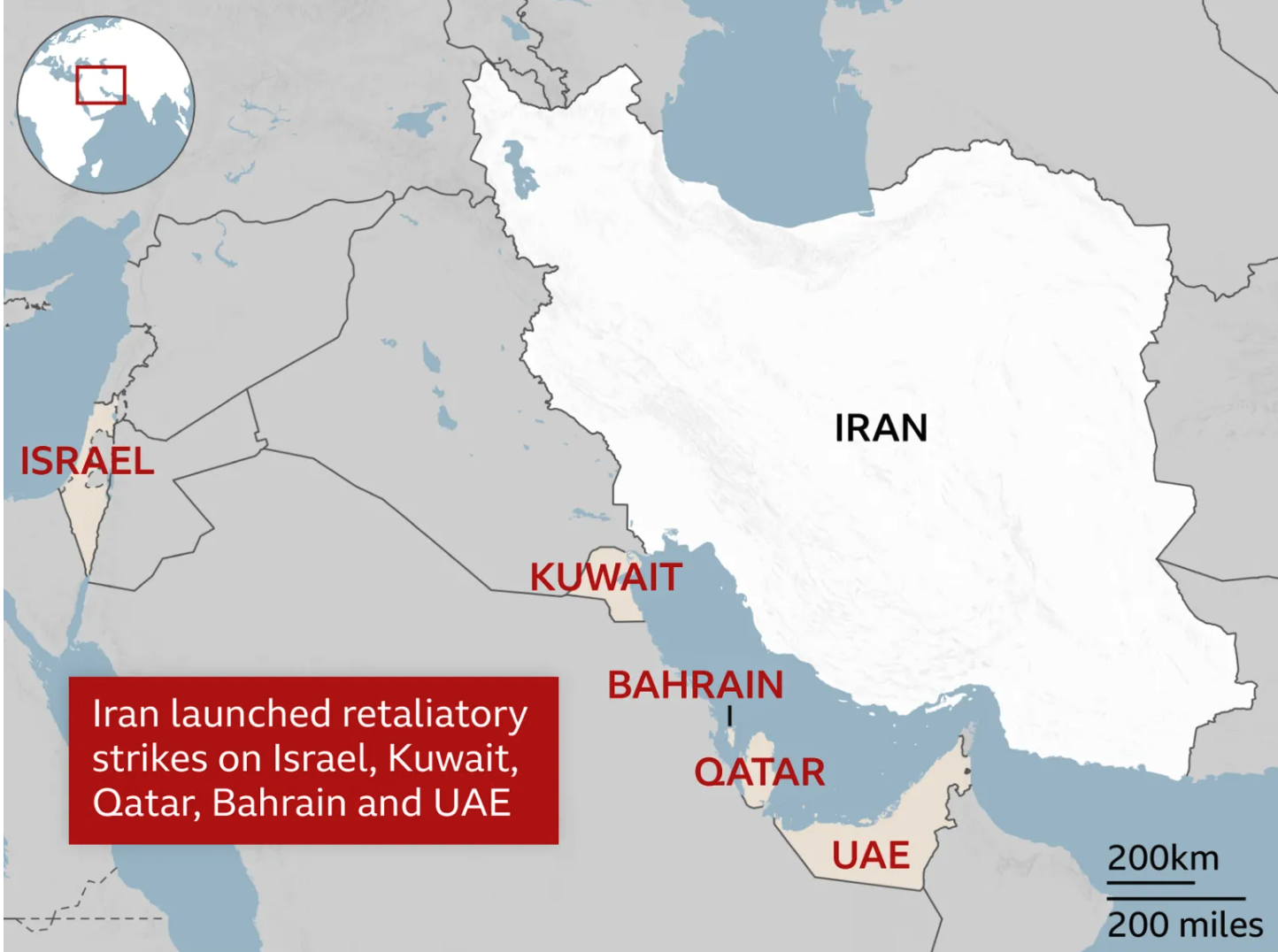
The United States and Israel initiated a major joint military operation against Iran following the collapse of Geneva talks, which failed to establish a binding framework for peace. Iran rapidly responded with widespread missile and drone attacks across the Gulf and directly against Israel. This immediate escalation has led to widespread airspace closures across key Gulf states, and critically, the Strait of Hormuz is now reinstated as a central point of global geopolitical concern. This marks a profound regime change; the market is no longer pricing a negotiation problem but a live war-risk problem.
The immediate takeaway is clear: this is no longer a diplomacy story, but one driven by military strikes. Every asset class is now navigating the same escalation tree through distinct channels. Oil faces disruption threats, gold rallies on fear, forex shifts due to safety and funding demands, bonds react to the inflation versus growth debate, equities undergo rotation, credit tests durability, and crypto experiences liquidity stress. Investors searching for iran-us war news today, or the broader implications of geopolitical instability, will find this a critical junction.
Why This is a Massive Event: A Two-Year Destabilization Arc
This conflict isn't an isolated incident; it's the culmination of nearly two years of escalating destabilization. The path to this point began in 2024 with Israel’s heightened campaign against Tehran-backed regional networks, leading to direct strikes that degraded Iran’s air-defense capabilities. This was the first structural change from a market perspective, signaling that Iran was no longer an insulated military actor within its own airspace.
June 2025 brought the nuclear issue back to the forefront. The International Atomic Energy Agency (IAEA) warned of Iran’s enriched uranium stockpile, intensifying fears of a breakout scenario. This was met with a massive Israeli air operation targeting Iranian military and nuclear sites, soon joined by the United States with heavy bunker-buster strikes on hardened underground facilities. A subsequent ceasefire was brief, but the message to markets was stark: once theoretical red lines regarding nuclear infrastructure, missile capacity, and air-defense systems had become targetable realities.
Internal Stress and External Confrontation
The conflict's evolution also has an internal dimension. Iran’s economy has progressively worsened, marked by a collapsing rial, soaring inflation, and food price hikes—transforming economic issues into political variables. Reports of growing unrest, strikes, and anti-regime sentiment have shifted Iran from a foreign-policy concern to a domestic stability risk. By late December 2025 and early January 2026, the political landscape had deteriorated significantly, with bazaar strikes and broad protests met with force. This forces investors to consider the concurrent risks of external confrontation and internal legitimacy crisis, recognizing that regimes under internal stress tend to become less predictable externally.
Simultaneously, the military backdrop tightened. Washington deployed its largest regional force concentration since the Iraq era, including dual carrier presence and advanced missile-defense assets. Europe ramped up pressure on the IRGC. Iran responded with tanker confrontations, live-fire drills, drone incidents, and temporary disruptions around key shipping lanes. This series of events quickly reminded markets of oil’s vital role as a transmission channel during conflict. The brief optimism from Oman on Friday, February 27, 2026, was always fragile, given the unresolved hard issues of enrichment, verification, sequencing, and enforcement. Now, the conflict has shifted from conditional risk to active repricing.
Market Snapshot and Immediate Reactions
Even before the full weekend escalation, markets ended Friday, February 27, 2026, on a defensive note:
- SPY closed at 685.99, down 1.03%
- QQQ closed at 607.29, down 1.21%
- DIA closed at 489.66, down 1.63%
- GLD closed at 483.75, up 2.71%
- Brent crude settled around 72.48 dollars per barrel, up 2.45%
- WTI crude settled around 67.02 dollars per barrel, up 2.78%
Cryptocurrencies also began repricing:
- Bitcoin traded around 66,002 dollars after falling to 63,177 intraday (a key factor for Bitcoin's price live movements)
- Ethereum traded around 1,940 after falling to 1,841 intraday
The Friday close marked a warning shot. Monday's opening bell will reveal the broader cross-asset verdict. Many are monitoring for the impact on usd safe haven status as well.
Commodities: Oil and Gold Lead the Way
Oil: The Fastest Transmission Mechanism
For those searching oil price iran war or oil price iran strike, the core answer lies in the swift repricing. Oil remains the quickest route for market impact because traders react to a credible rise in disruption probability through the Strait of Hormuz, tanker routes, insurance costs, or regional production risk, rather than waiting for actual long-term supply losses. Key signals to watch include the front end of the curve, diesel and jet fuel spreads, tanker insurance, freight costs, and any physical disruption near the Strait of Hormuz. If front-month oil significantly outperforms the back end, the market signals operational risk. Should Hormuz become even partially impaired, oil transforms from being merely a commodity story to an inflation, central-bank, airline, FX, and global growth narrative.
Gold: The Ultimate Safe-Haven Asset
gold price war behavior is a clear indicator that investors are losing faith in a clean macro landing. Gold is the classic refuge during rising military escalation, increasing inflation uncertainty, and diminishing trust in policy control. Gold’s strength even before the weekend repricing underscores this. Silver, while a higher-beta cousin, might underperform gold in a slower-growth war shock due to its greater cyclical exposure. If this conflict is extended, gold will act not just as a precious metal trade, but as a crucial credibility hedge, especially as investors closely watch the gold price today war impact. For a deeper look at its immediate implications, see our analysis on Gold Price: Analyzing Weekend Settlement & Next Week's Risk Map.
Forex: The Cleanest Scoreboard
In the foreign exchange market, the initial reaction often provides the most honest assessment of sentiment. The immediate beneficiaries in a live Iran-US war scenario are likely to be USD, CHF, and JPY, although sustained high oil prices could complicate the yen’s long-term outlook. Pressure points will likely emerge in emerging market (EM) currencies with fragile external balances, high-carry currencies, oil-importer currencies, and growth-sensitive crosses that rely on a stable risk backdrop. FX prices demand for safety much faster than equity allocators. When the dollar, gold, and oil all rise in unison, it signals a simultaneous repricing of safety, inflation, and supply risk, making forex a critical monitor of forex war news.
Bonds and Rates: A Complex Tug-of-War
The impact on bonds is complex due to a tug-of-war between growth fears, which can drive Treasury buying, and inflation fears spurred by oil and shipping disruptions. This bifurcation creates significant rates volatility: growth concerns pull yields down, while inflation pushes term premium up. If the conflict remains contained, duration can benefit from risk-off bids. However, if energy prices remain high amid prolonged conflict, inflation can dominate, constraining central bank actions. This scenario highlights that it’s not simply a “buy bonds on war” setup, but a intricate sequencing problem influenced by Convexity Risk Lingers: US10Y 3.962% & Bond Market Nuances.
Equities: Rotation and Potential Damage
A widespread stock market crash isn't the immediate, automatic outcome of stock market war. Instead, rotation is typically the first reaction. Energy producers, aerospace and defense companies, gold miners, and selected defensive sectors with pricing power are likely to outperform. Conversely, airlines, travel and leisure, consumer discretionary sectors (exposed to fuel and confidence shocks), high-beta cyclicals, and duration-heavy growth stocks could underperform, especially if rates volatility remains elevated. Narrow leadership can mask broader internal damage; when money flows into specific sectors like energy and defense, headline indices might appear stable while the average stock suffers significantly.
Credit: A Deep Truth Indicator
Credit markets often confirm the deeper truth of a geopolitical event after the initial wave. If the conflict remains contained, spreads might widen modestly, financing windows will stay open, and damage will be concentrated. However, if escalation occurs, high-yield spreads will widen faster, fuel-sensitive, travel-sensitive, and cyclically weak issuers will be hit hardest, and liquidity will thin. If oil, gold, and credit move in tandem, the market signals that the shock is no longer isolated but indicative of significant macro stress.
Crypto: Not a War Hedge, But a Liquidity Monitor
For those questioning bitcoin war risk or crypto war risk, the answer is clear: cryptocurrencies are not immune to geopolitical stress, especially with high leverage and uncertain liquidity. The typical sequence involves de-risking and reduction in leverage, followed by a debate on whether the crypto market takes an anti-fiat stance or simply undergoes broad macro risk-off. The immediate downside seen in BTCUSD price live and Ethereum demonstrates that traders are cutting exposure, anticipating either a short shock or a prolonged risk regime. Bitcoin chart live observations are showing sharp movements.
Shipping, Freight, and Insurance: The Hidden Inflation Bridge
This often-overlooked channel directly links conflict to inflation. If the Gulf region becomes dangerous for passage, if insurance costs soar, or if rerouting becomes necessary, the war transcends military implications to become a cost event. This directly impacts oil and refined products, airline economics, shipping costs, imported inflation, central bank communication, and manufacturing margins. The Strait of Hormuz’s significance cannot be overstated; roughly one-fifth of the world’s oil flows through this corridor, and even a credible threat of disruption can trigger a global macro repricing.
Three Scenarios from Here
Scenario 1: Fast Containment
- Retaliation continues briefly, but major energy flows remain largely intact.
- Oil spikes then partially cools.
- Gold stays firm but doesn't go vertical.
- Equity damage is concentrated, not universal.
- Credit stress remains manageable.
Scenario 2: Sustained Retaliation Cycle
- Strikes and counterstrikes continue for days or weeks.
- Oil maintains a durable geopolitical premium.
- Safe-haven FX remains strong.
- Equities continue rotating into energy and defensives.
- Credit and volatility gradually worsen.
Scenario 3: Strait of Hormuz Disruption or Credible Closure Threat
- This is the true global macro shock.
- Oil gaps sharply higher, refined products spike.
- Inflation expectations jump, easing expectations are delayed or repriced.
- Airlines, travel, EM FX, and fragile credit experience the heaviest damage.
What to Watch Next
- Any direct communication regarding the Strait of Hormuz being closed, restricted, mined, or unsafe.
- Movements in shipping insurance and freight quotes.
- Whether Brent and WTI open with sustained gap moves.
- A parallel rise in gold and the dollar.
- Dramatic underperformance of airlines and travel sectors.
- Falling Treasury yields while inflation hedges continue to rise.
- Continued deleveraging in crypto markets after the weekend shock.
- Whether the conflict remains bilateral or draws in more regional actors.
Bottom Line
This is now a genuine iran us war news today follow-up, not merely a diplomatic watch. The sequence of events is crucial: yesterday, peace seemed imminent; today, the region is embroiled in missile exchanges, airspace closures, and the imminent risk of an energy chokepoint shock. This makes it one of the most significant geopolitical events of the 21st century from a market perspective. Commodities are now trading disruption risk, forex trades fear and funding, bonds are balancing growth versus inflation, equities are undergoing rotation and margin pressure, credit evaluates durability, and crypto monitors liquidity stress. The initial market reaction is already underway, but the larger implications will unfold as global markets reopen and assess whether this is a contained shock, a prolonged cycle of retaliation, or the start of a much deeper Middle East war regime.