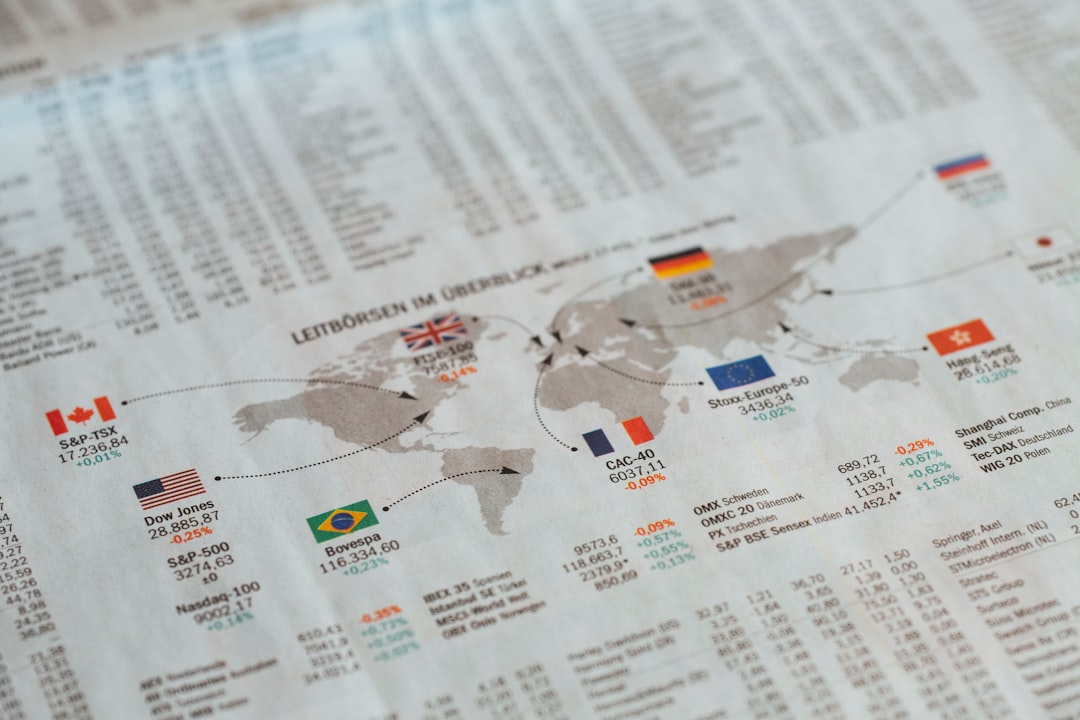
A global trade snapshot suggests momentum remains subdued into 2026, with weaker demand among major trade blocs and tighter financial conditions affecting trade flows—particularly for developing economies. With the DXY price live reacting to shifting macro expectations, the emergence of a $2.5 trillion trade finance gap is creating significant headwinds for small-to-medium enterprises and emerging markets alike.
Macro Transmission: From Trade Indicators to Employment
Trade indicators are often early-cycle signals for manufacturing, shipping, and industrial commodities. When trade slows, the macro transmission can appear first in orders and inventories before it hits employment. Currently, the global growth projection for 2026 is pinned at approximately 2.6%, reflecting a defensive posture across major economies. As traders monitor the DXY chart live, the focus is shifting toward how these trade shocks act asymmetrically—where uncertainty hurts investment quickly, while the benefits of new agreements arrive slowly.
Key Data Points and Market Sentiment
- Global Growth Projection: ~2.6% for 2026.
- Trade Finance Gap: $2.5 trillion in unmet demand.
- Risk Factor: Tariffs and policy uncertainty delaying capex.
Trade mechanics dictate that deals and tariff risks affect the economy first through expectations. While looking at the DXY live chart, analysts note that surveys and sentiment often move well before realized trade data. Foreign Direct Investment (FDI) and supply chains are slow variables, but they are powerful; when firms choose “in-market for market” investment, it signals a structural adjustment to policy risk. This realignment is evident in recent shifts, such as the German FDI in China hitting a 4-year high despite broader trade tensions.
Signal vs. Noise: Analyzing the 2026 Trade Regime
In practice, persistence across two or three releases is what changes the macro story. For those tracking DXY realtime data, the key is whether the signal is growth-led or inflation-led. Growth-led softness, like the current trade slowdown, tends to be policy-dovish, potentially easing pressure on central banks to maintain high rates. This correlates with the DXY live rate, which often softens when global trade volume declines, reducing the demand for the greenback as a settlement currency.
Trade sensitivity is not uniform. Economies with strong domestic demand can decouple temporarily, but those reliant on goods exports cannot. For example, India’s January PMIs showed a rebound driven by domestic demand, providing a buffer against global trade headwinds. Conversely, regions heavily integrated into global manufacturing may see a more direct impact on their industrial production data.
Market Implications and Strategy
Trade-sensitive currencies and industrial commodities often react early to trade momentum changes. For rates, slower trade can reduce inflation pressure via goods prices, but it can also reduce growth, creating a more dovish tilt. Monitoring the DXY live chart (or the DXY live rate) alongside freight rates and port throughput offers a more comprehensive view than relying solely on lagging monthly trade values.
The market will treat this latest update as a crucial data point, not a final verdict. If the next few prints of export orders within PMIs confirm this trend, the narrative of a 2026 slowdown will become sticky. However, if developments like the EU-India trade breakthrough accelerate implementation, we could see a faster-than-expected recovery in investment flows.