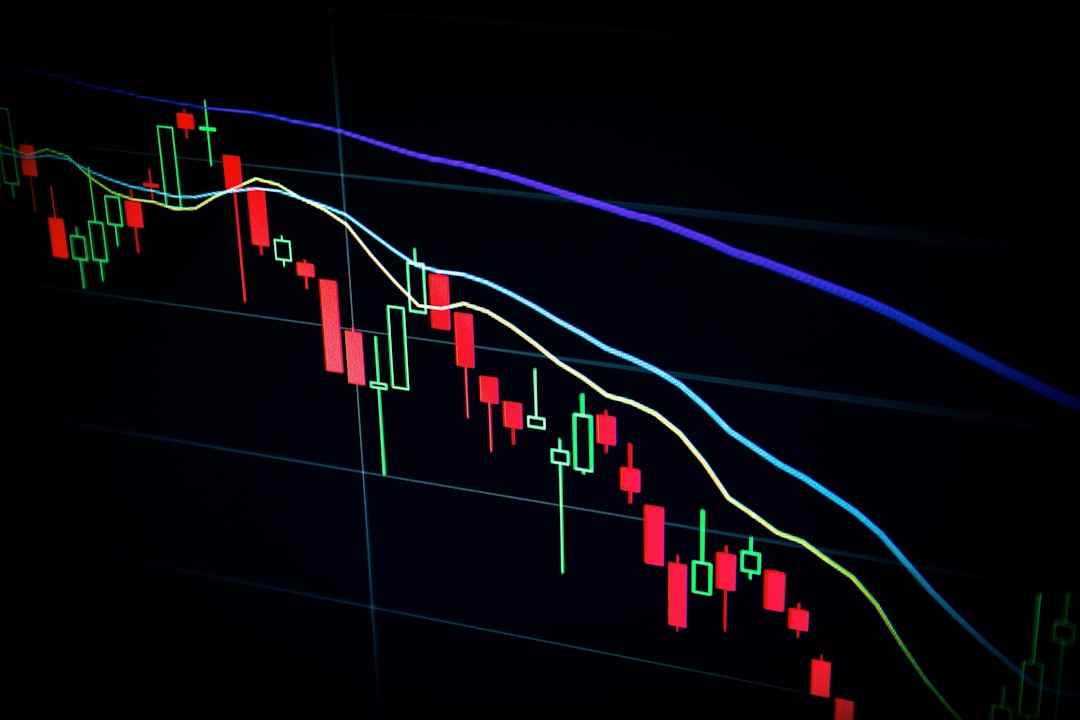
Global markets are navigating a complex landscape where monetary policy, supply dynamics, and geopolitical considerations are shaping asset prices. Today's briefing highlights how a sequencing regime, rather than single data points, is dominating market reactions, particularly concerning inflation, bond supply, and commodity strategic importance.
Rates and Inflation: The Core of Policy Decisions
In the Eurozone, inflation stands at 2%, with core pressure remaining stubbornly sticky and services inflation elevated. This scenario keeps the front-end of the yield curve firm, suggesting that the European Central Bank (ECB) anticipates maintaining a 2% inflation target over the medium term. While energy volatility remains active, softening growth worries, it hasn't cleared the bar for rapid policy easing. Meanwhile, the Treasury's focus on Treasury supply in focus keeps duration supply central to the bond market, with investors awaiting further economic data to gauge future movements. A new Fed-Treasury accord is reportedly already in the works, underscoring concerted efforts to manage fiscal and monetary policy coordination.
Currencies: A Mix of Fundamentals and Liquidity
The Euro held steady, reflecting the balanced inflation outlook. In contrast, the Australian Dollar (AUD) outperformed following the Reserve Bank of Australia's (RBA) hike to 3.64%. The RBA's warning that inflation remains above target provided sustained support for the AUD, even as the US Dollar (USD) experienced delays from economic data releases. In Asia, the Chinese Yuan (CNH) is closely watching liquidity conditions, particularly after Germany's Merz noted lingering challenges post his inaugural China trip. China's mixed Purchasing Managers' Index (PMI) and export orders keep high-beta FX cautious, highlighting global trade uncertainties.
Commodities: Strategic Moves and Geopolitical Undercurrents
The commodity sector is showcasing its role as a critical swing factor. OPEC+ decided to pause March output increases and maintain voluntary cuts, signaling a strategic effort to manage supply. OPEC+ Navigates Geopolitical Turbulence with Strategic Oil Output Moves, a crucial development as oil prices edge higher ahead of US-Iran nuclear talks. Furthermore, the emphasis on Critical-mineral Action Plans and price-floor discussions is generating a policy-backed bid for strategic metals, as nations like the US and Taiwan formalize agreements on reciprocal trade, underscoring the growing importance of securing vital resources.
Equities: AI Funding and Sector Rotation
The equities market is undergoing significant shifts, partly driven by the burgeoning AI sector. Oracle's substantial $45-50 billion 2026 financing plan makes it clear that AI capital expenditure is now deeply intertwined with funding strategies. Through an ATM program and a planned bond issue, technology companies are being re-priced based on their cost of capital, rather than solely on growth prospects. This environment favors sector rotation into energy, industrials, and quality defensives as market volatility increases. Despite headlines, market breadth is holding up better than the main index, suggesting a healthy rotation rather than outright capitulation.
Crypto Market: Microstructure, Policy, and Volatility
In the cryptocurrency sphere, Bitcoin traded near $68,057 in the latest session, demonstrating how sensitive crypto volatility is to macro liquidity. Similarly, Ether traded near $2,065 during the same period. Discussions around market structure concluded without agreement on stablecoin rewards, indicating that regulation remains as crucial as liquidity in shaping the crypto landscape. The context of 2% Treasury supply in focus nudges traditional rates, forcing FX markets to absorb adjustments, while commodities act as an arbiter for sustained risk appetite. The tape discounts a steady policy path with sector dispersion, though the risk of Eurozone yields steady at multi-month lows as investors await inflation data. could tighten correlations and see rates outperform FX on a risk-adjusted basis. This implies keeping exposure balanced with a hedge that benefits if commodities move faster than spot. Flows are currently light, making the market sensitive to marginal news, and the need to hedge against 2% pressure means carry trades remain selective. This leaves FX as the clean expression of the current theme. Dealers are cautious around event risk, thinning market depth. Pricing implies a steady policy path with sector dispersion, yet the distribution is skewed by Euro zone yields steady at multi-month lows as investors await inflation data., which is why commodities often serve as a better hedge than pure duration. Execution requires scaling in and out rather than chasing momentum due to potential liquidity gaps on headlines. The 2% and Treasury supply in focus tightens the link between policy and real assets; rates and FX react first, followed by commodities confirming the move. Given Euro zone yields steady at multi-month lows as investors await inflation data., the trade-off is between carry and convexity, with cross-asset pricing implying a steady policy path with sector dispersion but asymmetric payoff if volatility spikes. Keeping optionality in the hedge book helps absorb policy surprises. Bitcoin price live reflects this intertwined dynamic. The 2% is the anchor, but Treasury supply in focus is the catalyst, pushing rates in one direction and forcing FX to re-rate, with commodities arbitrating sustainability. Key factors to watch are funding costs, hedging demand, and relative value, where pricing suggests a steady policy path with sector dispersion, yet the wider distribution due to Euro zone yields steady at multi-month lows as investors await inflation data. makes position sizing paramount. A tactical hedge involves maintaining a small convex position that benefits from sudden rises in correlations. The interplay of 2% Treasury supply in focus keeps rates and FX tightly linked, while commodities remain the hinge for risk appetite. Adopting a sequence map over a headline map is critical, especially when Euro zone yields steady at multi-month lows as investors await inflation data. still defines potential gap risk. The BTCUSD price live action, along with ETHUSD price live, provides real-time insights into these macro forces. Monitoring Bitcoin USD price and Bitcoin USD chart live, as well as Bitcoin USD realtime data on a Bitcoin USD live chart, is crucial for traders. The Bitcoin to USD live rate is highly reactive to these overarching market conditions. The common nickname “bitcoin dollar live” aptly captures the direct correlation observed in today’s dynamic market.
Related Reading
- Bitcoin Price Volatility: Macro Liquidity & Policy Impact
- Commodities as Policy Assets: Navigating Energy and Metals Shifts
- Volatility Skew Signals Sticky Hedging Amidst AI and Oil Talks
- JGB Volatility Shifts as US and Japan Yields Diverge