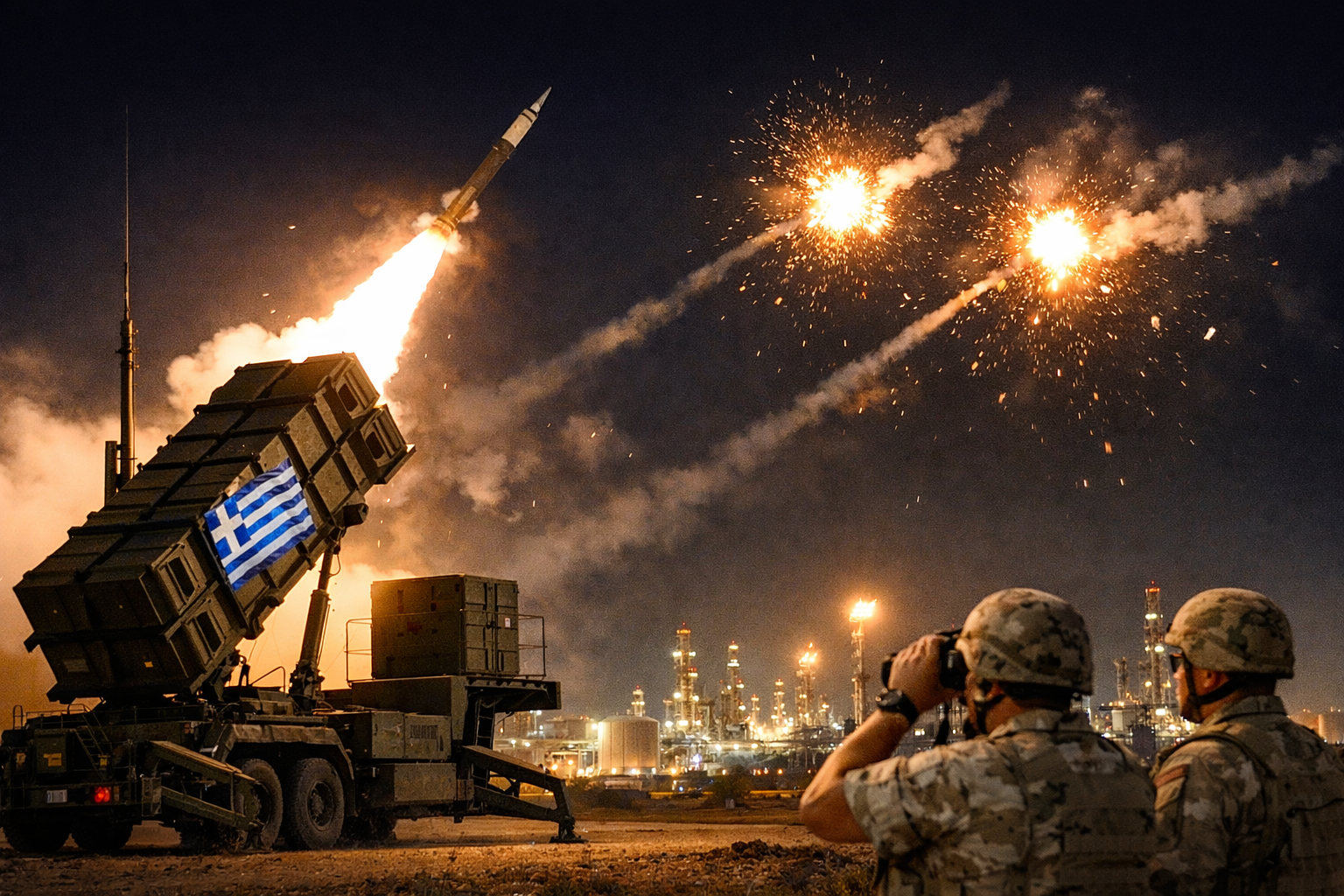
The recent interception of Iranian ballistic missiles targeting Saudi Arabian oil infrastructure by Greek military personnel operating a Patriot battery in Saudi Arabia has far-reaching implications for global markets, extending well beyond a single military success. This event marks a critical turning point, highlighting Europe's active involvement indefending Gulf energy assets and reshaping how traders price oil, gold, defense stocks, and the euro.
For those searching for insights into Greek Patriot Saudi Arabia, Greece shoots down Iranian missiles, Saudi refinery missiles intercepted, Yanbu missile interception, oil refinery attack Saudi Arabia, Europe defending Gulf energy, oil price war, gold safe haven, defense stocks, or the broader market implications, this event signifies a new era of 'expensive stability.' When European forces actively protect critical energy infrastructure, the conflict transcends a mere U.S.-Iran-Israel confrontation, becoming an increasingly pivotal European security and energy story.
What Actually Happened and Why It Matters
Reuters reported that Greek-operated Patriot air-defense systems successfully intercepted two Iranian ballistic missiles. Defense Minister Nikos Dendias confirmed these systems were protecting vital refineries and oil units, not just abstract military zones. While Saudi Arabia separately reported intercepting a missile targeting Yanbu, a strategically significant Red Sea port city with extensive refinery operations, it's the involvement of European personnel that demands close attention. This incident tells investors three crucial things:
- Energy infrastructure remains under direct and severe threat.
- The protection of Gulf assets is increasingly multinational.
- Europe is now a physical participant in defending the global energy system, directly impacting global inflation, industrial production, and shipping.
This is far from a normal missile intercept headline, as it indicates an evolving coalition protecting Gulf energy, strengthening market confidence in oil and LNG flows by demonstrating a credible, scalable, and politically durable defense architecture. With a Greek Patriot battery in Saudi Arabia performing live interception, the market can no longer separate Europe's security policy from its energy vulnerability, Gulf stability, and global inflation risk; they become intertwined. This development alone changes how major instruments like EUR/USD are assessed, as Europe's strategic posture becomes clearer.
Oil: A Dual-Edged Sword
The immediate bullish interpretation for oil is straightforward: missile attacks on refineries confirm the ongoing energy war and severe infrastructure threat, sustaining the geopolitical premium. However, there's also a stabilizing aspect: successful interceptions could reduce fears of worst-case supply losses. This explains why the oil reaction to such news can be complex. While the infrastructure risk is undeniable, the efficacy of defensive systems provides some counter-balance. The overarching message isn't that the problem is solved, but that Gulf oil is now operating within a heavily militarized protection regime that includes foreign operators beyond the U.S. This means oil traders must now simultaneously price the threat of attacks and the credibility of the expanding missile-defense shield around key assets. When considering the price of crude, say CL=F price gains, there's a delicate balance to strike between short-term fear and long-term defensive capability.
Why Yanbu Matters So Much for Oil Prices
Yanbu is not just any location. Its importance as one of Saudi Arabia's most vital energy hubs on the Red Sea, facilitating refining and export flexibility, makes it a prime target. A missile aimed at Yanbu signals to the market that global oil security infrastructure remains a live battlefield. Successful strikes could tighten refined-product markets, raise freight and insurance costs, amplify inflation, and erode confidence. Therefore, even a successful intercept acts as a stark reminder of the system's fragility, supporting the prevailing notion that the crude oil price should reflect significant geopolitical risk, especially given the current environment shown on any crude oil chart live.
Gold: Sustained Safe-Haven Demand
Gold price benefits significantly from events like this because they highlight a world increasingly militarized, energy-sensitive, and reliant on crisis management for basic economic stability. When refineries require defense by multinational missile batteries, the market internalizes that 'normality is no longer cheap.' This environment, characterized by geopolitical stress, inflation risk, policy uncertainty, rising defense burdens, and the need for constant, active protection of the old system, strongly supports gold’s appeal. Thus, even successful defenses can be gold-positive, as success contains instability rather than removing it. Anyone following a gold live chart will note how immediate geopolitical tensions translate into higher demand. We continue to see XAUUSD price live reflecting ongoing concerns.
Defense Stocks: A Direct Bullish Signal
This situation is profoundly beneficial for defense investors. It reinforces the market case for missile defense systems, air-defense interceptors, radar networks, surveillance, and extensive logistics support. A live intercept by Greek-operated Patriots confirms that missile-defense systems are not theoretical procurements but active, essential war infrastructure. This is bullish for both American and European defense companies and carries significant political weight. European personnel operating in live combat conditions in the Gulf create a strong impetus for Europe to increase spending on readiness, stockpiles, and integrated defense, moving beyond general defense spending to specific investments in air and missile protection systems. Investors interested in how this plays out can examine relevant defense stocks to confirm this trend. The US policy map suggests increased defense outlays.
The Europe Angle: Broader Implications for the Euro
This is much more than just a Greek story; it's a European narrative. While Greece is the visible actor, the broader implication is Europe's expanding security footprint and its tight linkage to Gulf stability for energy interests. Europe is evolving from a mere recipient of energy imports into a partial protector of the global energy system itself. This reinforces the strategic autonomy and rearmament narrative already gaining traction across Europe, signifying that future European defense spending will encompass not only Russia or eastern flank security but also the protection of the wider energy and trade systems crucial for the continent's economy. The EURUSD price live, or EUR USD price, may not show immediate bullishness, as Europe is still largely seen as exposed, but the long-term credibility of a more strategically serious Europe could benefit. We monitor euro dollar live for nuances.
Shipping and Insurance: The Quiet Center
Headlines targeting refineries immediately impact shipping and insurance markets. Energy infrastructure is critical for reliability, not just production. The threat of missile attacks on refineries and ports forces insurers and shipping operators to factor in increased route risk, higher war-risk premiums, greater caution in vessel movement, and potential interruptions at loading and refining points. Even a successful intercept only confirms that defensive measures worked this time, implying that underlying risks remain high. Such persistent risk keeps freight, insurance, and energy-delivery costs under pressure, allowing inflation channels to remain open.
Rates: Inflation and Defense Spending Story
The rates market must reconcile two significant forces. While a successful intercept mitigates the most extreme immediate refinery-loss scenario, the ongoing targeting of energy facilities and the broadening multinational defense response reinforce a longer-run inflation and fiscal narrative. This means energy risk persists, defense spending continues to rise, geopolitical volatility remains embedded, and central banks face a less comfortable macroeconomic environment. Consequently, a 'successful defense' headline doesn't automatically trigger a bond rally; it might reduce one tail risk while solidifying a broader regime of instability. This is crucial for understanding instruments like US10Y. The overall impact on rates radar suggests continued vigilance against inflation.
Crypto: A Liquidity Trade First
For crypto traders, the primary implication remains macroeconomic. Increased geopolitical stress and a strengthening dollar typically make crypto vulnerable in the short term, as it primarily trades on liquidity, leverage, and risk appetite. In the longer term, if this broader militarization and defense dependence are interpreted as signs of deeper global systemic instability, Bitcoin might reclaim some of its appeal as a geopolitical hedge. However, timing is everything, and immediate macro stress usually dominates first. Bitcoin volatility remains a key concern.
Why This Makes the War Harder to Treat as "Regional"
Perhaps the most significant takeaway is that the involvement of Greek personnel intercepting Iranian missiles over Saudi refineries transforms the conflict from a 'regional' one into something much wider. While geographically centered in the Middle East, its political, military, and economic implications now extend to Europe, global inflation, shipping lanes, missile-defense production, and alliance burden-sharing. Investors need to take this seriously, as it signals that the security architecture around global energy is now multinational, active, and under live fire, necessitating expensive stability. For any global investor, understanding where Europe stands is paramount, especially when looking at the EUR USD chart live, as it encapsulates so many of these interdependencies. The dollar quiet pivot also reflects these complex dynamics.
What To Watch Next
Seven critical areas warrant close attention:
- The activation of more European-operated defense systems in the Gulf, deepening Europe’s energy-security link.
- Continued attacks on Yanbu or other refinery-linked targets, sustaining the oil and refined-products premium.
- The ability of Saudi infrastructure to remain protected without visible production losses, acting as the key near-term oil variable.
- Whether defense stocks tied to missile interception continue their leadership role, confirming a long-run replenishment cycle.
- Rising shipping insurance costs despite successful intercepts, indicating persistent underlying risk.
- Europe signaling increased strategic involvement in Gulf energy security, expanding the rearmament and autonomy narrative.
- The synchronized firmness of the dollar and gold, confirming market pricing of instability over resolution.
Final Market Read
This headline transcends a simple military report. It signifies that European personnel are now actively defending Gulf oil infrastructure under live combat conditions, fundamentally altering the market landscape. It tells oil traders that while the infrastructure threat is real, the protection shield is strengthening. Gold investors are reminded that the world is increasingly militarized and inherently unstable. For equity investors, missile defense has shifted from a theme to an operational necessity. Europe watchers now understand that strategic autonomy is no longer theoretical. Ultimately, every macro trader must acknowledge an uncomfortable truth: the global energy system functions, but increasingly only through active multinational defense under fire. This is not peace – it is expensive stability, and expensive stability is a persistent market regime that all traders following EUR to USD live rate should closely monitor.