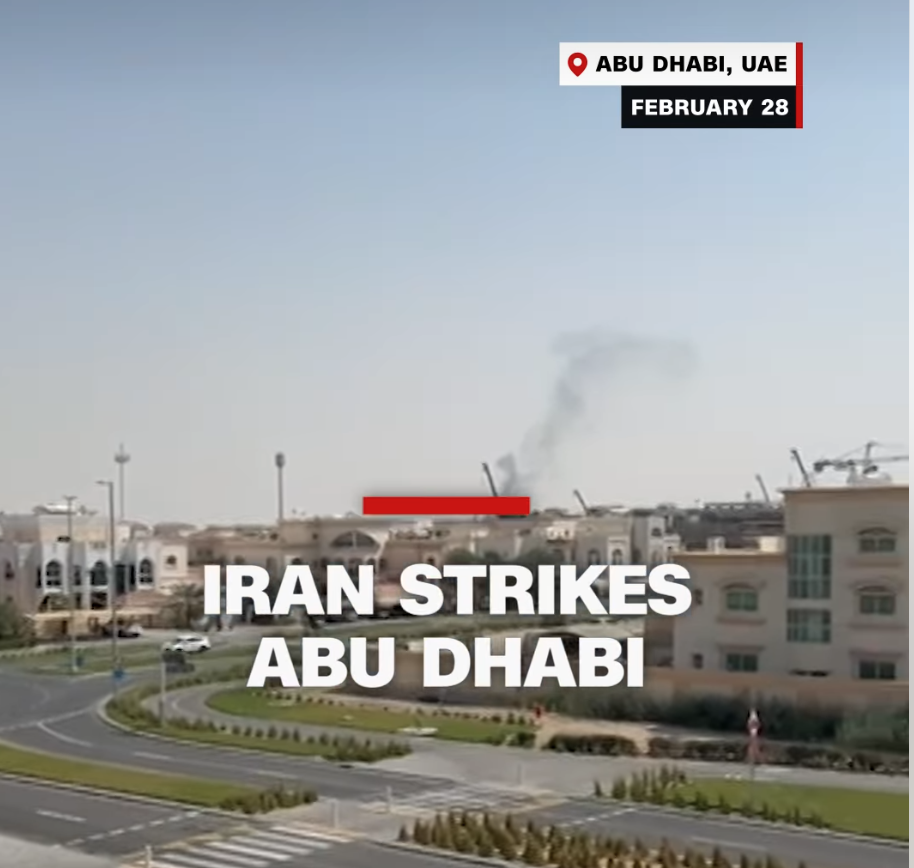
The recent fatal impact from an Iranian missile attack in Abu Dhabi marks a critical juncture for regional market analysis. This incident forces a re-evaluation of the UAE's long-held perception of invincibility, transforming it from a distant observer to a directly impacted player in the ongoing geopolitical landscape. The market is now closely watching how the abu dhabi economy war impact unfolds.
Abu Dhabi: The Sovereign Core Under Pressure
Public reports confirm that a fatal impact occurred in the UAE's capital, Abu Dhabi, due to shrapnel from an Iranian missile attack, resulting in one fatality. Concurrently, Zayed International Airport experienced widespread disruption, signaling the country's transition into an emergency operational mode. This is not merely an isolated incident; it signifies a breach of Abu Dhabi's previously unassailable security premium. Those tracking iran us war news today will recognize the gravity of this development.
Abu Dhabi is far more than just another city in the UAE; it is the sovereign core, wielding immense strategic weight across the region. Its financial prowess is underpinned by vast sovereign wealth funds, centralized federal decision-making, substantial energy interests, critical strategic infrastructure, and unparalleled balance-sheet credibility. The occurrence of an abu dhabi attack directly within this core challenges fundamental market assumptions.
The Virality of Vulnerability: A Paradigm Shift
The pivotal moment arrived when Abu Dhabi registered a confirmed fatal war-related impact. This event compelled the market to immediately reprice the UAE's standing, no longer as a pristine haven shielded from conflict, but as a strategic economy directly embroiled in regional tensions. The core of the issue is that any credible widening of the war in the Gulf will invariably prompt investors to reassess regional output risks, export route certainties, and the broader fiscal ramifications of energy revenues. This shift in perception is critical for understanding gulf sovereign risk.
Initial Economic Shockwaves and Repricing
The economic fallout begins with a repricing of sovereign risk. While not a full-blown crisis, investors are now compelled to question whether the UAE's security premium can still command its near-perfect valuation. This cautious reassessment is a natural market response to the uae attack update.
Second, aviation and operational confidence are directly affected. Flight disruptions in Abu Dhabi extend beyond tourism, impacting state-linked travel, business continuity, and high-value logistics crucial for its diverse economy. The abu dhabi airport war headlines highlight this vulnerability. Finally, energy market psychology is paramount. The inextricable link between Abu Dhabi and the UAE's strategic energy position means any escalation will prompt a review of regional output dangers, export uncertainties, and increased insurance and shipping costs.
Sovereign Capital, Banking, and Real Estate Implications
While Abu Dhabi possesses an exceptionally robust balance sheet, capable of absorbing shocks better than most in the region, the crux of the matter is different. The war's direct impact, even if limited, has the potential to erode the premium attached to this balance sheet without necessarily impairing its substance. This is evident through:
- Wider sovereign-risk pricing mechanisms.
- Increased caution in the valuation of state-backed projects.
- More conservative financial-sector multiples and higher discount rates on regional capital deployment. Investors are keenly observing the sensitivity of abu dhabi banks war risk.
Abu Dhabi's property market, though inherently more state-shaped and less subject to rapid fluctuations than Dubai's, is not immune to confidence shocks. Prolonged conflict could lead to slower investment decisions, increased wariness from foreign buyers and tenants, and a reduced appetite for regional expansion plans. The impact on abu dhabi real estate war sentiment will be a key indicator to monitor.
Key Factors to Monitor Going Forward
Traders and investors should closely observe several critical indicators:
- Whether Abu Dhabi experiences further war-related incidents, or if this remains an isolated event.
- The extent to which the UAE’s sovereign premium widens and is visibly reflected in market metrics.
- The speed and efficiency with which airports and logistics operations normalize.
- Whether rising energy-market fears begin to directly influence UAE strategic pricing decisions.
- Whether Abu Dhabi's reputation for stability suffers a temporary setback or incurs lasting damage. The ripple effects across the uae stock market war will be particularly telling.
The Bottom Line: A Subtle Shift in Perceived Safety
Ultimately, Abu Dhabi's resilience is not in question; its capacity to weather a shock is well-established. The real test lies in whether investors will continue to assign it the same near-invincible stability premium following a confirmed fatal impact within its capital. This represents a subtle but significant shift in perceived safety, which, in the world of finance, can trigger substantial reallocations of capital. The broader middle east conflict market impact is undeniably expanding.