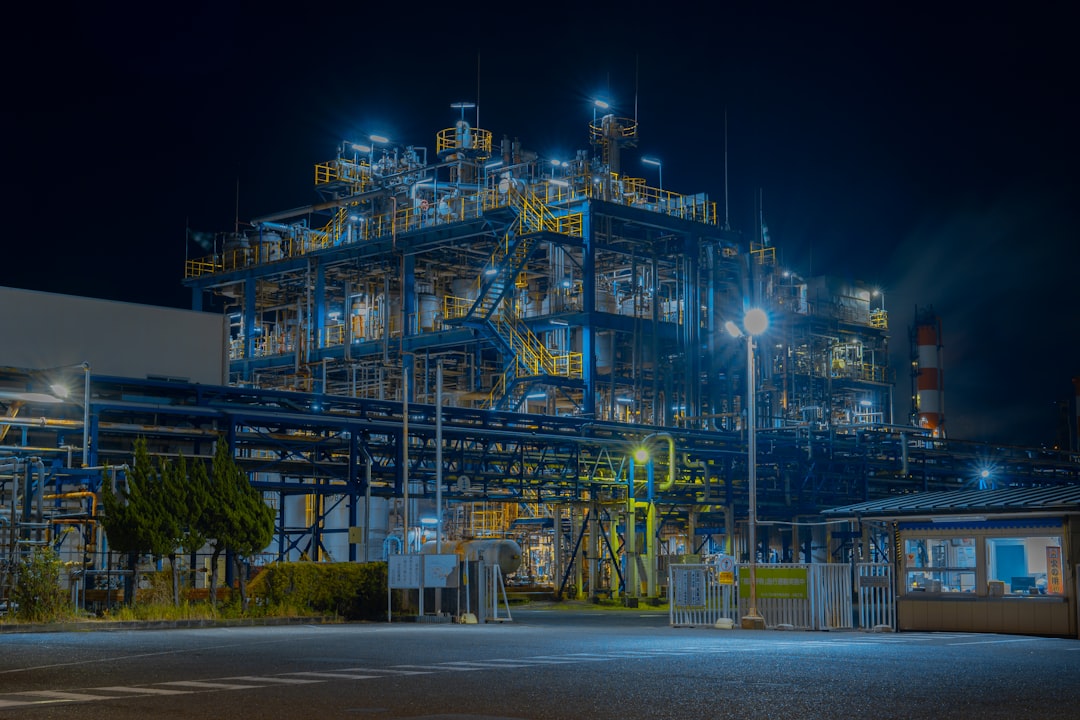
The landscape of commodity markets is undergoing a profound transformation, with geopolitical considerations and strategic policy decisions now acting as primary drivers. This shift means that commodities are once again trading like policy assets, dictating price floors and influencing market dynamics across energy, metals, and agriculture sectors.
Energy: An Anchor in a Volatile World
Energy remains the steadfast anchor of the commodity complex. Ongoing voluntary cuts by OPEC+ and the persistent grid risks emanating from Ukraine embed a significant geopolitical premium into crude oil and refined products. This robust underpinning persists even amidst mixed global growth signals, demonstrating policy's direct impact on price stability. The confluence of supply management and geopolitical tensions helps maintain the Brent Crude: Navigating Volatility Amid Shifting Supply & Geopolitics narrative, ensuring that energy remains central to any market analysis. From a relative-value perspective, an Oil Price Forecast: WTI Around $66, Brent $72 as Iran Risk Lifts CL=F, BZ=F provides a clear benchmark for energy prices.
Moreover, discussions around the Retail industry says Trump tariff reversal will bring predictability, flexibility for innovation, can also impact physical supply assumptions. This blend of explicit and implicit policy influences ensures that energy and metals are now trading as policy assets. The equity market repercussions are evident, with energy cash flows appearing increasingly durable, and buybacks acting as a vital volatility dampener. In the fixed-income sphere, higher breakevens often appear much faster than actual higher growth expectations, signaling inflationary pressures rooted in commodity prices.
Metals: Strategic Assets in a Geopolitical Chess Game
Beyond energy, metals have unequivocally become policy assets. The strategic declaration of U.S. critical minerals reserves, for instance, diverts demand into national stockpiles and long-term supply contracts. This practice inherently tightens the global supply for rare earths and other specialty inputs, providing strong support for mining stocks. Copper Market: Navigating Flows, Geopolitics, and Key Levels further exemplifies this trend, illustrating how political decisions directly influence supply-demand balances.
The implications extend to currency markets and bond spreads. Commodity-linked currencies tend to firm up, while import-heavy emerging markets often face widening external financing spreads. This is a direct consequence of policy frameworks bolstering metal prices. The gold price, for example, reacts significantly to discussions regarding critical mineral stockpiles and overall geopolitical stability.
Agriculture: The Unseen Arbiter of Macro Trends
While energy and metals capture immediate attention, agriculture often acts as the sleeper, a critical second-round channel into food Consumer Price Index (CPI) readings. Freight rerouting, coupled with fluctuating energy costs, directly pushes input inflation into fertilizers and transport-sensitive crops. This makes agriculture the ultimate arbiter if commodity price movements are to sustain their policy-driven trajectory. Keeping an eye on the soybeans market: Navigating Flows, Structure Amid Macro Swings is crucial for understanding broader inflationary pressures.
Cross-Asset Significance and Risk Management
Commodities function as the primary transmission belt between geopolitical events and inflation. Real-asset pricing now incorporates steady yields, but a policy-driven commodity bid can exert upward pressure on real assets and duration-sensitive stocks. A key cross-asset tell: if spreads in materials tighten simultaneously with a rise in yield volatility, the market is signaling a preference for real assets over duration. This pattern frequently precedes a significant equity style shift towards value investments.
Inventory behavior is paramount. When policy-driven stockpiles increase, producers strategically withhold supply, encouraging buyers to front-load orders. This action backwardates curves and lifts roll yields, even when spot prices remain constrained within a narrow range. The macro overlay reveals that while a firmer dollar can typically cap commodity rallies, this effect is diminished when supply is deliberately policy-constrained. In such scenarios, commodities behave as a distinct asset class, possessing their own unique risk premium. The current Oil Price Forecast: WTI Around $66, Brent $72 as Iran Risk Lifts CL=F, BZ=F serves as the anchor for the energy complex, but discussions around trade policy, such as the Retail industry says Trump tariff reversal will bring predictability, flexibility for innovation, act as a key catalyst. This combination exerts upward pressure on energy and forces metals to undergo a re-rating, with agriculture ultimately confirming the sustainability of the move.
What traders need to watch are funding costs, hedging demand, and relative value. Current pricing implies a policy-backed bid in real assets, yet the distribution of outcomes is widened by news such as Oil Prices Surge to Six-Month High After Trump’s Iran Warning. This emphasizes why position sizing is often more critical than the entry point. A tactical hedge might involve holding a small, convex position that benefits from a sudden increase in correlations.
Pricing Lens and Implementation
The market currently discounts a robust policy-backed bid in real assets. However, the omnipresent risk of a scenario where Oil Prices Surge to Six-Month High After Trump’s Iran Warning could materialize. Should this risk manifest, correlations are likely to tighten significantly, leading to energy outperforming metals on a risk-adjusted basis. For implementation, it's prudent to scale in and out of positions rather than chasing momentum, as liquidity can gap significantly on headline news. Commodities trade with their own nuanced narratives, and watching the WTI price live provides real-time insights into market sentiment.
The link between policy and real assets is increasingly tight, driven by factors like the Oil Price Forecast: WTI Around $66, Brent $72 as Iran Risk Lifts CL=F, BZ=F and the Retail industry says Trump tariff reversal will bring predictability, flexibility for innovation. Within a commodities framework, energy and metals tend to react first, with agriculture then confirming the broader market trend. Risk management is crucial, particularly with the background threat of Oil Prices Surge to Six-Month High After Trump’s Iran Warning. The trade-off is between carry and convexity, as real-asset pricing incorporates a policy-backed bid, but the payoff map becomes asymmetric if volatility spikes. Maintaining optionality is essential because Oil Prices Surge to Six-Month High After Trump’s Iran Warning can tighten spot prices while curves may underprice the persistence of these pressures. Policy risk is increasingly sector-specific, acting as a crucial signpost for the next major market rotation. Key indicators to watch include crude backwardation, the copper forward curve, and the strength of the USD basket. If the USD index live chart shows a strengthening dollar, commodity rallies will require genuine supply tightness to be sustainable.