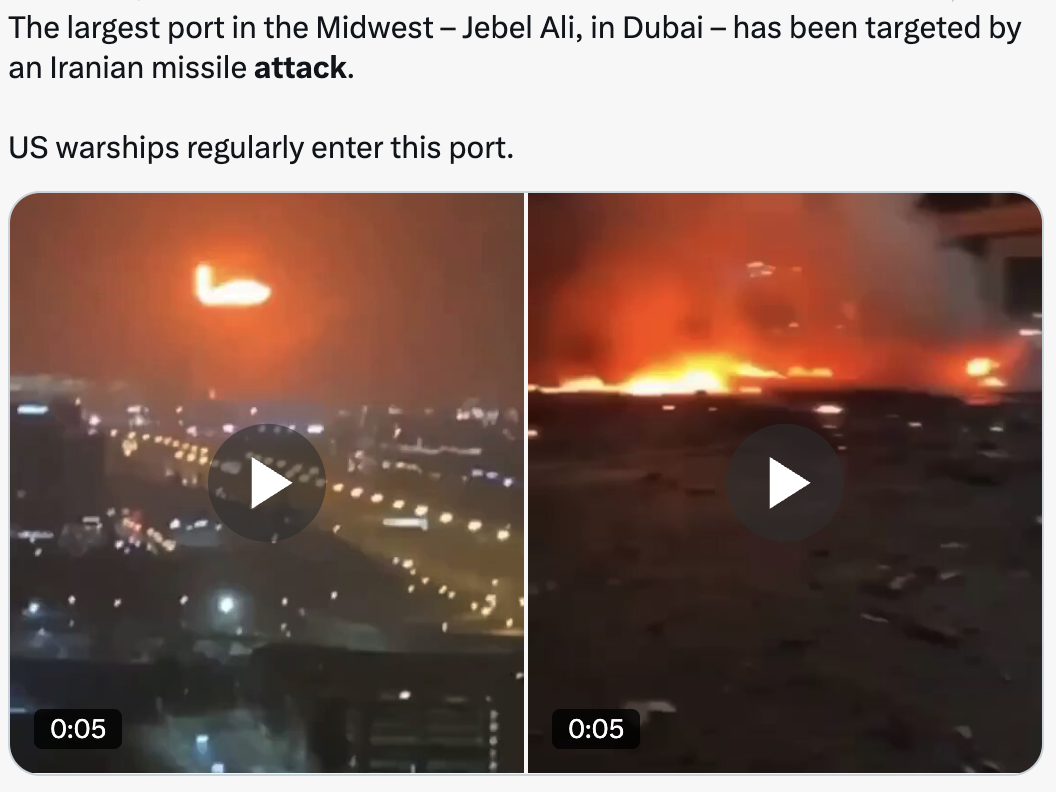
The geopolitical chessboard of the Middle East has seen a dramatic shift, with a reported Iran strike on Dubai's Jebel Ali port introducing a critical new dimension to regional and global risk calculations. This event, regardless of immediate verified damage, fundamentally alters how markets perceive stability in the Gulf, impacting everything from oil to shipping and real estate.
For weeks, missile threats and interceptions have been a grim reality across Israel, Qatar, Kuwait, and Bahrain. Now, the economic consequences of escalating tensions have landed squarely on Jebel Ali, Dubai's logistical cornerstone. Claims and footage of an attack circulating after the latest wave of regional hostilities immediately sparked market concern. The critical aspect here is not just the potential physical damage, but the perception that such a vital trade hub is no longer immune. When a lynchpin asset like Jebel Ali is seen as a target, the entire financial narrative of the Gulf undergoes a seismic shift. This is why markets are already moving, long before a forensic report confirms every detail.
The Unfolding Economic Fallout from a Jebel Ali Strike
Jebel Ali is more than just a port; it's a global artery, a container gateway, and a keystone in Dubai's economic model, connecting Asia, Africa, and Europe. Its function spans freight, warehousing, customs, free-zone activities, and shipping insurance, underpinning the UAE's reputation as a stable commercial capital. If markets believe Dubai port attack is now possible, that stable image erodes, and the reverberations extend far beyond the waterfront.
Shipping & Logistics Under Fire
The most immediate and tangible impact would be on shipping and logistics. Should carriers and insurers begin to categorize Jebel Ali as an active war-risk zone, insurance premiums would surge almost instantly. Vessels might face delays, and cargo could be rerouted, leading to longer inventory cycles and hardening charter prices. The perception of the Gulf as a frictionless trade corridor would quickly dissipate, driving up costs for importers, exporters, and logistics firms reliant on transit through the UAE.
Energy Markets React: Oil, Gold, and Beyond
The energy sector would respond with heightened volatility. Crude Oil Trading does not require an actual Strait of Hormuz closure to rally; the belief that regional infrastructure, previously thought safe, is now vulnerable is enough. If Jebel Ali is genuinely added to the strike zone, traders will question the safety of tankers, terminals, bunkering operations, and shipping schedules. Brent and WTI crude could spike significantly on this uncertainty. Petroleum products like diesel and jet fuel would also see price increases. Historically, gold benefits massively as the premier safe-haven asset during such geopolitical crises, while silver and other industrial metals would see a complex trade-off between growth fears and supply-route risks. Therefore, the gold price war narrative becomes very potent.
Forex and Gulf Currencies
Forex markets would also exhibit layered reactions. The initial response would be a classic flight to safety, boosting demand for the US dollar, Swiss franc, and Japanese yen. Subsequently, currencies tied to trade confidence, external balances, and regional tourism in the Gulf would face indirect pressure. While dollar pegs might mask immediate spot currency moves, the stress would manifest through wider equity spreads, higher bank funding costs, and shifts in capital flows. Market participants watching only the peg might miss the true repricing occurring underneath. Therefore, understanding FX exposure in these scenarios is crucial for risk management.
Dubai's Economy and Property Market
Dubai’s economy, built on confidence, trade, finance, real estate, and tourism, faces a profound perception shock. If civilian-commercial infrastructure is believed to be targetable, the emirate’s safe-haven premium diminishes. This could lead to a markdown in valuations across hotels, airlines, logistics companies, and real estate, impacting luxury demand. The risk premium itself becomes a key economic driver, even if physical damage is minor. The property market, a traditional safe harbor for regional capital, faces scrutiny. Off-plan sales, transactional velocity, and sentiment-sensitive demand could rapidly cool. The Dubai real estate war risk is very real.
Impact on Banks and Regional Equities
Banks would also feel the pressure, primarily through funding conditions, deposit behavior, increased demand for corporate hedging, and devaluation of collateral linked to property and trade volumes. A port strike doesn't need to cripple the banking system to significantly pressure bank stocks; it merely needs to cast doubt on Dubai's premium valuation. Regional equities would likely see brutal dispersion. Defense-linked companies and energy producers might outperform, while airlines, transport, developers, and consumer discretionary sectors, along with bank-heavy Gulf indices, could lag significantly. Credit markets would act as a truth teller: modest spread widening suggests a contained shock, but sustained, wider spreads would signal a structural repricing of Gulf risk premium.
Cryptocurrency's Role in a Crisis
As for crypto, it would likely behave as a modern macro asset, not an isolated universe. Initial hours would see rising volatility hitting leveraged positions. If the crisis escalates to broader issues like fiat instability, sanctions, or cross-border payment disruptions, the narrative could shift more favorably for certain digital assets. However, the first-order response remains dominated by liquidity and risk management, rather than ideologically driven adoption.
Therefore, the biggest mistake is to narrowly focus on physical damage. Markets assess interconnected networks. Jebel Ali's importance stems from its role in shipping, trade, aviation, finance, and capital allocation. When such a critical node is targeted, the economic blast radius far exceeds any immediate crater. This latest event in Dubai marks a threshold: the Gulf war map is no longer confined to military bases; it directly threatens the commercial infrastructure that defines the region’s economic identity. If this pattern continues, the market's response will be clear: rising oil and gold prices, increased shipping risk and insurance costs, stress on airlines, pressure on Gulf equities, wider sovereign and bank risk premiums, and Dubai's commercial safe-haven narrative facing its toughest challenge yet. Monitor the Jebel Ali latest news closely for further developments.