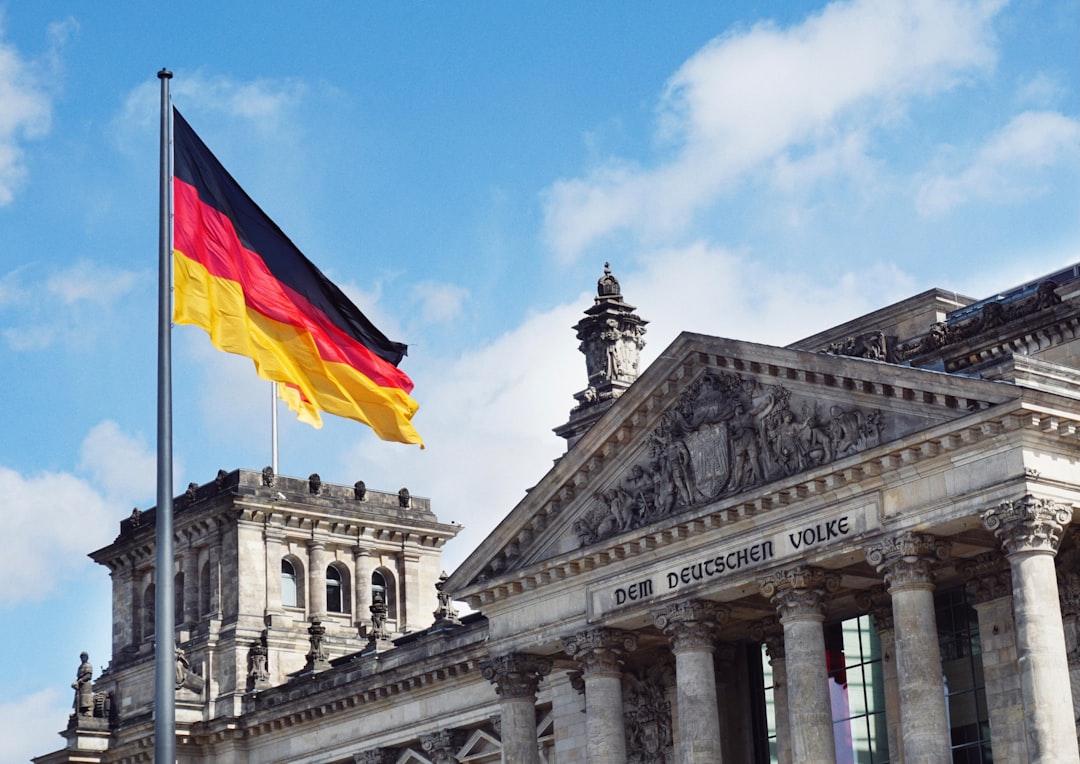
Germany’s business climate reading held firm but stagnant in January, suggesting the Eurozone’s largest economy is starting the year with limited momentum. As policy debates regarding global competitiveness intensify, the Ifo Business Climate Index remained unchanged at 87.6, reflecting a market defined by hesitation rather than immediate collapse.
Confidence vs. Reality: Analyzing the January Ifo Print
The stagnant reading in January highlights a growing divergence: firms appear more comfortable with current conditions than with the forward-looking outlook. This caution is largely driven by uncertainty surrounding trade policy and geopolitical shifts. In the currency markets, traders monitoring the EURUSD price live ticker noted that the data confirms a subdued growth narrative for the Euro area.
Stagnant confidence acts as a significant brake on private investment and hiring. Even if physical activity stabilizes, weak expectations can keep growth well below potential. For those tracking the EUR/USD price live, the lack of a positive catalyst from German industry suggests that the euro dollar live sentiment remains tethered to broader macro headwinds rather than domestic recovery.
Deep Dive: How to Read the Sentiment Indicator
It is essential to remember that sentiment can frequently diverge from behavior. Consumers and business managers can report high levels of pessimism while maintaining spending, provided that cashflow remains intact. However, the break usually occurs when employment expectations deteriorate. On the EUR USD chart live, we often see this reflected in increased volatility as participants weigh current stability against future risks.
Distribution also matters significantly in these reports. Weakness concentrated in lower-income brackets can have a larger macro impact than a dip in high-income sentiment due to the higher marginal propensity to consume. When analyzing the EUR USD live chart, keep a close watch on whether these sentiment shifts lead to a breakdown in key support levels.
Policy Transmission and Trade Mechanics
Trade shocks are inherently asymmetric; uncertainty tends to hurt investment quickly, while the benefits of new free trade agreements arrive slowly. This dynamic is currently visible as markets process the EUR to USD live rate amidst shifting global alliances. Surveys like the Ifo often move well before realized trade volumes, acting as a leading indicator for the EUR USD realtime price action.
For a broader perspective on how European sentiment compares to neighboring regions, you may find our analysis on Euro Area Consumer Confidence useful, as it highlights similar themes of stabilization within a subdued environment.
Market Implications and Scenario Mapping
From a tactical perspective, the EUR USD price is currently navigating a period where market pricing is mapped into the expected policy path of the ECB. If the EURUSD price live signals softer demand without re-igniting inflation, we may see a bear-flattening of the curve. Conversely, if clarity on fiscal execution emerges, expectations could stabilize and lift services demand into Q2.
Investors should cross-check these findings with upcoming manufacturing PMIs and industrial production data to see if the EUR USD price live establishes a new trend or stays within its current range. For those watching the British counterpart to the Euro, the recent BoE Strategy update provides a necessary comparison for cross-currency positioning.