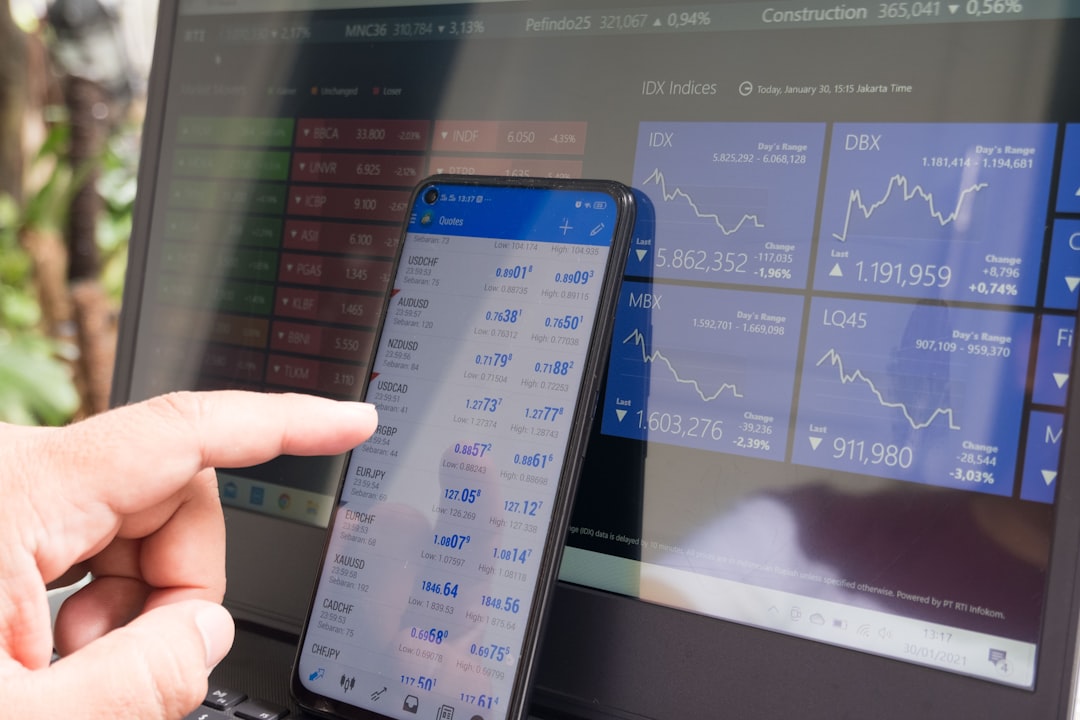
The Australian Dollar (AUD) to Swiss Franc (CHF) pair continues to offer opportunities within a defined range, driven by specific microstructure dynamics and macroeconomic crosscurrents. Traders are scrutinizing key levels and session flows to identify high-probability setups, mindful of underlying policy divergences and liquidity sequencing.
AUD/CHF Price Action and Key Levels
Currently, the AUD/CHF price live stands at 0.54650, reflecting a modest gain. The trading day has seen a high of 0.54750 (R1) and a low of 0.54310 (S1), with a midpoint balance at 0.54530. The decision band, crucial for tactical execution, lies between 0.54300 and 0.55000. Figure magnets at 0.54400, 0.54600, and 0.54800 are drawing attention, as the AUDCHF price live interacts closely with these psychological thresholds. Analysis of the AUD CHF chart live reveals that range behavior remains tradable, provided execution is anchored to defined invalidation points.
Microstructure and Session Chronology
The session's directional quality was primarily driven by the New York pre-open and the first cash-equity hour. This period often frames intraday conviction, especially when aligned with broader USD tone and interest rate movements. AUD CHF实时 data indicates that positioning remains reactive to macro sequence risk, requiring traders to stay agile. The Asia-to-Europe transition often prints false breaks, which tend to be reversed into the New York session, highlighting the importance of waiting for confirmation, particularly for the Australian Dollar to Swiss Franc live rate.
Trading Scenarios for AUD/CHF
Two primary setups dominate the AUD CHF live chart for active traders:
Setup A: Breakout Follow-Through
- **Trigger:** 15-minute acceptance at 0.54750 in the direction of the prevailing flow.
- **Entry Zone:** Between 0.54750 and 0.54830.
- **Stop Logic:** A structural close back through 0.54530 invalidates this setup.
- **Targets:** Initial target at 0.55000, with an extension to 0.55240 possible.
- **Horizon:** Intraday to 1 day.
Setup B: Mean-Reversion Fade
- **Trigger:** Clear rejection at either 0.54750 or 0.54310, particularly if accompanied by momentum divergence.
- **Entry Zone:** Scale in from the edge of the range back towards 0.54530.
- **Stop Logic:** Position outside 0.54930 (for a fade from the top) or 0.54130 (for a fade from the bottom).
- **Target:** Initial target at 0.54530, with partials considered ahead of the midpoint if follow-through is weak.
- **Horizon:** Intraday.
Probability Grid and Macro Drivers
The base case (56% probability) suggests a range-to-trend handover with a confirmation bias. Rotations around 0.54530 are expected, with boundaries tested until post-retest acceptance forms. Invalidation occurs with a sustained hold outside the 0.54300 / 0.55000 decision band. An extension case (23%) sees directional continuation if clean holds occur beyond triggers. For the AUD CHF price, acceptance beyond 0.54750 or below 0.54310 could lead to moves towards 0.55000 and potentially 0.55240. The reversal case (21%) involves a failed break and a fast return to balance, meaning a rejection outside the decision band followed by a loss of momentum will likely result in mean-reversion towards 0.54530, potentially overshooting to the opposite boundary.
Macro crosscurrents, such as the DXY strength, US front-end and 10-year yields, and commodity prices (WTI, Brent, Gold, Silver, Copper), continue to influence the broader risk sentiment. The upcoming FOMC communication window and follow-through in front-end yields versus the broad USD index are critical catalysts, directly impacting the AUDCHF realtime movements. Divergence in these factors usually reduces the durability of any trend. Furthermore, pair-specific policy spread cues for AUD and CHF, along with options expiry and figure-level strike congestion, can generate additional volatility.
Risk Management and Tactical Discipline
During data windows where spread conditions widen, it is crucial to reduce tactical frequency and prioritize cleaner confirmations. Liquidity sequencing is a significant variable, as Asia-to-Europe transitions can print false breaks. Traders of the AUD to CHF live rate should demand at least one retest hold before converting a tactical move into a directional expression. Cross-asset confirmation is vital to avoid false confidence; spot moves in the Australian Dollar to Swiss Franc are of higher quality when they coincide with consistent shifts in broad USD tone and rate expectations. If these channels disagree, conviction should remain tactical.
Positioning risk is asymmetric when narratives are one-sided. Heavily skewed market consensus can trigger outsized unwinds, often seen as sharp moves through figure magnets followed by rapid retracements in AUD CHF realtime. Strong risk discipline, including explicit invalidation and disciplined sizing, is the best defense. The carry signal for AUDCHF is only as durable as the follow-through in front-end pricing. When these yields stabilize in the same direction as spot, continuation probability improves. Conversely, if front-end moves fade, spot often reverts toward intraday balance, making level acceptance near 0.54530 more critical than the initial breakout print.
Relative-growth assumptions also play a role. If incoming data reinforces the same macro story as rate pricing, AUDCHF can trend beyond normal daily ranges. However, if data and pricing conflict, the pair usually reverts inside its prior structure. The current decision band from 0.54300 to 0.55000 acts as a practical filter for trend-versus-range execution. It's also important to monitor volatility regimes: calm conditions favor mean-reversion around figures, while expansion phases can lead to cleaner continuation entries from failed pullbacks. Monitoring range behavior around 0.54750 and 0.54310 helps distinguish normal market noise from structural repricing.
Policy transmission for AUDCHF price live remains nonlinear. Even a modest shift in rate expectations can trigger a larger spot adjustment when positioning is crowded near key figure levels. Desks should track whether the implied policy path and spot direction remain aligned after the initial impulse; divergence typically leads to faster mean-reversion. A robust directional view requires at least two aligned catalysts and sustained hold outside the intraday balance zone. Waiting for reaction quality at figure levels improves risk-adjusted entries, as spreads and liquidity can distort first prints. A stable hold above or below the decision band is usually more informative than raw momentum spikes.
Narrative persistence is the ultimate test. If flows continue to support the same macro interpretation into the next session, AUDCHF can build a cleaner trend channel. If the narrative weakens, range conditions reassert quickly, reinforcing the need for flexible short-term tactics, even when a macro bias appears clear. Given these dynamics, the AUD/CHF price live offers both challenges and opportunities for discerning traders.