
GBP/AUD: Retest Quality Crucial for Next Leg Movement
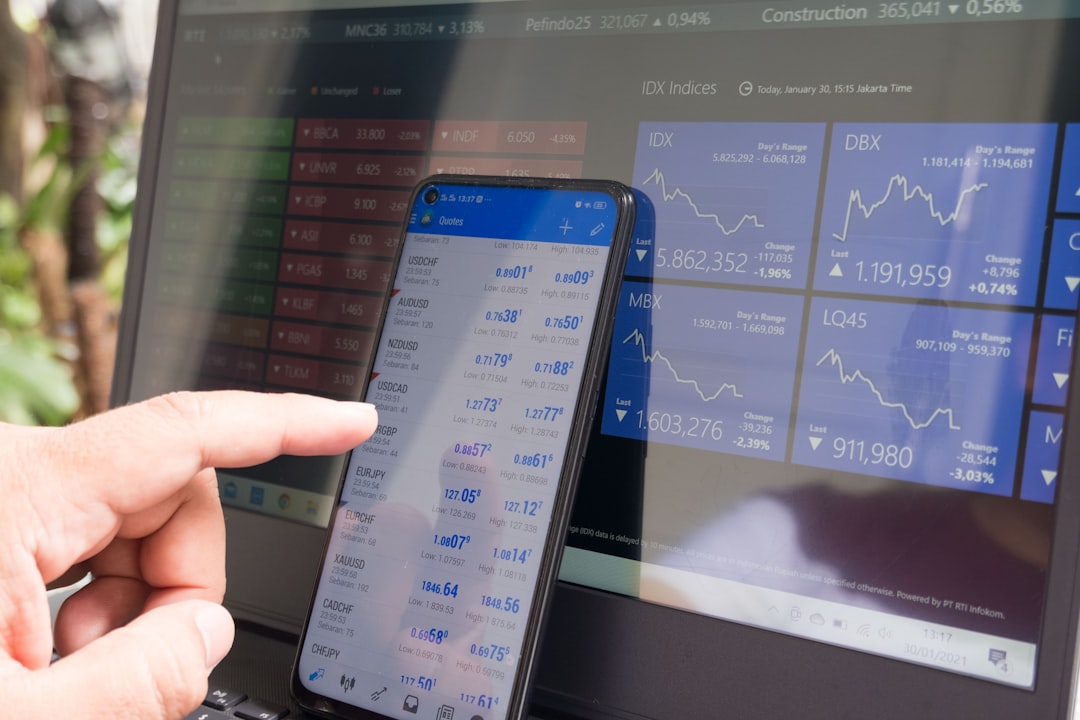
Today's GBP/AUD analysis centers on the 1.95000 pivot, emphasizing that retest quality will determine the pair's next directional move, whether it's trend or continued range-bound action.
The GBP/AUD currency pair hovers around a critical pivot point today, with traders keenly watching the quality of price retests to dictate the next market leg. At a reference mid-price of 1.95071 as of 09:00 UTC, the default bias remains rotation unless a clear boundary acceptance and protected retest confirms a directional shift.
GBP/AUD Session Outlook
For February 10, 2026, the GBP/AUD price live action is primarily defined by the 1.95000 pivot. This level acts as a critical regime line, where trade above suggests a buy-the-dip strategy and trade below implies selling rallies. The market is expected to remain in a rotational phase between 1.94500 and 1.95500 unless a decisive break and retest occurs.
Key Levels and Trade Ideas
Our GBP/AUD chart live reveals a clear ladder of resistance and support. Immediate resistance levels are identified at 1.95500, followed by 1.96000 and 1.96500. On the downside, critical support lies at 1.94500, then 1.94000 and 1.93500. Traders can monitor these levels closely for potential entry and exit points.
Two primary trade setup ideas are on watch:
- Break-and-retest: This involves waiting for clear acceptance beyond either 1.95500 (for upside) or 1.94500 (for downside), followed by a pullback that holds the broken level. Entry would be on the retest, with stops placed beyond the boundary and targets set at the next ladder rung.
- Failed-break fade: If an initial break beyond a boundary quickly repairs, traders may look to fade the move back towards the 1.95000 figure magnet, with invalidation placed just beyond the failed edge. This strategy leverages the tendency for price to revert to the mean when momentum wanes.
Execution Framework and Drivers
Effective execution in this environment demands discipline. Traders should identify the current market regime using the pivot, allow the market to test boundaries, and enter on the retest, not the initial breakout. Stops must be placed beyond structural levels and position sizing should be commensurate with risk. Taking partial profits at the first target is advised, with runners held only after further confirmation. The GBP AUD price live is highly sensitive to microstructure notes. When London sets the boundary, entry location anchors confirmation thresholds. Mean reversion improves signal quality when a break cannot hold the retest; fade failed breaks back to pivot. Furthermore, pullback compression sharpens trade expectancy after a large daily bar; upgrade only after a protected retest.
Underlying drivers include:
- Rates dynamics: Frontend rate movements tend to create cleaner trends in the USD complex, influencing cross-currency pairs like GBP/AUD. Backend-led movements can result in choppier, two-way markets.
- Risk Management: On a headline-driven tape, risk management supersedes narrative. Market levels and acceptance criteria should inform whether price action represents genuine information or mere noise.
- Carry vulnerability: Expanded volatility makes carry trades vulnerable, necessitating tighter risk budgets. Traders should avoid chasing yield in such conditions.
- Location Edge: The pair's edge lies in its location relative to figures and pivots, determining whether flows are trending or rotating. We provide the GBP AUD realtime data needed.
Scenario Analysis
Probabilistic scenarios for the GBP AUD price are as follows:
- Base Case (55%): Rotation remains confined within the 1.94500-1.95500 range. The optimal strategy is fading the edges back to 1.95000 with strict invalidation. This scenario is invalidated by acceptance beyond these boundaries coupled with a protected retest.
- Upside (15%): Price accepts above 1.95500 with compression on the retest. This could lead to an extension towards 1.96000 and potentially 1.96500. Invalidation occurs with a snap-back under 1.95000 post-retest.
- Downside (30%): Pivot failure leading to acceptance below 1.94500. This could trigger rotation towards 1.94000 and 1.93500 if the subsequent liquidity window confirms the move. Reclaiming and holding 1.95000 would invalidate this downside scenario.
Overall, treat 1.95000 as both the regime line and a figure magnet. Only upgrade to a trend bias after clear acceptance and a protected retest of a key boundary. If confirmation falters, consider fading back to the pivot and reducing exposure.
Related Reading
- GBP/AUD Technical Analysis: Navigating 1.95500 Pivot Regime
- AUD/NZD Analysis: Trading the 1.16000 Pivot Boundary
- AUD/CAD Technical Analysis: Navigating 0.95500 Pivot Regime
- AUD/CHF Analysis: Navigating the 0.54500 Pivot Regime
Frequently Asked Questions
Related Stories

EUR/JPY: Navigating 185.000 Pivot with Risk-Managed Tactics
This analysis provides a tactical trading map for EUR/JPY, focusing on defining invalidation levels and responding to market signals around the pivotal 185.000 mark. Learn to manage risk by...

USD/MXN: Tactical Trading Around 17.4000 Pivot
This analysis provides a tactical roadmap for USD/MXN traders, focusing on key levels, probability-weighted scenarios, and disciplined execution strategies around the pivotal 17.4000 level for...

USD/KRW: Navigating Volatility and Key Pivots on Feb 15, 2026
The USD/KRW pair is caught between pivotal levels of 1,460.00 and 1,480.00, demanding disciplined trading tactics focusing on retests and confirmation amidst a carry-selective environment.

USD/SGD Tactical Trading: Navigating 1.2700 Pivot Amid Volatility
This weekend, USD/SGD traders are closely watching the 1.2700 pivot point and the 1.2800 figure magnet to determine if the pair will trend or remain range-bound in thin liquidity.