
Burj Al Arab Drone Scare: Dubai's Confidence Premium Under Threat
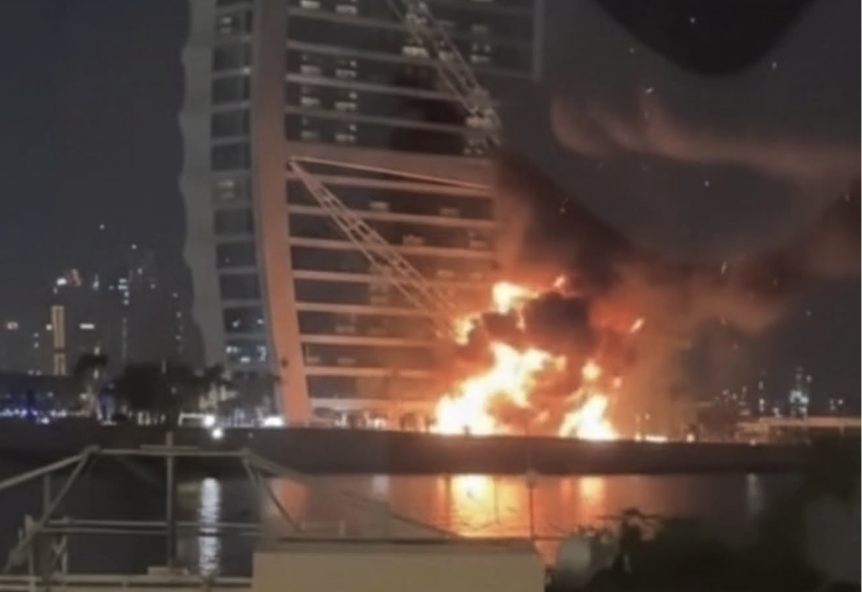
A reported drone incident near Dubai's iconic Burj Al Arab threatens to reprice the city's confidence premium, impacting tourism, real estate, airlines, and financial markets across the Gulf. This...
A recent incident involving an alleged drone near Dubai's iconic Burj Al Arab has sent ripples through global markets, signaling a potential repricing of the Gulf's 'confidence trade.' While the precise nature of the event – whether a direct strike or intercepted debris causing a fire – is debated, its symbolic impact on Dubai's image as a stable commercial hub is undeniable, potentially affecting tourism, airlines, insurance, real estate, banks, and commodity markets.
The Burj Al Arab Incident: A Market Reassessment
The image of flames near the Burj Al Arab, a global symbol of luxury and stability, immediately triggers market reassessment. Dubai has long sold itself on a 'confidence premium,' offering a secure environment for capital, tourism, global business, and logistics amid regional volatility. When its most recognizable landmarks enter the war-news cycle, even without extensive physical damage, the financial implications are significant. This event compels investors to question whether Dubai can maintain its ultra-stable perception relative to the wider Middle East, challenging the very foundation of its appeal.
The incident signals that geopolitical risks are no longer confined to military targets but are now brushing up against the civilian-commercial architecture of the Gulf's growth model. This shift drives an expansion of risk premium across various sectors. For instance, the Crude Oil Trading: Geopolitical Risk & Key Levels Ahead is one area closely watching such developments, as energy markets are highly sensitive to Middle East stability. Similarly, discussions around Sector Rotation: Quality Cyclicals Outperform Pure Duration Plays Amid Geopolitical Risks - FXPremiere highlight how investors adjust portfolios in response to escalating tensions.
Sector-Specific Impacts: From Tourism to Banking
The immediate market impact centers on confidence-sensitive equities and sectors. Airlines, hospitality, leisure, premium retail, developers, and banks with significant Dubai exposure become more vulnerable. These valuations can change without a worst-case military scenario; simply being associated with the conflict forces investors to recalibrate risk. Global travelers often perceive such incidents as 'danger reaching postcard Dubai,' rather than making technical distinctions about drone origins or damage. This can lead to hardened travel advisories, viral social media footage, and deferred business plans, impacting tourism well before official data is released.
Airlines, heavily reliant on route confidence and airspace reliability, face higher fuel costs, rerouting risks, and repricing of insurance. For a city built on movement, such interruptions are critical. The insurance market reacts fastest; if underwriters perceive civilian landmarks in Dubai as exposed, war-risk premiums for hospitality assets, beachfront property, aviation, and cargo movement will adjust, translating dramatic headlines into tangible economic variables. The Dubai real estate market, which has thrived on its 'safe regional haven' narrative, now sees this story tested, potentially leading to a repricing of what that safety premium is truly worth. High-end demand might be resilient, but foreign buyer sentiment and transactional momentum are highly susceptible to perception shifts.
Banks and financial services in Dubai, deeply integrated with trade, property, and tourism, will feel the effects through softened activity assumptions, wider risk spreads, and more cautious capital flows. A blow to confidence can lower bank stock multiples, even without immediate losses. On a broader scale, events like this contribute to a longer narrative about Geopolitical Grid Risk Reshapes Cross-Asset Correlations, influencing how various financial instruments react to regional tensions.
Commodities, Forex, and Crypto Responses
Oil is still central to the Gulf's market dynamics. Any signal that the region is becoming harder to insure or function stably will push crude prices higher through a geopolitical premium. Brent and WTI do not need a formal Strait of Hormuz closure for prices to react; merely the perception of expanding risk is enough. This same logic supports gold, which remains the clearest liquid hedge for war, uncertainty, and institutional stress. Active monitoring of the gold price live becomes critical during such periods, as investors flock to safe-haven assets.
Forex markets reflect this through classic risk-off moves: a stronger US dollar, firmer Swiss franc, and yen. However, given currency pegs in the Gulf, direct FX movements can be subtle. Instead, the stress manifests in sovereign spreads, credit default swaps (CDS), equity weakness, bank funding costs, and insurance pricing. Observing the EURJPY Price Live: Navigating Volatility and Policy Divergence Next Week underscores how policy shifts and geopolitical factors can drive currency dynamics. Similarly, those tracking the USDCAD Outlook: Navigating Volatility & Policy Divergence Next Week consider wider regional impacts.
Equities will likely see sharp dispersion, with energy and defense-linked exposures potentially outperforming, while airlines, travel, hospitality, real estate, and regional financials may lag. Credit markets will provide an essential indicator: if spreads remain calm, the market absorbs the incident; if they widen and persist, confidence has genuinely deteriorated. Crypto markets typically trade like other risk assets initially, with rising geopolitical stress leading to de-risking and a stronger dollar before narratives diverge. While the Bitcoin Price Live: Fortress at $60,000, Ceiling at $70,000 remains a key focus, broader market sentiment heavily influences its movements during global instability.
The Shifting Perception of Dubai's Stability
The most important takeaway is that markets care about thresholds, and a significant one appears to have been crossed. Dubai's premium landmarks are now sufficiently close to the conflict to appear in wartime footage and global news cycles, leading to widespread emergency response. This alone is a powerful signal. The market watchlist for the upcoming days will include sustained bids for oil and gold, fragile airline and tourism sentiment, elevated Gulf insurance risk, and confidence questions for Dubai-facing property and bank names. Regional equities are expected to trade with increased dispersion, and shipping and aviation risks will remain high. The commercial safe-haven story, pivotal to Dubai's rise, faces its sharpest test in years, forcing a recalibration of whether the Gulf’s most polished commercial hub will now trade at a wartime discount.
Related Reading
- Crude Oil Trading: Geopolitical Risk & Key Levels Ahead
- Sector Rotation: Quality Cyclicals Outperform Pure Duration Plays Amid Geopolitical Risks - FXPremiere
- Geopolitical Grid Risk Reshapes Cross-Asset Correlations
- EURJPY Price Live: Navigating Volatility and Policy Divergence Next Week
- USDCAD Outlook: Navigating Volatility & Policy Divergence Next Week
- Bitcoin Price Live: Fortress at $60,000, Ceiling at $70,000
Frequently Asked Questions
Related Stories
Bitcoin Price and Stocks Stabilize Amid Bond Market Signals
This morning's market brief highlights the delicate balance between sticky inflation in Europe, ongoing Treasury supply concerns, and the stabilizing but cautious tone in cryptocurrency markets,...

Reshoring & Stockpiling Reshape Cost Curves & Commodity Prices Live
Global supply chains are undergoing a fundamental shift due to reshoring and stockpiling policies, leading to increased unit costs and impacting manufacturing credit and commodity markets. This...
Sector Rotation: Quality Cyclicals Outperform Duration Amid Geopolitical & AI Shifts
Current market dynamics show a clear shift towards quality cyclicals over pure duration plays, driven by persistent geopolitical risks, the impact of AI funding costs, and sticky inflation pressures.
Bitcoin Volatility: Macro Liquidity, Policy, & Regulation
Bitcoin's price action remains deeply intertwined with macro liquidity and policy decisions, rather than pure hype. In the latest session, Bitcoin traded near $68,991, with Ether around $2,010,...