
Karachi Consulate Breach: Iran War Reprices Global Risk Assets
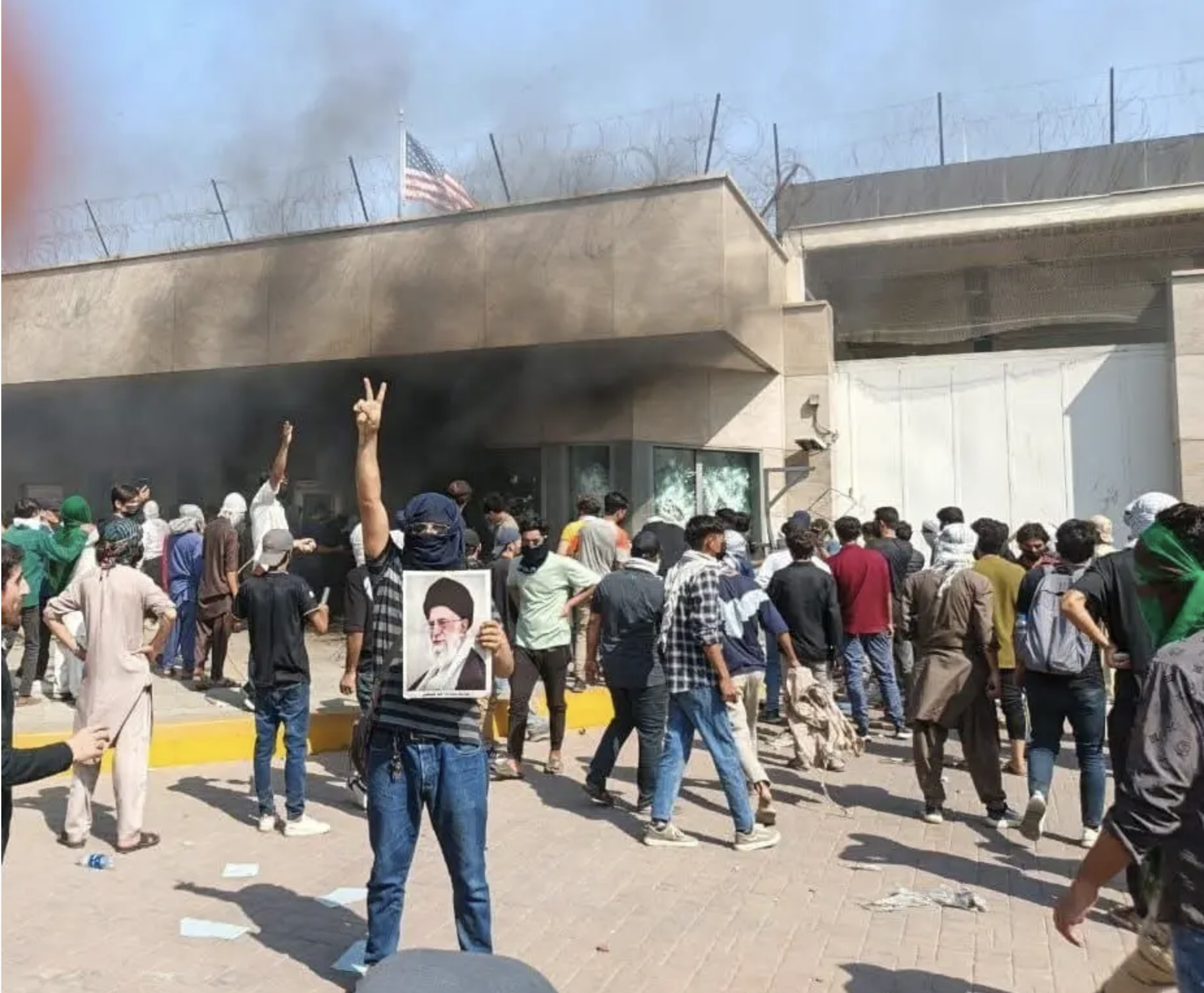
The breach of the U.S. Consulate in Karachi following the death of Ayatollah Ali Khamenei signals a dangerous new phase in the Iran war, expanding the conflict beyond military targets into...
The recent breach of the U.S. Consulate in Karachi marks a pivotal escalation in the ongoing Iran war, shifting market focus from conventional military engagements to the chaotic realm of urban unrest and diplomatic vulnerability. While the geographic source is unexpected, its implications are far-reaching, fundamentally altering how global risk assets are priced.
Karachi Incident : A New Front in Global Instability
News of Ayatollah Ali Khamenei's death triggered pro-Iran protests in Pakistan, culminating in the breach of the outer perimeter of the U.S. Consulate in Karachi. Though U.S. diplomats remained unharmed and the compound secured, the violent security response and the broader death toll across Pakistan underscore a significant change in the conflict's dynamics. This is not merely an isolated event; it represents the crisis moving beyond missiles and air bases into consular exposure, street violence, and state-control risk within a nuclear-armed South Asian country. This context matters intensely to the market, as previously the conflict was framed as a contained Middle East war. The Karachi incident shatters this perception, introducing the grim prospect of emotional contagion and anti-U.S. mobilization spreading through neighboring states, becoming a transmission mechanism for the conflict itself.
Market Impact: From Missile Risk to Street Risk
The market's reaction to street risk and consular risk differs significantly from its response to missile risk. Missile strikes can be modeled, and military infrastructure mapped; however, the unpredictable nature of diplomatic compounds under pressure, urban unrest, and widespread anti-U.S. demonstrations across multiple countries is far harder to quantify. This often results in a broader confidence discount that extends beyond the immediate battleground. Pakistan, a nuclear-armed state with economic fragility and strategic ties across Asia, presents a particularly complex scenario. When unrest linked to the Iran conflict reaches such a critical diplomatic perimeter, markets are compelled to consider whether the war is broadening geographically, politically, and socially, far beyond its initial scope.
Oil Markets: Pricing the Widening Ring of Instability
Oil remains the primary global indicator of regional instability. While Pakistan is not a major oil producer, the Karachi consulate breach adds another layer of disorder around the Gulf and the crucial Strait of Hormuz. Oil prices do not solely reflect disruptions to pipelines and tankers but also global confidence in regional political stability. The fact that the Crude Oil Price Jumps and Brent Crude Price Live remains elevated suggests markets are pricing in a widening ring of instability. This premium is less about immediate supply shocks and more about anticipating future disruptions as unrest spreads into states with military, diplomatic, and commercial relevance. Analysts will observe whether crude oil price live continues to reflect this broader risk.
Gold: The Ultimate Safe Haven Asset
Gold benefits most when confidence in global order erodes. A missile strike generates fear, but a breached consulate in a major city within a nuclear-armed state signifies a different level of institutional stress. It tells investors that the political ramifications of the war are escaping its original boundaries, pushing them toward clear, liquid hedges like gold rather than speculative cyclical bets. The gold price war scenario amplifies its traditional role as a safe-haven asset, reflecting a profound shift in risk perception.
Forex Market Dynamics and South Asia Risk
The secondary damage from such events becomes evident in the forex market. The initial response is a classic risk-off sentiment, leading to a stronger U.S. dollar, a firmer Swiss franc, and often a bid into the Japanese yen. However, Pakistan's specific market narrative is more nuanced. The Pakistani rupee outlook protests and associated sovereign risks face renewed stress as unrest intensifies and diplomatic sites become flashpoints. Beyond Pakistan, the broader forex market interprets this as a signal that the crisis is not neatly contained. This pressures higher-beta emerging-market currencies, particularly those vulnerable due to imported-energy exposure, current-account deficits, or political sensitivity to Middle East spillovers. Investors will be keenly watching the broader South Asia market risk indicators.
Bond Markets and Credit Spreads
Rates are impacted through the same uncomfortable macro mechanism seen across the entire conflict. Oil and freight stress fuel inflation expectations, while unrest and diminished confidence weigh on growth. This traps the global rates complex in a push-pull between safe-haven buying and inflation fear. For Pakistan, local yields and sovereign spreads become critical measures, as unrest can quickly translate into funding stress and fiscal anxiety. Credit markets, the ultimate truth detectors, will show if this is viewed as localized alarm or if credit spreads emerging markets begin to widen across South Asia and the Gulf, signaling deeper systemic concerns.
Equities and Supply Chain Vulnerabilities
Equity markets react in layers. Global energy and defense stocks may continue to outperform, while airline, travel, and transport-sensitive sectors remain vulnerable due to increased movement risk. South Asia-facing assets become more fragile. The Karachi story reinforces the market's growing understanding that this war can impact confidence across multiple geographies simultaneously. Shipping and logistics are also acutely affected. Karachi is a major commercial hub, and unrest there adds to a broader picture of ports, airports, roads, and urban infrastructure across the conflict zone being exposed to disruption. If the conflict spills into urban instability, supply chains face a third layer of friction beyond air and sea.
Crypto Market and Liquidity Shocks
The crypto market initially reacts to liquidity shocks before narratives. A consulate breach in Karachi might not immediately seem like a Bitcoin story, but the underlying mechanisms are similar: a stronger U.S. dollar, reduced leverage, heightened geopolitical uncertainty, and an ongoing debate about whether capital favors pure liquidity or decentralized optionality. In the short term, crypto assets behave like risk assets with additional volatility. However, some long-term traders might interpret this kind of consular disorder as indicative of broader global fragmentation.
Conclusion: A New Phase of Conflict
The fact that the U.S. Consulate remained secure and no diplomats were harmed mitigates the immediate worst-case scenario. However, the breach of the outer perimeter alone is sufficient to signal to investors that anti-U.S. anger linked to the Khamenei strike is now potent enough to stress diplomatic infrastructure in a significant neighboring state. This is a serious threshold, indicating that the next phase of the war may be defined not just by military campaigns but also by the eruption of public anger, the capacity of governments to contain it, and the ability of security services to prevent the conflict from becoming a broader anti-U.S. street crisis. Investors must consider whether Karachi was an isolated incident or the first indication that the war is entering a new, more chaotic phase where the anger lands next.
Frequently Asked Questions
Related Stories

Bitcoin Price and Stocks Stabilize Amid Bond Market Signals
This morning's market brief highlights the delicate balance between sticky inflation in Europe, ongoing Treasury supply concerns, and the stabilizing but cautious tone in cryptocurrency markets,...

Reshoring & Stockpiling Reshape Cost Curves & Commodity Prices Live
Global supply chains are undergoing a fundamental shift due to reshoring and stockpiling policies, leading to increased unit costs and impacting manufacturing credit and commodity markets. This...

Sector Rotation: Quality Cyclicals Outperform Duration Amid Geopolitical & AI Shifts
Current market dynamics show a clear shift towards quality cyclicals over pure duration plays, driven by persistent geopolitical risks, the impact of AI funding costs, and sticky inflation pressures.
Bitcoin Volatility: Macro Liquidity, Policy, & Regulation
Bitcoin's price action remains deeply intertwined with macro liquidity and policy decisions, rather than pure hype. In the latest session, Bitcoin traded near $68,991, with Ether around $2,010,...