
Position Sizing: The Key to Long-Term Trading Success
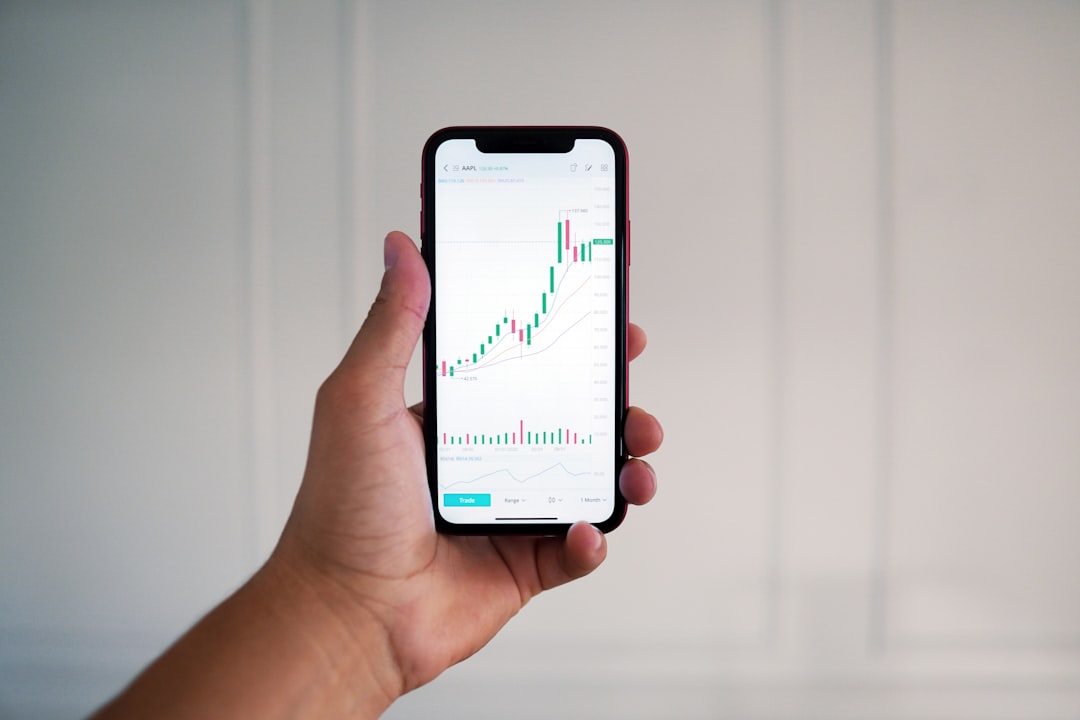
Learn proper position sizing techniques that protect your capital while maximizing returns.
Position Sizing: The Cornerstone of Long-Term Trading Success
In the dynamic and often volatile world of forex and financial markets, traders are constantly seeking an edge. While sophisticated strategies and technical analysis often grab the headlines, the true determinant of sustained profitability and capital preservation rarely does: proper position sizing. As global markets continue to navigate inflationary pressures, evolving monetary policies from central banks like the Federal Reserve, ECB, and BoE, and geopolitical uncertainties, managing risk effectively has become paramount. This article delves into why mastering position sizing is not just a strategic advantage but a fundamental necessity for any trader aiming for long-term survival and success.
Market Overview: Navigating Current Volatility
Recent market conditions underscore the critical role of robust risk management. Equity indices, such as the S&P 500, have experienced significant swings, with some sectors demonstrating increased volatility. Currency pairs like EUR/USD have seen considerable fluctuation, reacting to divergence in interest rate expectations and economic data releases. Oil prices (WTI, Brent) remain sensitive to supply chain disruptions and geopolitical events, while gold (XAU/USD) often serves as a safe-haven asset amidst uncertainties. In such an environment, where market sentiment can shift rapidly based on a single data point or geopolitical headline, blindly entering trades without a calculated risk-reward framework is a recipe for disaster. Professional traders understand that market predictability is limited, but controlling exposure is entirely within their grasp.
Key Analysis: The Science Behind Position Sizing
Position sizing is the process of determining the appropriate number of units (lots, shares, contracts) to trade in a financial instrument. It's not about how confident you are in a trade, but about how much you are willing to risk on that particular trade relative to your total capital.
Defining Your Risk Tolerance
The first step in effective position sizing is to clearly define your maximum acceptable risk per trade. For most professional traders, this is typically a small percentage of their total trading capital, commonly ranging from 1% to 2%. For instance, if you have a $10,000 trading account and define your risk per trade as 1%, you are willing to lose a maximum of $100 on any single trade.
Calculating Stop-Loss Distance
Once your risk per trade is established, the next crucial step is determining your stop-loss level. This is the price point at which you will close your trade to limit potential losses. The distance between your entry price and your stop-loss price (measured in pips for forex, or points for futures/stocks) is critical. For example, if you enter EUR/USD at 1.0850 and set your stop-loss at 1.0820, your stop-loss distance is 30 pips.
The Position Sizing Formula
With your risk per trade and stop-loss distance, you can calculate your position size using this formula:
Position Size (in units) = (Account Risk % * Account Balance) / (Stop Loss in Pips * Pip Value per Lot/Unit)
For forex, if 1 standard lot of EUR/USD has a pip value of $10, and your calculated risk is $100 with a 30-pip stop-loss:
Position Size = ($100) / (30 pips * $10/pip) = $100 / $300 = 0.33 standard lots
This means you would trade approximately 0.33 standard lots to risk no more than $100 on that specific trade.
Trading Implications & Strategy
Implementing proper position sizing transforms trading from a speculative gamble into a calculated business venture. It ensures that no single loss, even a string of consecutive losses, can significantly impair your trading capital. This psychological buffer is invaluable, allowing traders to execute their strategies objectively without the paralyzing fear of ruin.
- Preservation of Capital: Limiting risk per trade prevents devastating drawdowns, keeping you in the game longer. A 50% drawdown requires a 100% gain just to break even, highlighting the importance of preventing deep losses.
- Compounding Returns: By systematically risking a small percentage, you allow your account to grow exponentially through compounding, assuming a positive edge.
- Emotional Control: Knowing your maximum loss per trade is defined reduces stress and emotional trading, which are often the undoing of many traders.
- Adaptability: Position sizing allows you to adapt to varying market conditions. In high-volatility environments, your stop-loss distance might increase, automatically leading to a smaller position size to maintain the same monetary risk.
Risk Considerations
- Over-Leveraging: The primary danger is using too much leverage and sizing positions too large relative to account capital, leading to rapid margin calls or account depletion.
- Inconsistent Risk %: Deviating from a defined risk percentage per trade introduces inconsistency and negates the benefits of disciplined sizing.
- Ignoring Market Volatility: Failing to adjust stop-loss distances for changing market volatility can lead to either excessively tight stops (getting stopped out prematurely) or excessively wide stops (risking more than intended).
- Psychological Biases: Overconfidence after a winning streak or desperation after losses can lead to abandoning position sizing rules.
Conclusion and Outlook
Position sizing is not merely a mathematical exercise; it is a fundamental pillar of trading psychology and capital management. In an era where technological advancements provide an abundance of market data and trading tools, the human element of discipline and risk control remains paramount. As global central banks continue their battle against inflation – with potential interest rate hikes from the Fed and ECB still on the table for some time – and geopolitical tensions persist, market volatility is likely to remain elevated. This environment makes disciplined position sizing more crucial than ever. By consistently applying sound position sizing principles, traders at FXPremiere Markets can fortify their trading accounts against inevitable drawdowns, enhance their chances of long-term profitability, and navigate the complex financial landscape with greater confidence and control. Remember, the goal is not to avoid losses, but to manage them effectively so that your winners can outweigh them over time.
Frequently Asked Questions
Related Stories

Risk-Reward Ratio: Calculating Trading Edge
Understanding risk-reward ratios is crucial for profitable trading. Learn how to calculate and apply them.