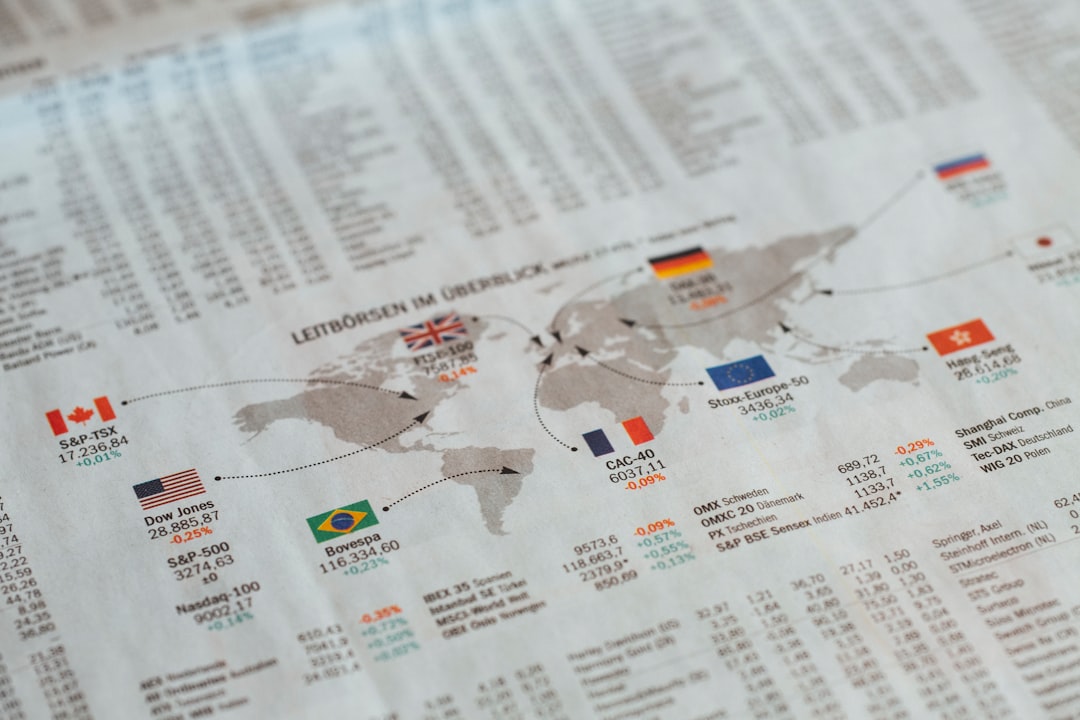
The era of globalization optimized solely for efficiency has reached its conclusion. In its place, a new regime defined by resilience and geopolitical alignment has emerged, fundamentally altering the default assumptions that have underpinned global portfolios for decades.
From Efficiency to Resilience: The Structural Pricing Shift
For over thirty years, investors could rely on stable supply chains, predictable trade agreements, and low-friction capital flows. Today, those certainties have vanished. As the world moves toward a bipolar or fragmented trade architecture, we are seeing a higher baseline risk premium applied to almost every asset class. This transition is not merely a temporary spike in volatility but a fundamental repricing of how capital moves across borders.
Market participants must now account for a more significant dispersion between sector and regional winners. While the old model favored high-growth tech and low-cost manufacturing, the current environment prioritizes strategic assets. We are observing that energy, defense, shipping, critical minerals, and power infrastructure have become the new defensive core of modern portfolios. These sectors are no longer cyclical plays; they are the bedrock of the 2026 economic reality.
Navigating Macro Constraints and Infrastructure Risks
In this new landscape, infrastructure constraints have evolved into primary macro variables. Looking at the broader financial context, such as the Fed credibility and EU-India trade deal impact, it is clear that political alignment is now a prerequisite for economic stability. Investors should focus on the DXY realtime data and DXY price live to understand how the US Dollar is reacting to these shifting alliances.
Beyond the currency markets, the physical world is reasserting itself. Capacity at ports, the reliability of power grids, and the security of shipping lanes are now as critical as interest rate projections. When monitoring the DXY chart live, one must consider that the USD realtime value is increasingly sensitive to capital flow directions that act as a "stability vote" for national industrial policies. Viewing the DXY live chart alongside commodity prices reveals a growing DXY live rate sensitivity to supply-side shocks.
Execution and Strategic Defaults
The US Dollar price is being influenced by what we call "regime friction." Portfolios designed for the "fantasies" of 2010—where borders were invisible and supply was infinite—are now underperforming. Current US Dollar chart live patterns suggest that liquidity is concentrating in markets that can guarantee energy and food security. Analysts monitoring the US Dollar live chart should keep a close eye on the implementation of sanctions and industrial policies rather than just high-level political announcements.
The bottom line is that the new globalization rewards resilience. Whether you are tracking the US Dollar realtime or looking for value in emerging markets, the focus remains on where the physical infrastructure is robust enough to withstand correlation spikes during times of stress.