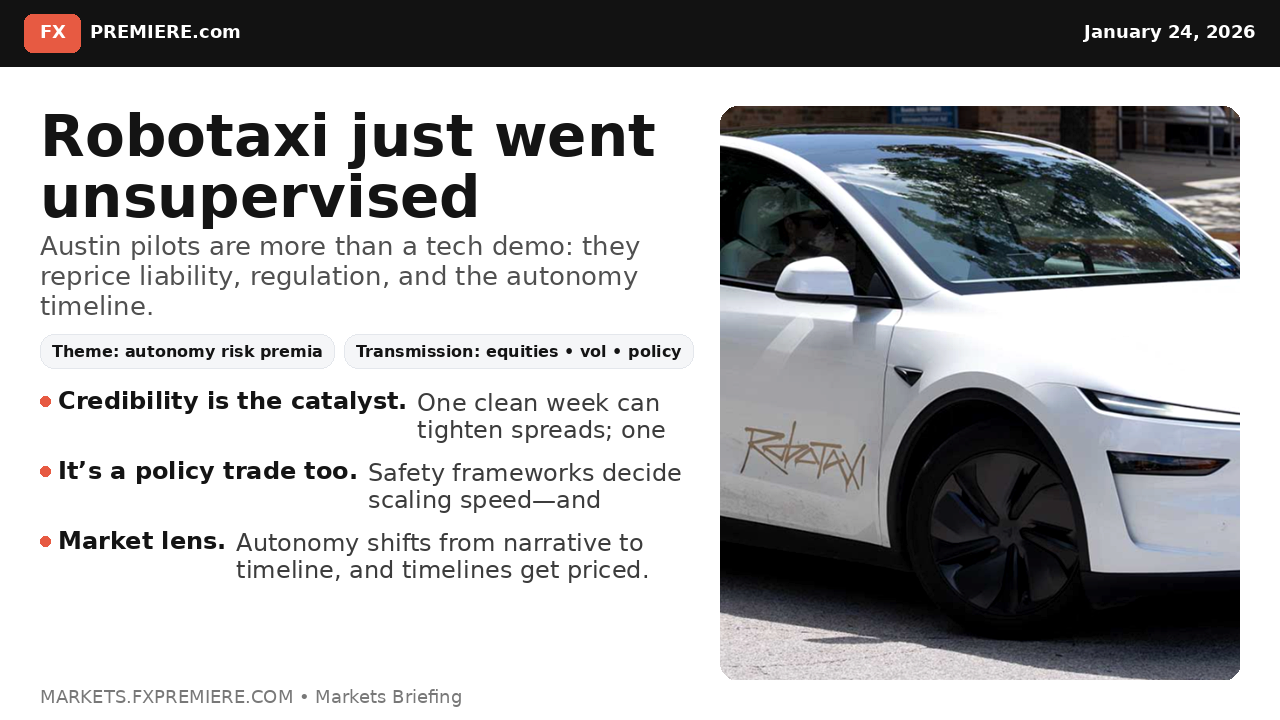
The integration of the robot economy into global markets is no longer a distant forecast; it is actively leaking into the tape, signaling a profound shift in the macro regime. While many market participants view recent tech headlines as isolated corporate events, the underlying reality points toward a structural transformation driven by AI capex, labor substitution, and hardening data borders.
The New Blueprint for Data Sovereignty
The recent structural shift in platforms like TikTok serves as a critical template for the future of data borders. By moving toward localized infrastructure and American-majority governance, the industry is signaling that the next phase of globalization will be defined by licensed access within domestic silos rather than free-flowing global platforms. This strategic de-risking means capital and data will increasingly follow policy lines, providing a structural tailwind for cloud infrastructure and compliance tooling.
Market Implications for FX and Volatility
For forex traders, this reinforces the theme of "geopolitical fragmentation." Currencies may become more sensitive to data-policy alignment than traditional economic indicators. Consequently, platform-sensitive equities will likely see headline risk return as a permanent feature, keeping implied volatility elevated.
AI as an Organizational Redesign Tool
Major corporate downsizings, such as Amazon's move to cut approximately 14,000 corporate roles, should not be mistaken for cyclical cost-cutting in a weak economy. Instead, this represents a fundamental organizational redesign. White-collar roles are being substituted for AI development and infrastructure spending.
As explored in our analysis of The 2026 Macro Regime Shift, this creates a world where growth remains resilient while labor market narratives become fragmented. For the Federal Reserve and other central banks, this means the labor market may lose its reliability as an inflation signal, making monetary policy significantly harder to navigate.
The Autonomy Timeline and Commodity Intensity
The acceleration of "unsupervised" autonomy and the looming rollout of humanoid robots represent a massive macro variable that markets have yet to price fully. This transformation is not merely a "product launch"—it is a shift in industrial metal intensity.
- Copper and Silver: The buildout of robots and AI-driven grids is structurally bullish for industrial metals. You can read more on this in our Gold and Real Yield Analysis and our Silver 2026 Industrial Demand report.
- Equity Volatility: Companies at the forefront of this shift, like Tesla, become "story + vol" instruments rather than clean beta trades.
- Energy Markets: Robotics and AI scale the demand case for electricity and grid stability, supporting power-related commodities.
Conclusion: A Capex and Control Regime
The unifying trade of 2026 is defined by three pillars: Capex as the new competitive moat, re-regulated data control, and the structural re-pricing of labor. This environment favors hard assets and productivity-linked equities while leaving interest rates unstable as policy maps fail to account for rapid automation.