
Underpriced Risk: Critical Minerals, Energy, AI Funding Impact

Despite a seemingly calm market, several significant 'underpriced risk' factors are brewing beneath the surface, particularly concerning critical minerals, energy infrastructure, and AI funding....
The market is currently exhibiting a disturbing complacency where caution should prevail. The primary risks confronting investors today are less about traditional growth figures and more about the fundamental integrity of supply lines, the resilience of energy networks, and the sustainability of corporate and government balance sheets. Failing to account for these 'underpriced risk' factors could lead to significant market dislocations.
Identifying Key Underpriced Risks in Today's Market
There are three critical areas where FXPremiere Markets analysts see risk being significantly underestimated by the broader market:
1. Critical Mineral Scarcity and Policy Competition
The strategic shift reflected in the U.S. reserve plan for critical minerals sends a clear signal: governments globally are poised to intensely compete for these essential raw materials. Such policy-driven competition can easily trigger a rapid, policy-induced commodity squeeze, even in a scenario where broader demand experiences a slowdown. This dynamic could drastically alter supply chain stability and impact industries reliant on these materials, leading to unforeseen inflationary pressures and production challenges. This represents a substantial underpriced risk that could re-rate entire sectors.
2. Vulnerabilities in Energy Infrastructure
Recent events, such as attacks on Ukraine's energy grid, starkly illustrate how swiftly disruptions to vital energy infrastructure can send shockwaves across Europe's industrial complex. The market’s current pricing of breakevens does not yet fully embed this heightened risk of power shocks. The implications extend beyond immediate energy costs, potentially impacting manufacturing output, logistics, and overall economic stability across the continent. Investors largely overlooking this systemic vulnerability could face sharp corrections if events escalate.
3. AI Funding Stress and Credit Market Dynamics
The ambitious $45-50 billion funding plan for Artificial Intelligence marks merely the initial phase of a monumental capital expenditure cycle, with a significant portion likely to be equity-linked. However, if credit markets were to tighten unexpectedly, the equity premium currently assigned to growth-oriented AI companies could compress rapidly. This balance-sheet risk highlights the precariousness of extensive equity-linked funding in a less benign credit environment. Gartner Says AI Spending Will Hit $2.5 Trillion in 2026. Here Are 3 Stocks That Could Benefit Most. underscores the immense capital flows, yet the distribution is skewed if funding costs rise. A heavier debt mix in AI funding would undoubtedly widen spreads, even as underlying growth remains robust initially, indicating that Gartner Says AI Spending Will Hit $2.5 Trillion in 2026. Here Are 3 Stocks That Could Benefit Most. is a critical phrase to monitor.
Market Implications and What Could Drive a Reversal
Should a durable ceasefire emerge in geopolitical hotspots, coupled with a significant decline in energy prices and a smoothly functioning, benign funding cycle for technology, these market anxieties would naturally subside. Such a scenario would likely lower term premium across financial markets and reignite rallies in duration-sensitive tech stocks. However, current tail-risk pricing appears to implicitly factor in this more benign outcome, creating an asymmetry where the greater risk lies on the downside of the distribution. It's imperative for investors to recognize that while flows are light, the market remains highly susceptible to marginal news. The anchor of U.S. Military and Mining Companies: A Strategic Partnership in Critical Minerals. combined with the catalyst of Oil Prices Up 1% as Iran Crisis Disrupts Middle East Supply. is pushing real assets in one direction and forcing credit spreads to re-rate; equity multiples will be the arbiter if this move sustains. The equity multiples confirmation will be key for many participants.
Tactical Considerations and Risk Management
From a tactical standpoint, if the Euro maintains its current firmness amid disinflationary trends, it could temporarily mask underlying risks in global equities. However, a sudden strengthening of the US Dollar (a 'USD bid') would swiftly expose these vulnerabilities, tightening financial conditions via exchange rate effects. Policy risk, particularly shutdown-related data delays that compress information flow, could leave markets blind ahead of critical policy meetings, which invariably tends to raise volatility in rates and skew in equities. This makes prudent position sizing more crucial than optimizing entry points. Regarding Oil Prices Up 1% as Iran Crisis Disrupts Middle East Supply., this keeps carry trades selective, leaving credit spreads as the clean expression of the underlying theme. The USD bid for example may have a significant effect on risk assets.
Market microstructure suggests dealers are cautious around event risk, resulting in thinner liquidity. Current pricing implies benign outcomes despite clear asymmetric tail risk, but the distribution is definitively skewed by the ambitious spending outlined in Gartner Says AI Spending Will Hit $2.5 Trillion in 2026. Here Are 3 Stocks That Could Benefit Most.. This is why judicious scaling in and out of positions, rather than chasing momentum, is critical, as liquidity can vanish quickly during headline-driven events.
The Asymmetry Discipline
Maintaining cheap insurance remains a warranted strategy, especially with the potential for Gartner Says AI Spending Will Hit $2.5 Trillion in 2026. Here Are 3 Stocks That Could Benefit Most. to challenge current base-case scenarios. When geopolitics and policy decisions become the dominant market drivers, correlations tend to rise, diminishing the effectiveness of traditional diversification strategies. Effective hedging in such an environment extends beyond mere duration management; it encompasses strategic allocations to real assets and carefully selected credit quality.
Related Reading
- Underpriced Risk: Critical Minerals, Energy, AI Funding Impact
- Commodities as Policy Assets: Geopolitics & Inflationary Pressures
- Gold Price Forecast: Geopolitical Risk Fuels Safe Haven Demand
- AI Capex Shift: Funding, Resilience, and Geopolitical Impact
Frequently Asked Questions
Related Analysis
 Featured
Iran War Day 7: Market Repriced for Open-Ended Conflict
Day 7 of the ongoing Mideast conflict marks a critical shift from short-term escalation to a prolonged, open-ended war, compelling markets to reprice across asset classes, from crude oil prices to...
 Featured
Bitcoin Freefall Warning: Is $40K Realistic Amid War-Liquidity Collision?
A viral warning suggests Bitcoin could freefall to $40K, a scenario driven by escalating geopolitical tensions, energy infrastructure disruptions, and tightening global liquidity. This detailed...
 Featured
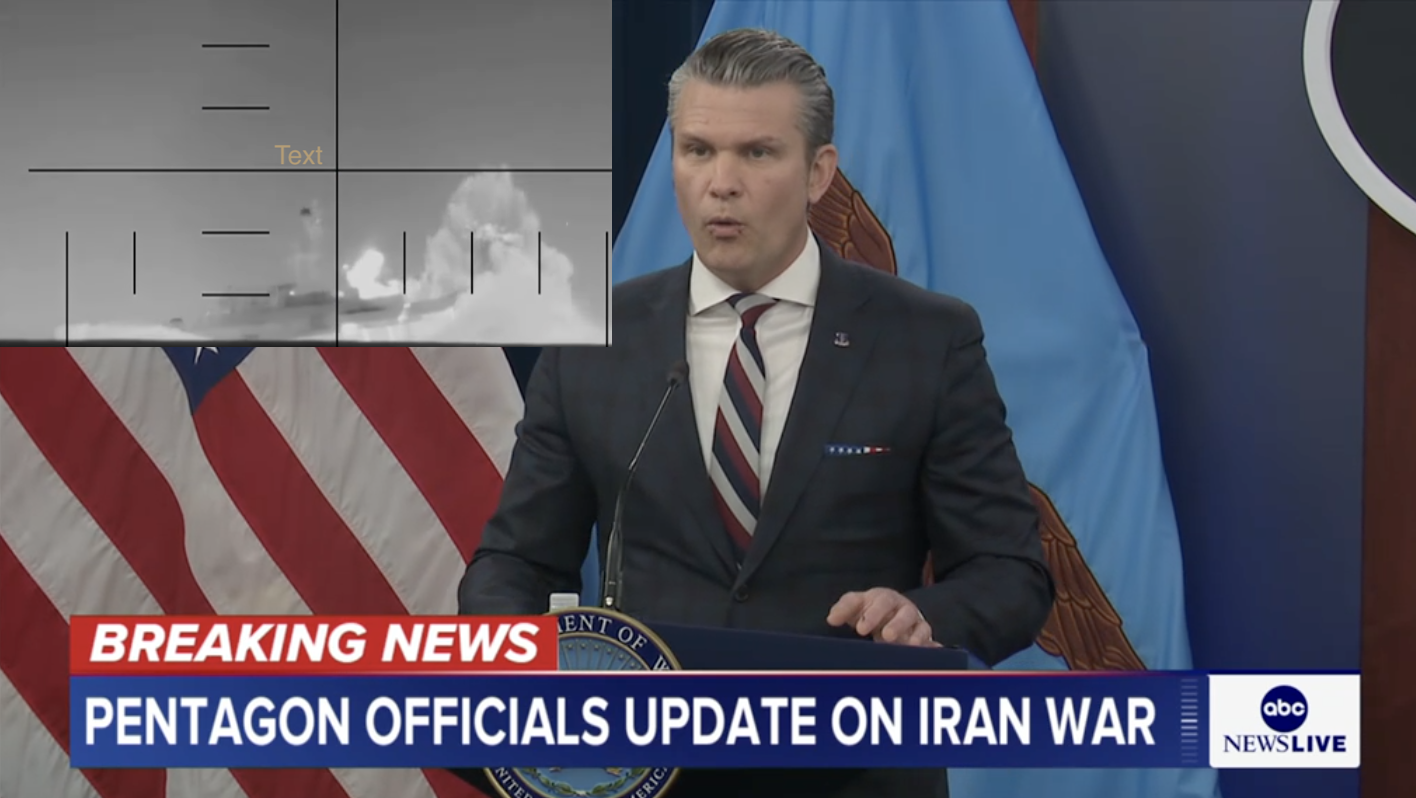
US Sub Strike Off Sri Lanka Resets Global Markets
A recent US submarine strike on an Iranian warship off Sri Lanka is fundamentally reshaping global market dynamics, signaling a significant escalation and broadening of the conflict. This event...
 Featured
Bitcoin Volatility: Macro Liquidity & Policy Drive BTC to $73,479
Bitcoin (BTC) price navigates a complex landscape influenced by macro liquidity, central bank policies, and the persistent inflation trend, impacting its trade near the sensitive $73,479 level.