
Bitcoin Volatility: Macro Liquidity, Policy, & Regulation Driving BTC

Bitcoin (BTC) and Ether (ETH) prices continue to be highly sensitive to macro liquidity conditions, with policy decisions and regulatory shifts playing a critical role in driving current...
In a global market grappling with persistent inflation, shifting monetary policy, and geopolitical tensions, the cryptocurrency market, particularly Bitcoin and Ether, remains highly sensitive to macro liquidity and regulatory developments. Current pricing indicates a steady policy path with sector dispersion, yet underlying risks, highlighted by potential shifts in central bank leadership, could introduce significant volatility.
Macroeconomic Headwinds and Their Impact
The macroeconomic landscape continues to be shaped by two primary forces: the inflation trend still driving Europe rates and the significant Treasury supply in focus in the US. These factors directly influence global liquidity, dictating the appetite for risk assets, including cryptocurrencies. While Eurozone core inflation remains sticky and services inflation elevated, the European Central Bank (ECB) faces a delicate balancing act to maintain stability without rapid easing. Meanwhile, US Treasury supply keeps duration in focus, impacting broader market rates and potentially the cost of capital across financial sectors.
FX and Commodity Dynamics
Foreign exchange markets are adjusting to these macroeconomic shifts. The EUR has remained steady amidst the inflation mix, while the AUD saw an outperformance following the RBA's rate hike, underpinned by warnings that inflation remains above target. On the commodity front, OPEC+'s decision to pause March output increases and maintain voluntary cuts, coupled with supply disruptions from the ongoing US-Israel-Iran conflict, has significantly widened the impact on energy prices. Oil and gas production shutdowns in critical regions are fueling volatility, making commodities a crucial swing factor for overall market risk appetite. Moreover, critical-mineral Action Plans and price-floor discussions are providing a policy-backed bid for strategic metals.
Equity Market Sector Rotation
The equity market is undergoing a notable sector rotation. Oracle's substantial financing plan for 2026 highlights that AI capital expenditure is now deeply intertwined with funding strategies. This reprices tech companies based on their cost of capital rather than solely on growth prospects. This shift favors sectors like energy, industrials, and quality defensives, as investors seek stability amidst rising volatility. The observed breadth holding up better than headline indices suggests a healthy rotation rather than an outright market capitulation.
Cryptocurrency Market Drivers and Volatility
The cryptocurrency market continues its dance with macro liquidity and regulatory signals. As of the latest session, Bitcoin traded near $67,832, reflecting its sensitivity to global liquidity conditions. Similarly, Ether traded near $1,978, mirroring Bitcoin's price action. The crucial phrase, BTCUSD price live, captures the immediate market interest in Bitcoin's valuation. Market participants are closely monitoring the BTC/USD price live feed, trying to discern future trends. Discussions around market structure for stablecoin rewards have stalled, keeping regulatory uncertainty as significant a driver as liquidity itself. The Bitcoin Volatility: Macro Liquidity, Policy, & Regulation theme remains central to understanding price movements. Analysts frequently refer to the BTC USD chart live for real-time insights, while others observe the BTC USD live chart to identify emerging patterns. A quick check on the BTC USD realtime data reveals current market sentiment. The Bitcoin to USD live rate is a key metric for traders executing trades. The constant flux makes for an exciting, albeit challenging, trading environment for the bitcoin dollar live market. The overall sentiment is that a Bitcoin Volatility: Macro Liquidity & Policy Drive BTC to $71,007 scenario is easily within reach given varying market factors.
Risk Factors and Implementation Strategies
A key risk factor on the horizon is President Donald Trump's nomination of Kevin Warsh to become Fed chair, which could bring unintended consequences for financial markets. If this risk materializes, correlations across asset classes could tighten, with rates potentially outperforming FX on a risk-adjusted basis. Traders should keep exposure balanced and consider hedges that benefit if commodities advance faster than spot markets. With flows remaining light, the market is highly sensitive to marginal news, making caution paramount. Dealer desks are also exercising caution around event risk, leading to thinner market depth. This often makes commodities a better hedge than pure duration. Execution should prioritize scaling in and out rather than chasing momentum, given that liquidity can gap rapidly on headline news. Risk management involves navigating the trade-off between carry and convexity, with optionality in the hedge book to absorb policy surprises effectively. The junction of inflation trend still driving Europe rates and Treasury supply in focus strengthens the link between policy and real assets. In this macro framework, rates and FX react first, with commodities later confirming the broader market movement.
Related Reading
- /en/news/market-commentary/bitcoin-volatility-macro-liquidity-policy-regulation-mar-06-2026
- /en/news/market-commentary/bitcoin-volatility-macro-liquidity-71007-mar-05-2026
- /en/news/market-commentary/rates-radar-term-premium-awakens-geopolitics-data-delays-mar-06-2026
- /en/news/market-commentary/us-policy-fed-succession-tbyields-funding-mar-06-2026
Frequently Asked Questions
Related Stories
 Featured
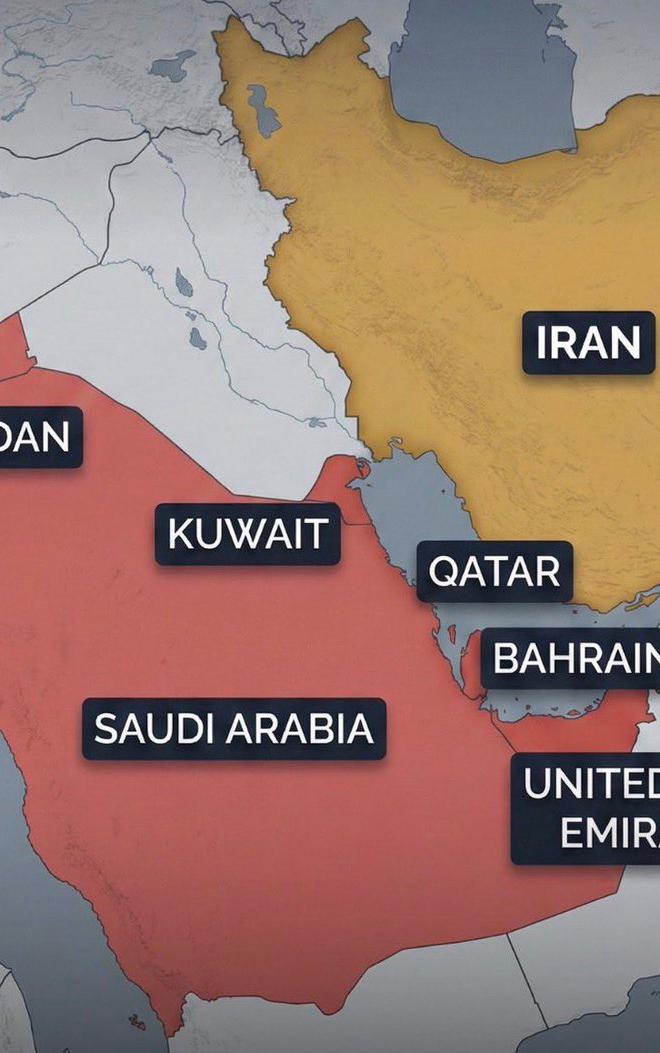
Iran's Gulf 'Hostage Strategy': Oil, Gold, & Forex Implication
Iran's recent statement, seemingly a de-escalation, is revealed as a strategic maneuver to pressure Gulf states hosting US military operations, creating profound implications for global oil, gold,...

Reshoring & Stockpiling Reshape Cost Curves & Commodity Prices Live
Global supply chains are undergoing a significant transformation due to increasing reshoring and stockpiling initiatives, fundamentally altering cost curves across industries and impacting...

Sector Rotation: Quality Cyclicals Over Pure Duration Plays
Amid sticky rates and geopolitical noise, the market is favoring quality cyclicals over pure duration plays, driven by balance-sheet strength and policy visibility. This shift emphasizes sector...

Bitcoin Volatility: Macro Liquidity & Policy Drive BTC to $67,832
Bitcoin's price movements are increasingly dictated by macro liquidity and policy decisions, not just crypto-specific hype. With BTC trading near $67,832, understanding the interplay between...