
Iran's Gulf 'Hostage Strategy': Oil, Gold, & Forex Implication
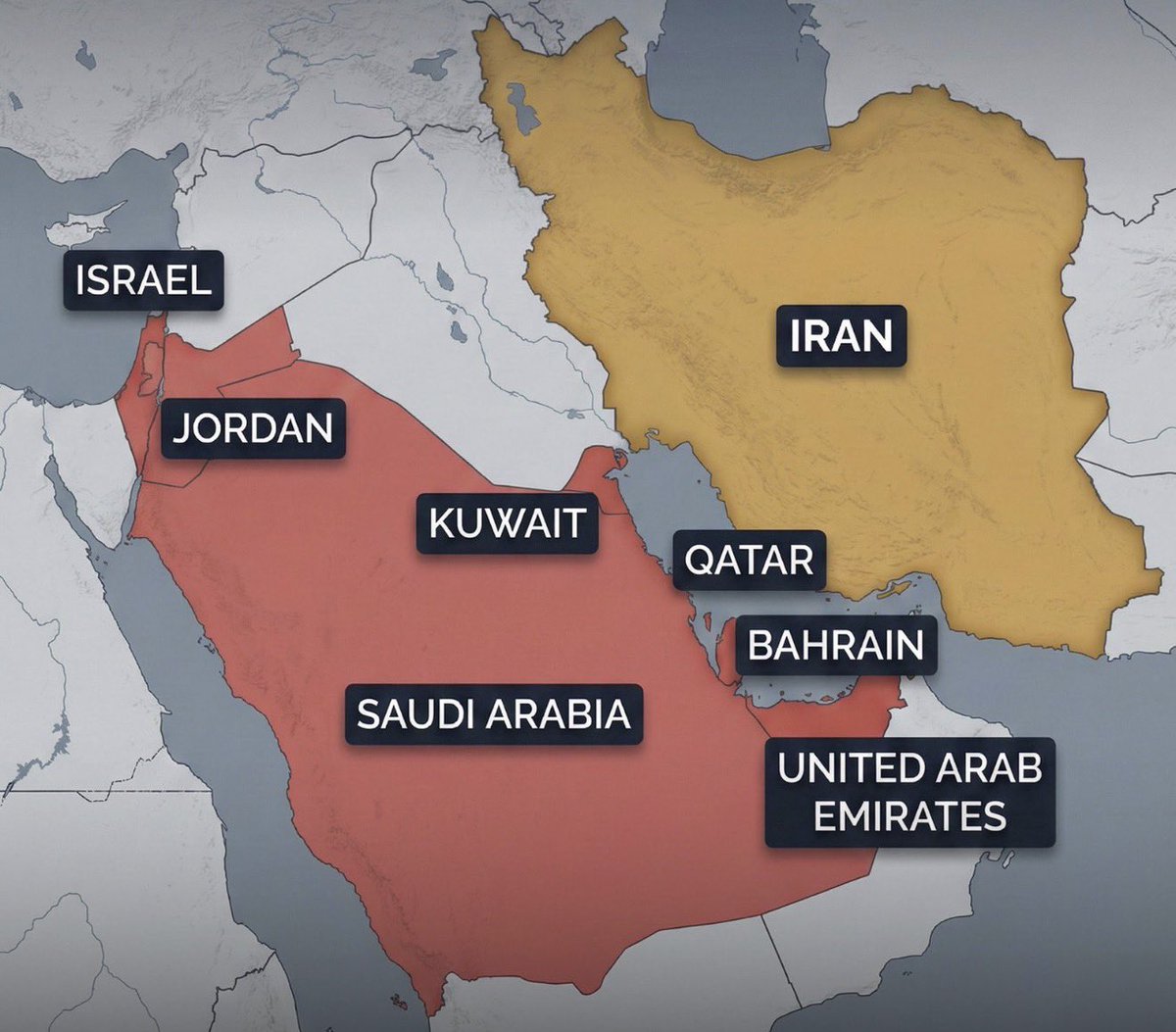
Iran's recent statement, seemingly a de-escalation, is revealed as a strategic maneuver to pressure Gulf states hosting US military operations, creating profound implications for global oil, gold,...
A recent statement from Iran's president, suggesting neighboring countries will no longer be attacked unless their territory is used to launch an attack on Iran, sounds like a step towards de-escalation. However, a deeper analysis reveals a calculated 'hostage strategy' designed to pressure Gulf nations hosting US military assets, signaling significant market implications for oil, gold, and forex.
Iran's Strategic Gambit: More Pressure Than Peace
The initial interpretation of Iran's message – that neighboring countries are safe unless they become launchpads against Iran – might appear reassuring. Yet, this condition fundamentally shifts the narrative. It’s not a retreat from conflict but an attempt by Tehran to redefine the operating environment and apply strategic pressure where the US-led coalition exhibits political vulnerability.
This is a direct message to key Gulf states like Qatar, UAE, Kuwait, Bahrain, Saudi Arabia, and Oman, which host critical American military infrastructure, including aircraft, drones, logistics, missile defense, and command centers. Iran is effectively communicating: if your territory is used for operations against us, it remains a legitimate target. This isn't de-escalation; it's a recalibration of threats, making it a critical market, energy, sovereign risk, shipping, and dollar liquidity event.
Targeting Political Tolerance, Not Just Military Assets
Iran's strategy isn't about conventional military victory over the United States. Instead, it aims to increase the regional cost of hosting the US military, forcing Gulf capitals to re-evaluate their exposure. This means Iran is not merely targeting runways, bases, radar, or ports; it's actively targeting the political tolerance of the governments that facilitate these operations. Stay fully aligned with Washington, and remain a target; seek distance, and the regional military map changes. This nuanced approach introduces significant execution risk, as war rarely adheres to diplomatic statements alone, keeping the probability of stray escalation persistently high.
Oil Markets: Structural Doubt Drives Geopolitical Premium
The oil market is the first to grasp the gravity of this situation. Crude prices don't require a full closure of the Strait of Hormuz to rally significantly. Persistent doubt about the uninterrupted operation of the Gulf launch network, tanker corridors, loading infrastructure, and maritime insurance framework is sufficient to drive prices higher. This latest Iranian message embeds that doubt more deeply, suggesting that Gulf states are now bargaining chips.
Energy traders will now factor in political hesitation, partial operating restrictions, airspace risk, insurance repricing, and tanker delays, all of which lift the geopolitical premium. Any sign of Gulf hosts remaining fully open to US strike operations sustains the retaliation premium. Attacks on energy infrastructure translate into genuine supply threats. Crucially, any evidence of Gulf states limiting US access would signal strategic fragmentation, paradoxically also driving crude higher due to concerns over confidence and risk pricing. Monitoring the crude oil price live becomes essential for understanding immediate market reactions.
Natural Gas and LNG: Reliability Under Scrutiny
If Iran's objective is to pressure the Gulf hosting network, then the LNG markets, particularly involving Qatar, are directly in the crosshairs. Qatar is a nexus for both military basing and global LNG flows. Should military risk, air defense strains, shipping uncertainty, or infrastructure disruption threaten Qatar's export capabilities, European and Asian gas pricing could become highly unstable. LNG buyers don't just price cargoes; they price reliability. Once that reliability is questioned, the premium can outpace actual physical disruption. The XAUUSD price live continues to reflect safe-haven demand amidst such geopolitical uncertainties.
Forex Markets: Dollar's Initial Strength, Underlying Stress
The immediate reaction to escalating tensions is typically a flight to safety: buying dollars and other safe-haven assets. The USD CHF price live reflects this sentiment keenly during periods of geopolitical strain. The dollar likely benefits from risk aversion and global funding demand. Gold-linked safe havens and the Swiss franc also attract inflows. The Japanese yen may follow suit on risk-off logic, though its energy vulnerability adds complexity. However, the true forex story lies beneath the surface. Gulf currencies, often pegged, may appear calm initially, but stress tends to leak into sovereign spreads, funding costs, local equities, credit default risk, and regional liquidity. This means financial strain might manifest in the cost of insuring regional exposure long before the peg itself shows weakness, making the EUR USD price live a key indicator of wider cross-asset correlations.
Gold: A Hedge Against Fragmentation and Miscalculation
Gold has a well-established role as a safe-haven asset during conflicts. However, its most enduring rallies occur when geopolitical shocks translate into institutional uncertainty. Iran's latest move achieves precisely this, transforming the conflict into a broader question about the durability of the US regional operating system. The XAUUSD price live indicates robust demand. Can Washington maintain its operational tempo from Gulf territories? Will host nations remain committed? Will the security of infrastructure and airspace hold? Will markets trust regional protection guarantees? When the answers to these questions are ambiguous, gold performs exceptionally well. It's no longer just a safe-haven trade but a hedge against fragmentation, miscalculation, and strategic drift. Examining the gold live chart provides crucial insights into investor sentiment during such periods.
Equities: Dispersion Instead of a Uniform Decline
A simplistic view might suggest an across-the-board stock market decline. A more accurate outlook anticipates significant leadership dispersion. Relative winners are likely to include energy producers, defense contractors, and cybersecurity firms. Meanwhile, sectors like airlines, tourism, Gulf property, hospitality, and consumer names exposed to fuel and freight inflation are likely to suffer. Regional banks, facing concerns about funding and sovereign risk, could also face headwinds. The key is that Gulf-facing equities don't require direct physical destruction to reprice; they simply need the market to question the region's long-taken-for-granted business model, open skies, and reliable logistics.
Rates and Central Banks: The Inflationary Impact
If prolonged Gulf-host risk keeps oil and gas prices elevated, the rates market will shift from pricing a pure geopolitical scare to pricing a stagflationary threat. This creates an uncomfortable dilemma for central banks: energy shocks push inflation higher, while confidence shocks depress growth expectations. This environment can lead to stalled bond rallies, inconsistent curve movements, and increased rate volatility as traders navigate between growth fears and persistent inflation. The EURUSD price live is particularly sensitive to these inflation expectations.
Credit Markets: The Truth Detector
To gauge whether this geopolitical situation is evolving into a systemic market problem rather than mere headline noise, pay close attention to credit markets. A sharp widening in high-yield spreads, climbing Gulf sovereign risk premia, stress in shipping and airline credit, and cheaper regional bank paper would signal that markets are pricing in a real funding and balance sheet event. This is when contagion risk transitions from news headlines to tangible portfolio math.
Shipping and Insurance: The Quiet Heart of the Story
Perhaps most critically, Iran's statement implies that regional geography is no longer neutral. If hosting US forces incurs military liability, then ports, corridors, and transit routes inherit new pricing risks. Underwriters will disregard diplomatic reassurance and focus on whether vessels, terminals, and crew are operating within an active battlespace. This leads to higher insurance costs, more exclusions, hesitation from shipowners, slower cargo movement, wider freight spreads, and ultimately, faster inflation transmission into the real economy.
What to Watch Next
Five key signals will determine the market's direction:
- Do Gulf states publicly or privately alter US operational modalities from their soil?
- Do attacks on Gulf economic targets genuinely decline, or do they persist despite the new rhetoric?
- Do insurers and shipping operators perceive the risk map as narrowed or as an interconnected war theater?
- Do oil and LNG forward curves steepen, signaling near-term disruption fears?
- Does the USDJPY price live alongside credit markets confirm stress through wider spreads and weaker funding conditions on regional risk assets?
Final Market Read
Confusing Iran's conditional restraint with de-escalation would be a significant error. This move is designed to force Gulf nations to choose between hosting full-intensity US operations and potentially facing increased aggression, or distancing themselves and weakening Washington's regional reach. While the wording may sound softer, for markets, it is potentially far more destabilizing. The question is no longer just about direct conflict but about the resilience of the alliance architecture under the Gulf. If this architecture shows cracks, oil won't need a full blockade to spike, gold won't need a new headline to maintain its bid, forex won't require an official de-peg to price in stress, and equities won't need a global crash to enter a much uglier rotation. Investors watching the EUR to USD live rate will see how global confidence responds to these intricate geopolitical developments. For up-to-the-minute information, consider reviewing the XAUUSD realtime data and the gold price live chart.
Frequently Asked Questions
Related Stories

Bitcoin Volatility: Macro Liquidity, Policy, & Regulation Driving BTC
Bitcoin (BTC) and Ether (ETH) prices continue to be highly sensitive to macro liquidity conditions, with policy decisions and regulatory shifts playing a critical role in driving current...

Reshoring & Stockpiling Reshape Cost Curves & Commodity Prices Live
Global supply chains are undergoing a significant transformation due to increasing reshoring and stockpiling initiatives, fundamentally altering cost curves across industries and impacting...
Sector Rotation: Quality Cyclicals Over Pure Duration Plays
Amid sticky rates and geopolitical noise, the market is favoring quality cyclicals over pure duration plays, driven by balance-sheet strength and policy visibility. This shift emphasizes sector...
Bitcoin Volatility: Macro Liquidity & Policy Drive BTC to $67,832
Bitcoin's price movements are increasingly dictated by macro liquidity and policy decisions, not just crypto-specific hype. With BTC trading near $67,832, understanding the interplay between...