
板塊輪動:優質週期性股票優於存續期間

在利率黏性及地緣政治雜訊不斷的市場中,一場顯著的板塊輪動正在展開,投資者偏好具備強勁資產負債表和政策可預見性的公司。這種轉變反映了當前經濟和地緣政治的不確定性。
The current market environment is characterized by a pronounced sector rotation, where investors are increasingly prioritizing cash flow and balance-sheet strength over traditional duration plays. This strategic pivot reflects ongoing economic and geopolitical uncertainties.
Dissecting the Rotation Map
The rotation map reveals several key shifts. Energy sectors continue to demonstrate leadership, driven by disciplined supply management and escalating geopolitical risks, notably the potential for a U.S.-Iran war to 'immediately' impact gas prices at the pump. Conversely, the technology sector is currently digesting substantial AI funding costs, exemplified by Nvidia's $4 billion investment in two photonics companies, which demands careful analysis of profitability and efficiency. Financials are benefiting from attractive carry trades and a more stable rate environment, while utilities are attracting bids as a defensive play against duration risk.
Industrials are enjoying a tailwind from supportive policies, including strategic minerals stockpiling, positioning them favorably. Staples, meanwhile, act as valuable volatility dampeners in uncertain times. Materials are gaining traction due to strategic procurement initiatives, whereas the discretionary sector remains highly sensitive to interest rate fluctuations. Health Care offers steady carry, contrasting with communication services whose growth narratives are heavily dependent on significant capital expenditure.
Investment Implications: Quality Over Index Beta
From a portfolio lens, the current climate favors cash-flow durability over duration beta. The quality factor has emerged as a more reliable guide than broad index-level performance. This indicates a market preference for robust financials and predictable earnings streams. When rates are sticky and geopolitics is noisy, as suggested by the potential for a U.S.-Iran war to 'immediately' impact gas prices at the pump, sector selection becomes paramount, often outperforming passive index beta strategies. The current rotation pricing now implies a flatter growth path, accompanied by specific pockets of policy-driven demand, further reinforcing the appeal of quality cyclicals over pure duration.
Risk overlay remains crucial. Should crude oil prices spike further or the dollar rally aggressively, defensive assets and exporters could diverge sharply. Investors must be prepared to rebalance their portfolios swiftly. Earnings sensitivity is also heightened; sectors with high operating leverage are now more vulnerable to rising funding costs than to top-line growth, prompting a preference for companies demonstrating strong free cash flow conversion. Always keep duration exposure diversified across sectors, because when term premium rises, even seemingly safe rate-sensitive defensives can lag on headlines. The link between policy and real assets, further underscored by developments like Nvidia's $4 billion investment in two photonics companies, has tightened significantly, demanding a nuanced approach to cross-asset allocation.
Navigating Risk and Execution
With core pressure remaining sticky in the background, the trade-off is between carry and convexity. While rotation pricing nowimplies quality cyclicals over pure duration, the payoff map is asymmetric if volatility spikes. Sizing rules suggest keeping optionality in the hedge book to absorb policy surprises. The combination of a potential U.S.-Iran war's impact on gas prices and Nvidia's significant investment acts as both an anchor and a catalyst, pushing defensives in one direction while forcing cyclicals to re-rate. The quality factor acts as the arbiter, determining whether these moves are sustainable.
What to watch includes funding costs, hedging demand, and relative value. Pricing suggests quality cyclicals over pure duration, but the distribution is wider due to persistent core pressure, making position sizing more critical than entry timing. A tactical hedge involving a small convex position can benefit if correlations rise suddenly. In sector rotation terms, this nudges defensives while cyclicals absorb the adjustment. The ultimate swing factor, the quality factor, will reflect whether risk appetite holds. Implement by balancing exposure with a hedge that benefits if the quality factor moves faster than spot. The market is currently sensitive to marginal news, and liquidity can gap on headlines. How a U.S.-Iran war could 'immediately' impact gas prices at the pump, experts, pushes participants to hedge, while Nvidia to invest $4 billion in two photonics companies, keeps carry trades selective, leaving cyclicals as a clean expression of the theme. Execute by scaling in and out rather than chasing momentum.
Conclusion
Ultimately, portfolio discipline dictates rotating by cash-flow certainty until core pressure, which remains sticky, stops driving correlation spikes. It's vital to keep factor exposures balanced; quality and value can coexist effectively when the cost of capital rises and inflation tails remain firm.
Related Reading
常見問題
相關故事
 Featured
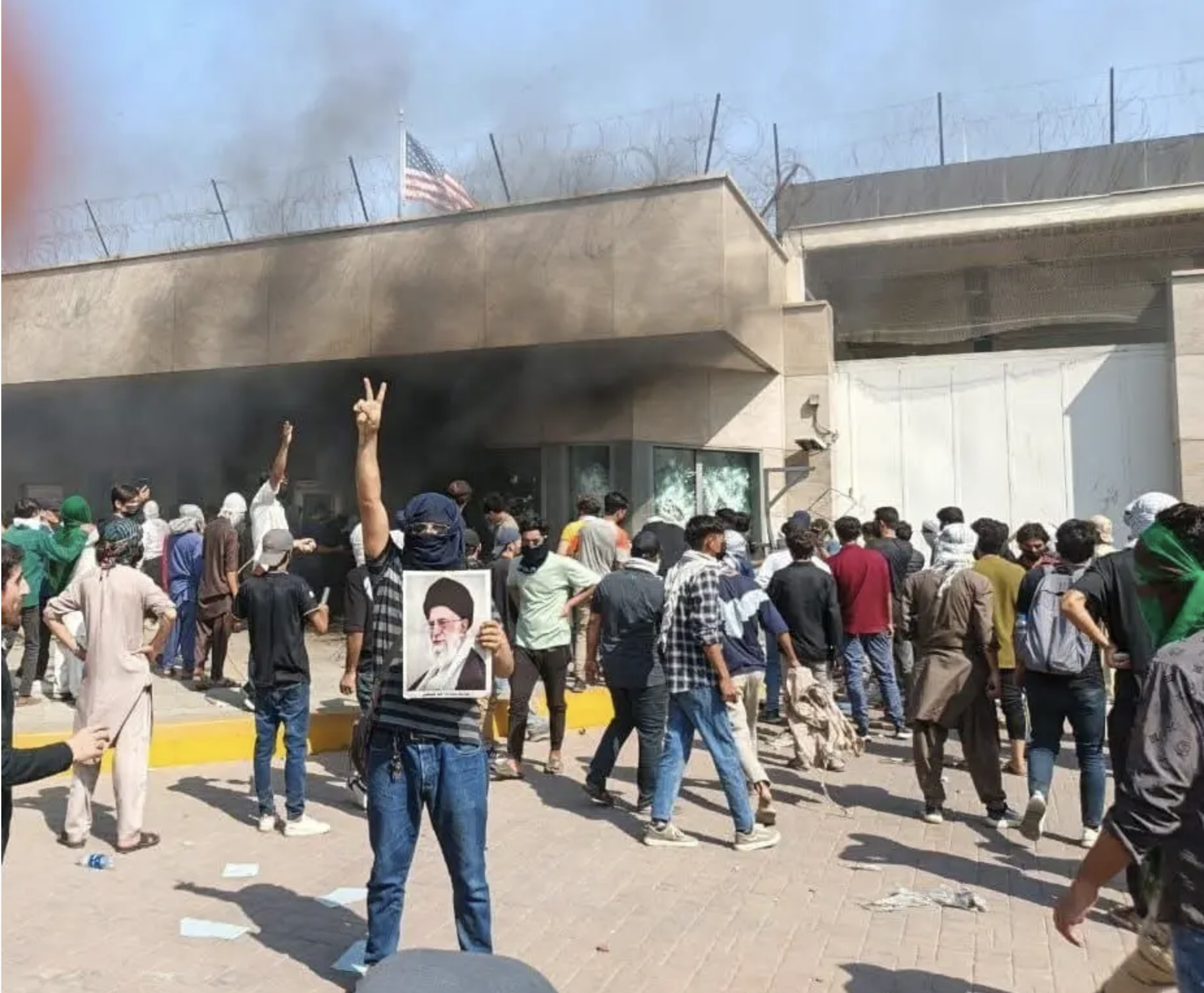
卡拉奇領事館突破:伊朗戰爭重估全球風險資產
阿亞圖拉阿里·哈梅內伊逝世後卡拉奇美國領事館被突破,這預示著伊朗戰爭進入一個危險的新階段,將衝突從軍事目標擴展到城市動亂和外交脆弱性,迫使全球風險資產重新定價。

通貨膨脹與國庫券供應驅動市場動態:大宗商品為關鍵
全球金融市場正處於一個複雜的格局中,歐洲持續的通貨膨脹和美國大量的國庫券供應正在驅動利率和貨幣的變動。原油價格飆升。
回流與庫存:韌性成本對市場動態的影響
鼓勵國內生產和庫存的新工業政策,正在巧妙而顯著地重新校準全球市場,將採購從簡單的成本項目轉變為戰略重點。這種轉變是由於對供應鏈韌性的追求所驅動的。

比特幣價格波動:宏觀流動性、政策與XRP展望
比特幣近期波動,以及以太幣和XRP,顯示出市場日益受宏觀流動性和監管政策而非純粹投機炒作所驅動。我們分析了目前的市場動態。