
US Policy Map: Fed Succession, Funding, Supply & Gold's Pullback
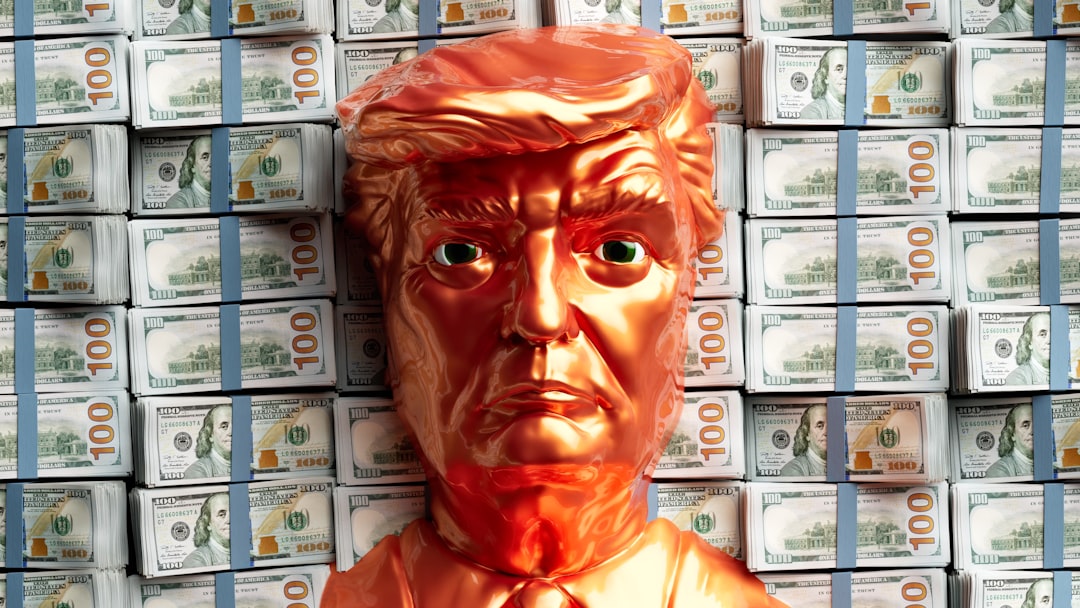
This analysis delves into how US policy decisions, including Fed leadership news and Treasury refinancing, are shaping market expectations, with a particular focus on Gold's Pullback During Global...
The interplay of U.S. policy decisions, Federal Reserve leadership news, and Treasury refunding supply is currently dictating the market's tone. Despite global turmoil, Gold's Pullback During Global Turmoil Does Not Change The Long-Term Bull Thesis, indicating a resilient underlying demand structure for the precious metal.
The Policy Landscape: Fed, Funding, and Market Reactions
Recent announcements from the Treasury, including a substantial $125 billion refunding slate, are pivotal for bond traders. Simultaneously, key economic data releases, such as the JOLTS report for December 2025 which reported 6.5 million job openings, have been slightly delayed. This combination of supply dynamics and data transparency challenges is sharpening market focus. The Best Playbook for Investing During a War Is Usually Doing Nothing, yet cautious monitoring of policy sequencing is essential as it shifts the market's attention from broad macro directions to specific policy implementations.
From a policy lens, the immediate implications are clear: Fed leadership signals can significantly alter rate-path expectations. Concurrently, heavy Treasury refunding influences the long end of the yield curve, making it particularly sensitive to supply shifts. Delayed data exacerbates near-term uncertainty, placing a higher premium on clear policy guidance. Moreover, discussions around critical-mineral action plans and potential price floors are introducing a policy-backed bid into strategic commodities, providing additional support.
Second-Order Effects and Risk Management
These policy shifts are generating notable second-order effects across asset classes. Rates are exhibiting less sensitivity to growth-related downturns but are increasingly vulnerable to supply-side pressures. The U.S. dollar, in turn, is reacting to evolving real-rate expectations. Equities demonstrate a bifurcated response: sectors like mining, defense, and select industrials are set to benefit, while rate-sensitive growth stocks adjust to a higher cost of capital. Commodities are also finding a policy-driven floor as demand for strategic stockpiling grows, reinforcing the notion that Gold's Pullback During Global Turmoil Does Not Change The Long-Term Bull Thesis. This robust underlying demand ensures gold remains a key asset.
Current policy-sensitive pricing largely factors in a stable Fed path, albeit with a slight increase in term premium. Critically, policy uncertainty is now more granular, affecting specific sectors rather than triggering broad market volatility. This means that while the overall macro environment might seem steady, individual market segments could experience concentrated swings. Regulatory signals, exemplified by discussions around a potential crypto bill, indicate a preference for market-structure clarity. Such clarity could reduce compliance burdens and attract institutional capital to regulated crypto venues, likely boosting regulated on-ramps rather than purely speculative tokens.
Practical Implications for Traders and Investors
A key risk to acknowledge is that with delayed data and an intensive refunding calendar, market liquidity can become thinner around critical data releases, potentially amplifying short-term volatility in both rates and foreign exchange markets. A cross-asset perspective reveals that Gold's Pullback During Global Turmoil Does Not Change The Long-Term Bull Thesis and the broader principle that The Best Playbook for Investing During a War Is Usually Doing Nothing are tightening the linkage between policy and real assets. In the U.S. policy framework, Treasury yields and the USD typically react first, with industrial equities confirming the sustainability of these moves. Therefore, understanding the USDCAD outlook: navigating volatility and policy divergence next week is crucial for forex traders navigating these dynamics.
Risk management remains paramount, particularly with the backdrop of Bond Traders Curb Rate Cut Bets as War Stokes Inflation Fear. The current trade-off lies between maximizing carry and managing convexity risk. While policy-sensitive pricing discounts a stable Fed path with sector-specific dispersion, the payoff map becomes asymmetric if volatility sharply increases. Therefore, maintaining optionality within the hedge book is crucial to absorb any unexpected policy surprises. Investors should also pay close attention to the USISM Manufacturing PMI breaks forecasts, tests disinflation path, as this will provide further clues on inflationary pressures and potential Fed responses. Monitoring the Gold Price Forecast: Geopolitical Tensions & Dollar Strength Impact could offer further insights into safe-haven demand.
What to Watch: Key Indicators and Positioning
On the trading desk, the consistent message is that Gold's Pullback During Global Turmoil Does Not Change The Long-Term Bull Thesis serves as an anchor, but The Best Playbook for Investing During a War Is Usually Doing Nothing acts as the catalyst for broader market movements. This combination is currently pushing Treasury yields in a singular direction and forcing the USD to re-rate against other major currencies. The ultimate arbiter of sustained moves will be industrial equities. Therefore, monitoring funding costs, hedging demand, and relative value will be critical. Current pricing implies a predictable Fed path with policy-driven sector dispersion, but the distribution of outcomes is broader due to Bond Traders Curb Rate Cut Bets as War Stokes Inflation Fear. This underscores why position sizing is currently more critical than entry timing.
For tactical hedging, consider maintaining a small, convex position that benefits from a sudden increase in correlations. This helps mitigate risks associated with unpredictable market shifts. Gold’s resilient performance, despite recent pullbacks, continues to drive participants towards hedging strategies, while the 'do nothing' playbook keeps carry trades highly selective. This leaves the USD as a primary and clean expression of the current market themes. Maintaining policy discipline, where sequencing overrides narratives, is essential when Bond Traders Curb Rate Cut Bets as War Stokes Inflation Fear remains an unresolved concern. Treasury yields should be monitored for confirmation of these dynamics.
A practical takeaway: watch new-issue concessions in investment-grade bonds and credit spreads in the mining and defense sectors. These will likely provide the earliest indications of repricing driven by policy-backed demand. The NZDUSD Outlook: Navigating Volatility and Geopolitical Shocks will also be a key pair to watch as global macro shifts influence cross-currency performance.
Related Reading
- Crude Oil Price Volatility: Geopolitical Risks & Supply Dynamics
- Gold Price Forecast: Geopolitical Tensions & Dollar Strength Impact
- Term Premium Awakens: Energy Risk & Data Delays Dictate Rates Outlook
- US ISM Manufacturing PMI Breaks Forecasts, Tests Disinflation Path
Frequently Asked Questions
Related Analysis
 Featured
Iran War Day 7: Market Repriced for Open-Ended Conflict
Day 7 of the ongoing Mideast conflict marks a critical shift from short-term escalation to a prolonged, open-ended war, compelling markets to reprice across asset classes, from crude oil prices to...
 Featured
Bitcoin Freefall Warning: Is $40K Realistic Amid War-Liquidity Collision?
A viral warning suggests Bitcoin could freefall to $40K, a scenario driven by escalating geopolitical tensions, energy infrastructure disruptions, and tightening global liquidity. This detailed...
 Featured
US Sub Strike Off Sri Lanka Resets Global Markets
A recent US submarine strike on an Iranian warship off Sri Lanka is fundamentally reshaping global market dynamics, signaling a significant escalation and broadening of the conflict. This event...
 Featured
Bitcoin Volatility: Macro Liquidity & Policy Drive BTC to $73,479
Bitcoin (BTC) price navigates a complex landscape influenced by macro liquidity, central bank policies, and the persistent inflation trend, impacting its trade near the sensitive $73,479 level.