
Hormuz Shock: US War Risk Guarantees Hit London Insurance
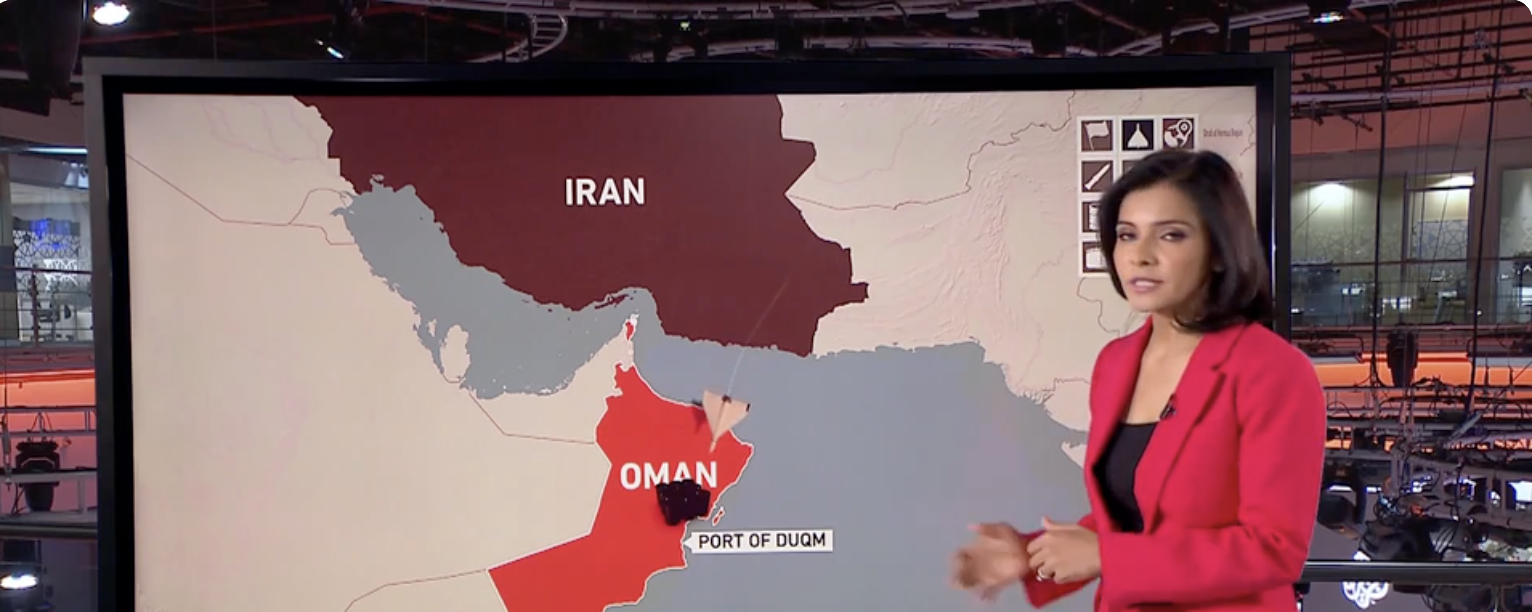
The US guarantee to insure tankers through the Strait of Hormuz reshapes the risk landscape for London's marine insurance market, turning a geopolitical crisis into a direct financial-services,...
The recent US move to provide political risk insurance via the DFC and offer tanker escorts through the Strait of Hormuz, if needed, comes as a direct response to escalating tensions in the critical waterway. While often framed as an oil market development, this initiative carries profound implications for London’s iconic insurance sector and, by extension, the broader British economy. This is no longer merely a foreign-policy crisis; it's a direct financial-services, inflation, and growth narrative for the UK.
The Hormuz Threat and London's Central Role
The threat emanating from the Strait of Hormuz has evolved beyond theoretical concerns. War-risk coverage in and around the Gulf has seen significant adjustments across the market – policies have been pulled, repriced, or had tight restrictions imposed. Premiums have surged by multiples within days, forcing underwriters to reclassify zones faster than many shipowners can adapt their voyage plans. This volatile environment positions Lloyd's of London and other UK-linked marine insurance markets at the very heart of global trade resilience.
When governments discuss escorts and guarantees, the underlying conversation inevitably shifts to a singular, critical question: Who will insure the ship? Without insurance, there is no voyage. Without voyages, energy flows are disrupted. Without stable energy flows, price volatility escalates. This fundamental chain of interconnected consequences frequently traces back to London.
How the U.S. Move Redefines the UK Insurance Landscape
Donald Trump’s DFC political-risk proposal acts as a state backstop signal, addressing a market teetering on the edge of paralysis. For Lloyd’s of London and the UK-based marine and Protection & Indemnity (P&I) ecosystems, this creates a split reality:
- Expanded Premium Opportunity: War-risk rates and specialized terms can rapidly increase gross written premiums for insurers willing to undertake selective risks.
- Explosive Tail-Risk and Volatility: The benefit of higher premiums is negated if loss severity, accumulation, and legal complexities surpass initial pricing assumptions. This is a critical point often overlooked by investors, who might mistakenly assume a simple 'insurers win from higher rates' dynamic. Instead, this is a 'insurers can earn more only if they survive the tails' cycle.
Lloyd's-Specific Pressure Points
Lloyd’s market participants are now contending with five immediate stress channels:
- War-Risk Repricing and Capacity Rationing: Underwriters are poised to implement higher attachment points, tighter sub-limits, and stricter wording regarding navigation routes, delay clauses, and sanctions exposure. The focus shifts from the inherent risk of Hormuz to the premium and terms required to make any voyage insurable.
- Aggregation Risk: Multiple incidents within the same corridor could trigger correlated losses across various insurance books, including hull, cargo, liability, and marine war. Aggregation can manifest faster and with greater impact than single-event claims because different product lines are affected simultaneously.
- Reinsurance Cost Shock: Primary war writers are heavily reliant on reinsurance. If retro and reinsurance pricing surge or terms become tighter, UK writers will either pass these costs onto shipowners or reduce their underwriting appetite, potentially exacerbating global trade bottlenecks.
- Claims Inflation: A damaged vessel represents only the initial claim. Subsequent costs can include salvage operations, extensive delays, rerouting, cargo deterioration, crew injuries, pollution, port fees, legal disputes, and sanctions compliance. The total cost of claims can grow significantly long after the initial incident fades from headlines.
- Contract Disputes and Wording Litigation: Declarations of force majeure, cancellation notices, deviation routes, and 'held covered' clauses are ripe for disputes. London’s legal and arbitration ecosystem is likely to see a significant increase in high-value marine conflict cases. Even periods without total losses can still prove costly for insurers due to litigation.
Impact on English Vessel Insurance Companies
For UK-linked insurers and P&I clubs, the current environment is intensely operational. Daily pricing windows replace stable annual assumptions, and voyage-by-voyage underwriting becomes the norm. Clients demand coverage certainty in a market that cannot offer it cheaply. While government security guarantees improve confidence, they do not eliminate the missile risk.
The commercial outcome is paradoxical: revenue potential increases, but so does capital strain. Firms with disciplined risk selection, robust reinsurance, and clear wording are best positioned to outperform. Conversely, firms that pursue premiums without a strong command of tail-risk discipline face potential mark-to-market and reserve challenges.
Broader Economic Ramifications for the UK
This situation impacts Britain through four critical channels:
- Inflation and Household Cost Pressure: Persistent disruption in Hormuz intensifies UK fuel and energy-linked inflation risks. Despite domestic policy buffers, global energy pricing inevitably filters into transport, food logistics, and utility costs, complicating the path to disinflation.
- Monetary Policy Complexity: The Bank of England confronts a familiar dilemma: energy-driven inflationary pressures coupled with weaker growth momentum resulting from trade friction and global risk-off conditions. This scenario could necessitate tighter monetary policy for longer than households and businesses anticipate.
- City of London Earnings and Volatility: While London might benefit from increased demand for insurance, broking, and legal services during crises, this is not clear-cut upside. Higher fee pools are accompanied by elevated balance-sheet risk, reserve uncertainty, and the potential for significant event losses. Financial-services GDP might appear resilient even as underlying risk quality deteriorates.
- Trade and Shipping Costs: UK importers and exporters will face higher freight rates, longer transit times, and increased pass-through insurance costs. This directly impacts margins for manufacturers, retailers, and commodity users, even if physical volumes continue to move.
Therefore, while parts of the City of London may see increased earnings, the wider UK economy could simultaneously experience a slowdown. Market misunderstanding often reduces this complex scenario to binary outcomes, such as 'U.S. escorts fix it' or 'Hormuz is closed forever'. The reality is far more nuanced. Escorts and US guarantees can partially restore confidence, especially for strategic cargoes, but insurers ultimately price probability, not just promises. If incidents involving missiles, drones, or vessel strikes continue, private underwriters will persist in demanding extraordinary terms, irrespective of political pronouncements.
This is why Lloyd’s matters so significantly. It acts not merely as a passive observer but as a steering mechanism. If London reopens capacity at workable prices, trade can continue. However, if London tightens terms too severely, even government-backed shipping corridors may struggle commercially.
Key Indicators to Watch
Investors and analysts should monitor several critical indicators:
- Joint War Committee zone guidance.
- The direction of war-risk premiums – whether they stabilize, continue to rise, or become effectively unquotable.
- P&I and hull cancellation notices, particularly surrounding Gulf entry windows.
- Reinsurance and retro pricing for marine war classes.
- The actual number of escorted voyages, beyond announced policies.
- UK inflation expectations and sterling reaction to energy risk.
- Lloyd’s/UK insurance equity performance relative to broader UK indices.
- Growth in London maritime arbitration and claims litigation volume.
A collective deterioration in these indicators signals a grim outlook for the UK: heightened external price pressures, increased market volatility, and eroded real-economy confidence.
Bottom Line
The Hormuz crisis has transcended its immediate military context to become a significant London insurance stress test. The US's strategic move to provide political risk insurance and naval escorts, while potentially alleviating immediate panic, also underscores the severity of the breakdown where private risk transfer alone is insufficient. This creates a high-revenue, high-tail-risk environment for Lloyd’s and English marine insurers, and a notable inflation-and-growth headwind for the UK economy. The financial-services sector may offer some offset, but its resilience could prove fragile if losses cluster. In essence, London may profit from insuring the crisis, but Britain ultimately has to contend with its broader economic ramifications.
Frequently Asked Questions
Related Stories
 Featured
BlackRock Private Credit Gates Warn of Illiquid Loans Redemption Risk
BlackRock's recent move to cap investor withdrawals from a private credit vehicle highlights a critical liquidity mismatch in the rapidly growing $1.8 trillion private credit market, raising...
 Featured
Iran War Markets: Systemic Risk & Cross-Asset Impact
The Iran conflict has evolved into a systemic risk, driving significant cross-asset repricing in global markets. This analysis delves into how energy routes, military escalation, and domestic...
 Featured
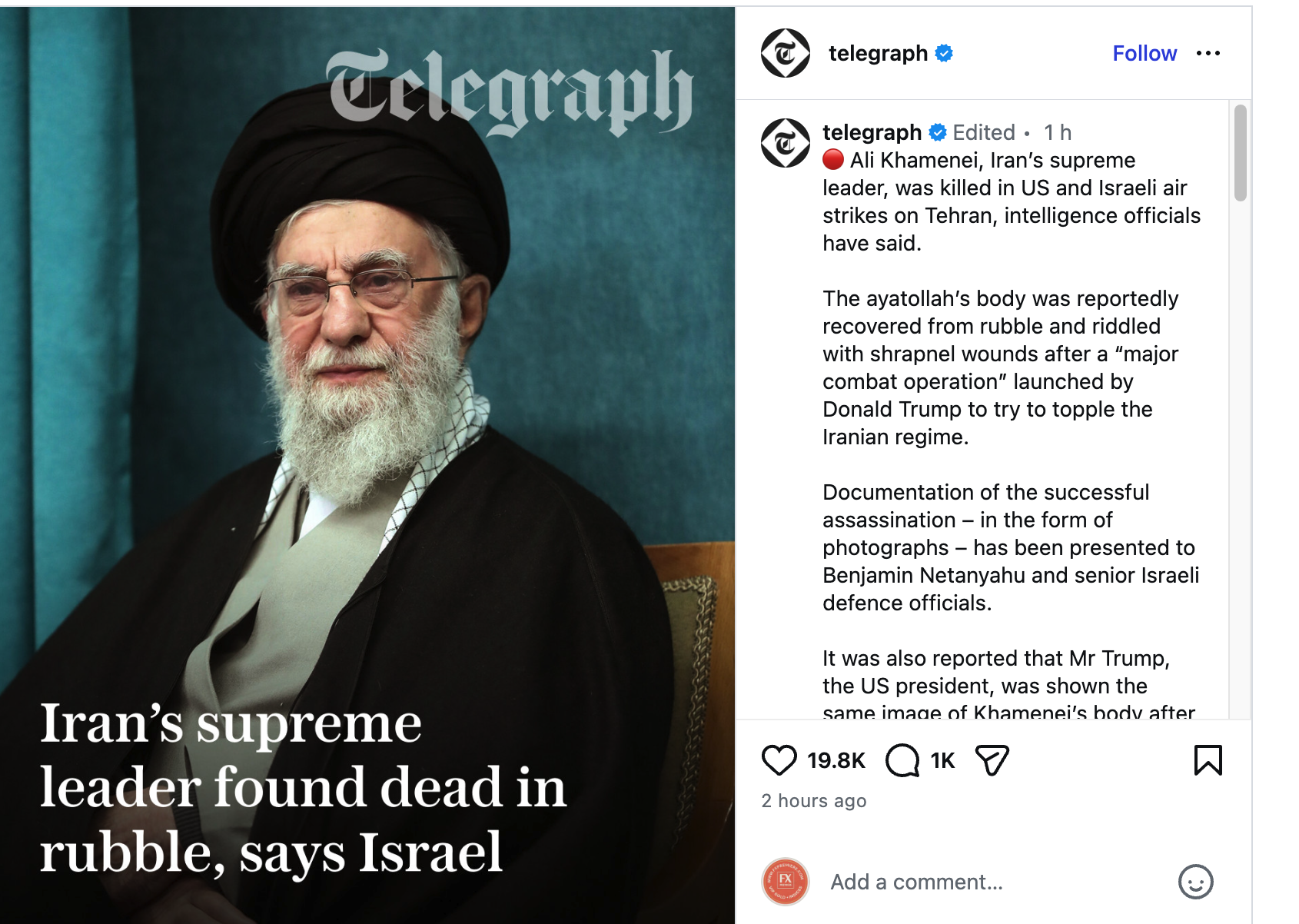
Khamenei Dead in Rubble: Iran Succession Crisis Risks Global Markets
Reports that Iran's Supreme Leader Ali Khamenei was found dead in rubble after US-Israeli strikes signal a critical shift from mere conflict escalation to potential regime disruption, triggering a...
 Featured
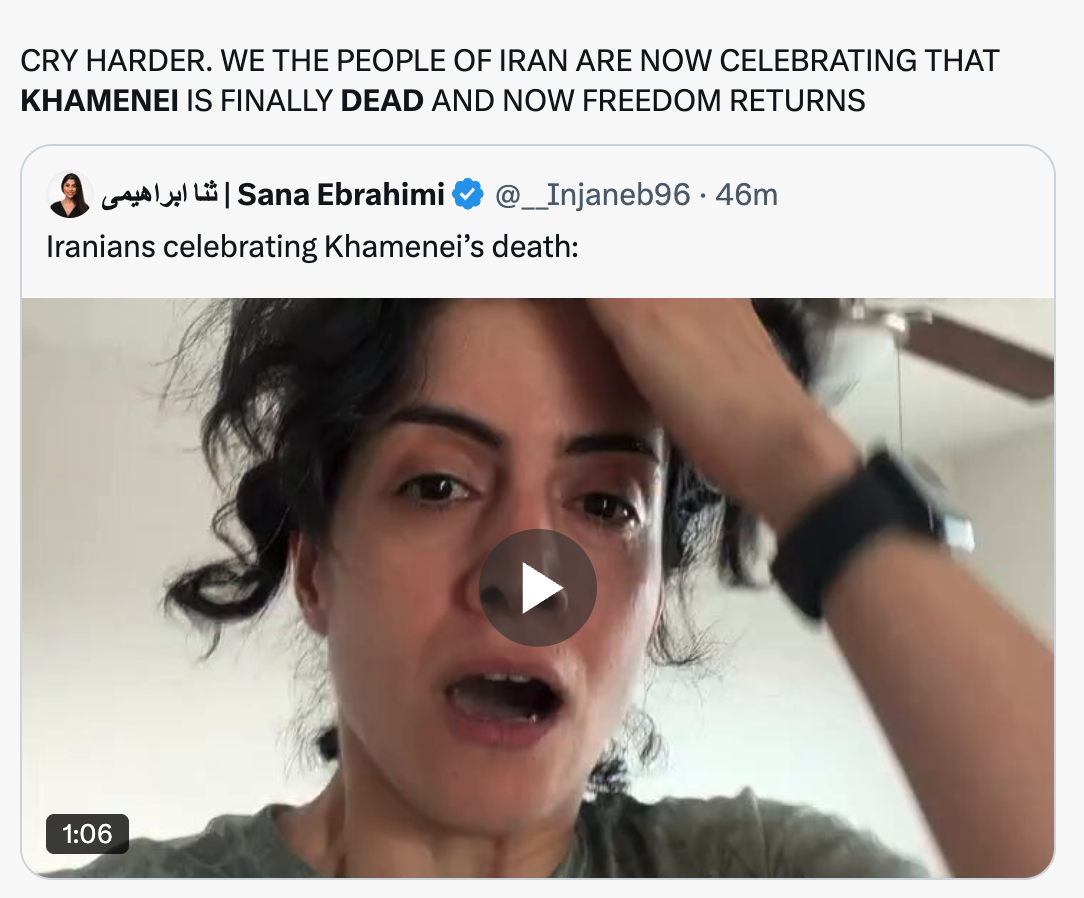
Khamenei Dead? Celebration Videos Spark Regime-Shock Market Event
Reports and viral videos of Iranians celebrating the potential death of Ayatollah Ali Khamenei are shifting market focus from mere war-pricing to the far more significant realm of regime-pricing,...