
Iran War Markets: Systemic Risk & Cross-Asset Impact

The Iran conflict has evolved into a systemic risk, driving significant cross-asset repricing in global markets. This analysis delves into how energy routes, military escalation, and domestic...
The ongoing Iran conflict has transcended its initial regional scope, morphing into a significant source of systemic risk that is now actively repricing global markets. The narrative has shifted from isolated strikes to a broader concern about system-wide stress, impacting crucial domains like energy routes, military escalation, and domestic security.
It's vital to frame the current market reaction not on the absolute verification of every circulating headline, but on one fundamental principle: traders now perceive a substantially elevated probability of wider geopolitical spillover. This shift in perception is driving market behavior across various asset classes, reflecting a scramble for safety and a reassessment of fundamental economic assumptions. The Energy Grid Risk Reshapes Cross-Asset Correlations theme is more relevant than ever.
What's Changed: From Regional Conflict to Contagion Pricing
The most critical change, from a market perspective, is the transition from a single-country conflict to one with potential contagion pricing. Reports of strikes across multiple geographies, coupled with references to military bases, shipping incidents, and embassy closures, signify that investors are no longer asking "who wins?" but rather "what breaks?" This sentiment drives a profound re-evaluation of risk across portfolios.
Furthermore, energy logistics have moved to the frontline of this conflict. Discussions around shipping incidents near Fujairah, LNG diversions, and increasing risks associated with Gulf transit mean the market is no longer solely pricing oil as a commodity. Instead, it’s increasingly being priced as a form of insurance, embedding a persistent premium rather than a fleeting one. This dynamic also influences related instruments such as gasoline price live and crude oil price live.
Finally, policy optionality is being significantly constrained. When market signals suggest that "rate cuts are off the table," this isn't merely a forecasting detail. It reflects a repricing of central bank reaction functions under an energy shock scenario. This implies rising inflation tails and receding growth tails, a toxic combination for most risk assets that exacerbates volatility across the board.
The Cross-Asset Map: How Systemic Risk Transmits
A) Commodities: The Direct Impact
Commodities are the most immediate and tangible transmission channel. Crude oil price live and refined products respond first. However, the true macro accelerants are gasoline and diesel, as their price movements quickly impact CPI, consumer confidence, and political stability. LNG disruptions are particularly critical for Europe and parts of Asia; even a single diversion can signal a broader shift where counterparties prioritize security over efficiency, affecting natural gas price live. Gold price live serves as a crucial gauge of market anxiety; it rises when trust in policy and geopolitics declines, becoming the default hedge. A key "tell" for traders is whether oil sustains its gains even on days when equities bounce. If so, the embedded premium is proving sticky, not temporary.
B) FX: Seeking Safety, Then Managing Funding
In a genuine escalation, FX markets react in two distinct stages. Firstly, a safety bid emerges, with JPY and CHF strengthening as investors de-risk. High-beta currencies, especially those of energy importers, typically struggle. Secondly, a funding regime takes hold. The USD can perform paradoxically: it might rally as a global refuge or weaken if the shock is perceived as primarily US-centric. The direction depends on whether global investors seek USD for safety or fear policy and security spillover within the US. If FX volatility rises while safe havens strengthen, it signals market concern about gap risk, beyond mere directional moves. Our Dollar's Quiet Pivot: FX Regime Check and Real-Rate Dynamics analysis provides further context.
C) Rates: The "Split Brain" Dilemma
Energy shocks create an extremely challenging environment for rates. The inflation shock pushes central banks to keep rates higher for longer, while the growth shock argues for earlier cuts. This inherent contradiction fuels volatility, particularly in the front end of the yield curve. The long end begins pricing a term premium, indicating investors demand greater compensation for uncertainty itself. If central banks are perceived as constrained, bonds may lose their traditional hedging efficacy, increasing portfolio stress.
D) Equities: Dispersion and Sectoral Shifts
Aggregate index headlines can be misleading; in such a regime, dispersion is the true signal. Early winners typically include defense and security supply chains, energy producers and select services, and, depending on the evolving domestic threat narrative, some cyber and infrastructure names. Conversely, airlines, travel, and sectors exposed to route disruptions, along with consumer cyclicals (if gasoline becomes a political tax), tend to register losses. High-duration growth stocks also suffer if rates volatility persists. Pay close attention to regional equity behavior – circuit breakers in Asia or gapping in Gulf markets signal liquidity stress and forced selling. For more insights on this, refer to our Sector Rotation: Quality Cyclicals Outperform Duration article.
E) Credit: The Lagging but Serious Move
Credit markets often lag initially but then move decisively as investors start pricing higher input costs, weaker demand, tighter financing windows, and increased refinancing risk. A crucial tell is if equities rally but credit spreads continue to widen, signaling underlying tightening conditions. For comprehensive analysis on this, see our Funding Costs Take Center Stage for IG Spreads.
F) Crypto: The Leverage Thermometer
Crypto tends to react predictably to geopolitical shocks. It sells off first during a risk-off phase, followed by violent whipsaws as leverage is flushed from the system. If liquidity and funding conditions remain pressured, crypto remains fragile. Conversely, if the macro environment calms, crypto can bounce sharply, though this is often a mechanical reaction rather than a fundamental one. Keep an eye on Bitcoin Price Volatility to understand market sentiment. For a deeper dive look at Bitcoin $67014 Sensitivity to Macro Liquidity.
Why This Feels Like 2008 to Some (Even If It Isn’t)
The comparison to 2008 by some traders isn't about price levels but the behavior of the system. Events like circuit breakers, shipping reroutes, embassy closures, cyber warnings, accelerated defense production discussions, and energy logistics stress are all "system signals." They indicate a shift from efficient flow to resilient flow, which is inherently more expensive. This increased expense means inflationary pressures, which in turn removes central bank flexibility, thereby raising risk premia across all assets. This is the core reason for heightened global concern.
What to Watch Next: Five Key Decision Points
- Actual shipping behavior, not just statements, particularly through key chokepoints.
- Movements in insurance and war-risk pricing, which often serve as a concealed form of policy action.
- Any confirmed damage to energy infrastructure or sustained disruptions to LNG flows.
- The rates market reaction, focusing on front-end repricing and term premium behavior.
- Changes in domestic security postures and any significant cyber incidents, which alter the risk map for US assets.
Ultimately, the market is no longer viewing the Iran conflict as merely a transient headline cycle. It is increasingly being treated as a fundamental regime risk. The initial market response targets energy assets, followed by a scramble for safe havens. The truly critical test, however, lies in whether policy flexibility remains constrained and whether elevated risk premia persist long after the immediate headlines subside.
Frequently Asked Questions
Related Stories
 Featured
BlackRock Private Credit Gates Warn of Illiquid Loans Redemption Risk
BlackRock's recent move to cap investor withdrawals from a private credit vehicle highlights a critical liquidity mismatch in the rapidly growing $1.8 trillion private credit market, raising...
 Featured
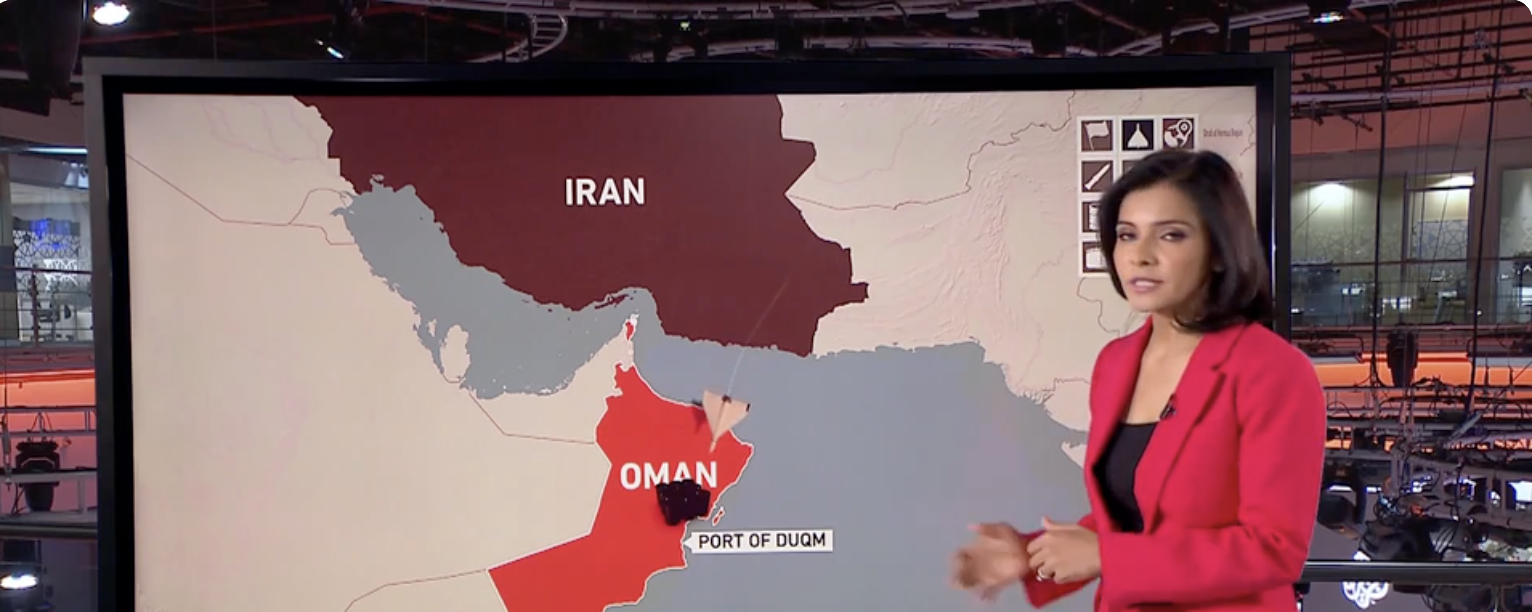
Hormuz Shock: US War Risk Guarantees Hit London Insurance
The US guarantee to insure tankers through the Strait of Hormuz reshapes the risk landscape for London's marine insurance market, turning a geopolitical crisis into a direct financial-services,...
 Featured
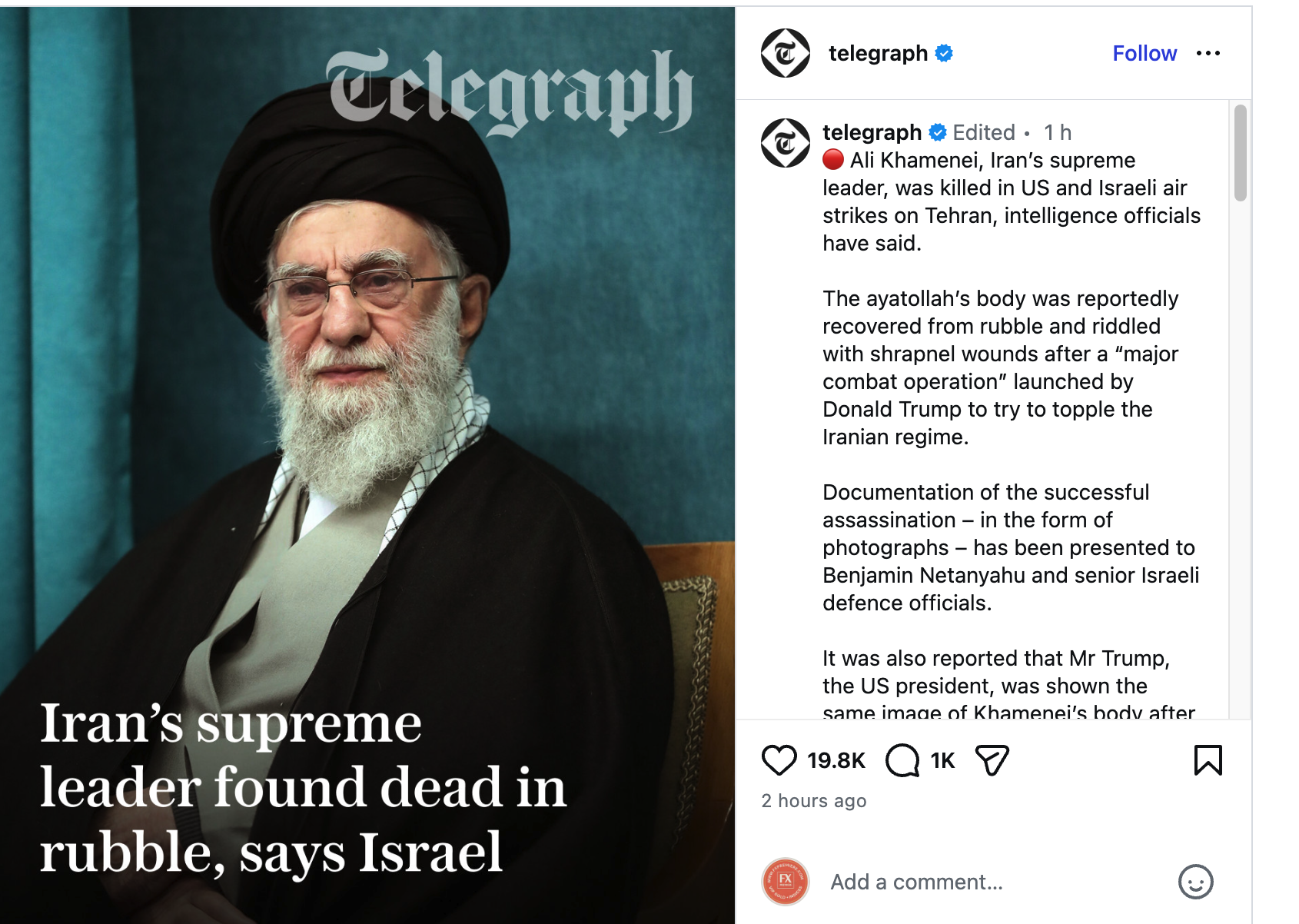
Khamenei Dead in Rubble: Iran Succession Crisis Risks Global Markets
Reports that Iran's Supreme Leader Ali Khamenei was found dead in rubble after US-Israeli strikes signal a critical shift from mere conflict escalation to potential regime disruption, triggering a...
 Featured
Khamenei Dead? Celebration Videos Spark Regime-Shock Market Event
Reports and viral videos of Iranians celebrating the potential death of Ayatollah Ali Khamenei are shifting market focus from mere war-pricing to the far more significant realm of regime-pricing,...