
No Flights Out: Iran-US War Shatters Gulf's Luxury Mobility Trade, Repricing Key Markets
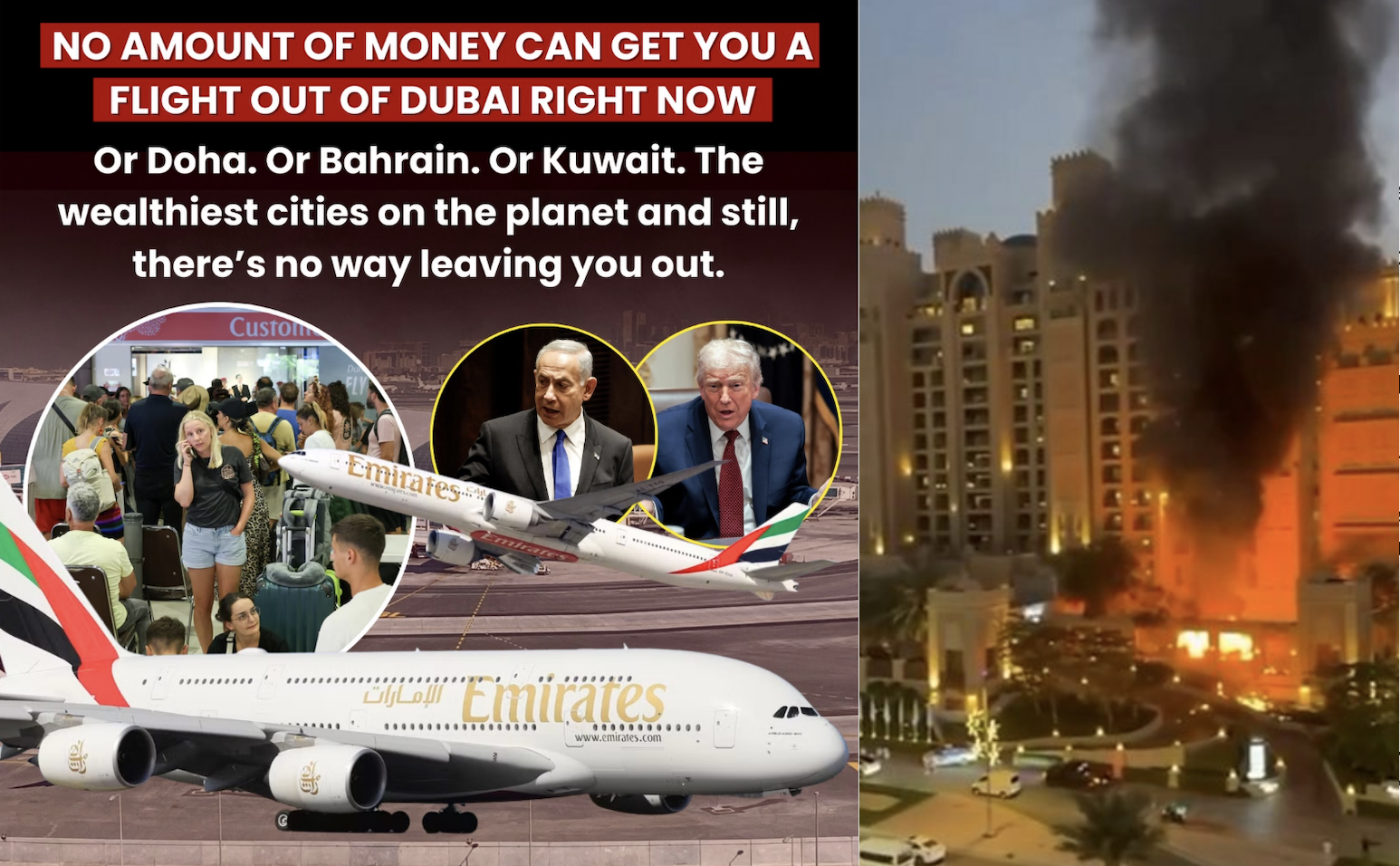
The recent disruption of major Gulf airports due to the Iran-US war signals a profound shift beyond mere travel inconvenience, fundamentally repricing oil, gold, forex, stocks, shipping, and...
The stark image of a grounded luxury jet perfectly encapsulates the market’s immediate understanding following the recent Iran-US war escalation: for a critical window, money stopped solving the problem of mobility in the Gulf. With major hubs like Dubai, Abu Dhabi, Doha, Bahrain, and Kuwait International facing closures or severe disruptions, the region's core promise of instant, frictionless movement for the globally connected elite was publicly broken.
This goes far beyond mere travel cancellations; it's a confidence headline for markets worldwide. On March 1 and March 2, 2026, Emirates and Air Arabia suspended flights, Qatar Airways halted operations, and Lufthansa curtailed its Middle East network. Minor damage at DXB and suspended drone permits in the UAE underscore that this wasn't an isolated glitch but a full security repricing of the region's air-transport infrastructure. The image of 'no flights out of Dubai' serves as a powerful metaphor for the suddenly re-evaluated risk landscape.
Aviation and Global Connectivity Under Stress
The Gulf’s richest cities thrive not merely from oil, but as strategic arteries connecting Europe, Asia, and Africa. When hubs designed for global transit, cargo, and long-haul routes shut down, even temporarily, the disruption ripples worldwide. Airlines face reduced productivity, increased fuel burn from diversions, delayed cargo, stranded high-margin travelers, and out-of-position crews. Insurance premiums are repriced, and business travel becomes fraught with uncertainty. The economic implications extend far beyond the aviation sector, creating losses across the entire supply chain.
Tourism, Hospitality, and the Service Economy Shock
The psychological impact of discovering that traditional signs of wealth cannot secure an exit during a crisis lands hardest on cities whose business models rely heavily on premium travel, conferences, luxury consumption, and international openness. If travelers begin to associate Dubai, Doha, Bahrain, and Kuwait with ‘Doha war impact’ or sudden lock-in risks during geopolitical flare-ups, the premium attached to hotels, retail, airlines, and event infrastructure must be re-evaluated and potentially marked down. This effectively translates a military crisis into a significant service-economy shock.
Oil Markets Reprice Geopolitical Risk
While airport closures alone may not permanently move crude prices, they undeniably signal to traders that the ongoing conflict is impacting the Gulf’s civilian-commercial infrastructure, not just military targets. When this occurs simultaneously with ‘Hormuz shipping disruption,’ OPEC+ emergency signals, and state-level security measures, oil traders shift from questioning the reality of the story to assessing the appropriate 'oil price Iran war' premium for Brent and WTI. This repricing reflects the market’s concern that the Gulf can no longer guarantee the smooth movement of energy, people, and commercial traffic as reliably as before, potentially leading to a more persistent and substantial oil move than many expect, even without a full export shutdown.
Gold Shines as the Ultimate Hedge
In this turbulent environment, gold stands out as the cleanest hedge. It doesn't rely on perpetual traveler disruption but rather on the market's recognition that geopolitical infrastructure risk is now real, visible, and economically contagious. When 'Gulf airports closed,' airlines suspend operations, and diplomatic resolutions seem distant, gold transcends its role as a speculative momentum trade. Instead, it transforms into a fundamental portfolio response to an increasingly uncertain world, cementing its status as a reliable safe haven asset.
Forex Layers and Gulf Dynamics
Forex markets interpret these events in multiple layers. The initial reaction is typically a classic risk-off shift into the U.S. dollar, Swiss franc, and often the yen. However, a deeper 'forex war analysis' reveals concerns about mobility, funding, and external balances. Currencies of countries reliant on imported energy, tourism, or fragile capital flows become more vulnerable. While oil exporters might initially benefit from higher crude prices, this support can wane if the crisis evolves into a broader growth shock. Critically, in the Gulf, the fixed currency peg can mask underlying repricing, as the true adjustments often occur in credit default swaps (CDS), sovereign spreads, equities, and corporate funding – a nuance often missed by outsiders focusing solely on the spot market. This speaks to the dynamic nature of 'gulf markets today'.
Equities, Property, and Banking React
Equity markets will see varied reactions. Energy and defense sectors may outperform, as might some safe-haven miners. Conversely, airlines, airports, luxury retail, developers, property-sensitive financials, and hospitality names will likely experience immediate pressure. These sectors are built on the premise of free movement for affluent, connected individuals, a promise now under severe stress. Similarly, property markets in Dubai and the broader Gulf, which have long benefited from positioning as a secure, high-end refuge for capital, will see this 'Dubai real estate war risk' narrative tested. If the perception of an exceptionalism premium diminishes, multiples in these sectors will compress.
Gulf banks, intrinsically linked to trade, travel, wealth, and commercial real estate, will also feel the shift. Disrupted airport systems, slowed cargo, and less reliable elite mobility force bank investors to rethink activity assumptions, deposit behavior, wealth-management flows, and collateral quality. For valuations to re-rate lower, nothing needs to 'break' definitively; a significant shift in perception is enough.
Shipping, Credit, and Crypto’s Response
Shipping and freight are hidden accelerants. When air corridors are disrupted, commercial value shifts to sea routes. However, if the Red Sea and Gulf regions face pressure from Hormuz shipping disruption, heightened war-risk insurance, or tanker hesitation, then the Gulf’s critical movement channels are impacted simultaneously. This scenario evokes comparisons to past supply-chain shocks, emphasizing that disruptions to movement lead to tighter inventories, rising costs, and rapidly declining confidence.
Credit markets will ultimately determine whether this remains a dramatic headline or becomes a durable financial problem. If transport, hospitality, property, and regional financial spreads widen significantly, it indicates a deepening funding and confidence crisis. Finally, 'crypto' also demands attention. While initial reactions to crises often involve liquidation and flight to the dollar, pressing Bitcoin and other tokens, the subsequent debate over crypto's role as either a risk asset or a hedge against systemic breakdown can trigger violent two-way price action. Cryptocurrencies are intrinsically part of this cross-asset response.
The Enduring Market Signal
The viral nature of this crisis imagery lies in its implicit message about hierarchy: in a true geopolitical lockdown, wealth may still buy comfort, but it cannot guarantee an exit. This is a profound statement regarding the limits of capital when state-level security systems close ranks. For markets, this matters immensely because so much of modern premium valuation rests on the belief that the best-connected people and institutions can always find a way around problems. This past weekend, in parts of the Gulf, they could not. This isn't merely a social-media post; it’s a market signal. It reveals that the conflict has impacted elite mobility, luxury-city branding, route economics, tourism, logistics, and the confidence premium underpinning the Gulf business model. When the world’s most globally mobile cities suddenly feel closed off, markets don't just price inconvenience; they price vulnerability. Traders will be keenly watching whether Dubai, Abu Dhabi, Doha, Bahrain, and Kuwait quickly return to normal, or if lingering restrictions signify a deeper, more enduring shift in the Gulf's 'Kuwait airport closed' perception and its once frictionless-access narrative. If the latter interpretation prevails, this crisis will be remembered as the moment money discovered there were no exits.
Frequently Asked Questions
Related Analysis
 Featured
AI Rights Trade: Why Claude's Consciousness Comments Could Hit Tech Stocks
Anthropic's recent comments regarding AI model consciousness and welfare signal a potential paradigm shift that could impact tech stocks, cloud service providers, and the entire AI business model,...
 Featured
Hormuz Strait Closure: Global Wallet Shock & Oil to $100 Outlook
The effective closure of the Strait of Hormuz due to geopolitical tensions is rapidly shifting from a military concern to a global economic crisis, threatening to send oil prices past $100 and...
 Featured
Greece Revives Cyprus Defense Doctrine, Reshaping Iran War Map
Greece's strategic decision to deploy naval assets and F-16s to Cyprus signals a profound shift in the Eastern Mediterranean's role in the escalating Iran conflict, repricing risks across oil,...
 Featured
Iran-US War: Global Markets Reprice After "14 Countries Hit" Event
A dramatic escalation in the Middle East, with Iran reportedly striking targets across 14 countries, has sent shockwaves through global financial markets, forcing a swift re-evaluation of risk...