
Iran-US War: Global Markets Reprice After "14 Countries Hit" Event
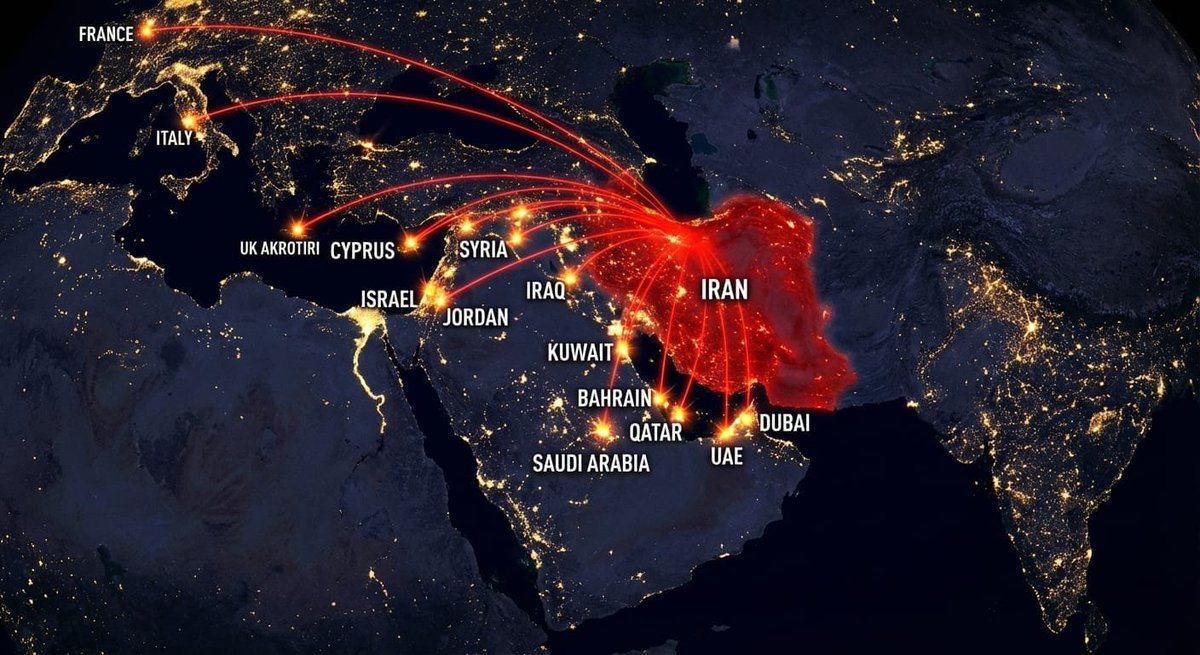
A dramatic escalation in the Middle East, with Iran reportedly striking targets across 14 countries, has sent shockwaves through global financial markets, forcing a swift re-evaluation of risk...
The Middle East conflict has escalated dramatically, with reporting indicating Iran's strike envelope expanded across 14 countries in a single night. While specific claims are still being verified, the strategic impact is undeniable: a widened conflict radius that has forced global markets to reprice risk across a spectrum of assets, from oil and gold to forex and shipping.
From Regional Crisis to Network Crisis: The Widened Strike Map
The viral headline, "Iran hit 14 countries in one night," encapsulates the market's perception of a significant escalation. Though the precise number of verified hits across distinct nations is subject to ongoing intelligence gathering, the undeniable reality is that Iran extended its reach across Israel, the Gulf states, Iraq, Jordan, and Oman. This included targeting or threatening allied military infrastructure, turning the conflict into a regional-system event rather than a contained bilateral clash. The market no longer views this as a localized skirmish but as a potential network crisis, where the military, commercial, and logistical architecture of the Gulf is now intertwined within an elevated risk chain. This shift has critical implications for various global markets, as evidenced by how Quickly the gold price Iran war narrative emerged as investors sought safe haven assets.
Oil: The Immediate Front-End Expression of Risk
Oil is the most direct barometer of this crisis. A sustained war premium has been integrated into crude prices, primarily due to concerns about the Strait of Hormuz. This critical chokepoint, through which approximately one-fifth of the world's oil flows, is now considered operationally stressed. Insurers are repricing risk, shipowners are hesitating, and naval threats are intensifying. Markets do not wait for explicit closure notices; they reprice immediately. The aftermath saw oil prices surge by approximately 13%, reaching around $82 a barrel, reflecting acute supply disruption fears. Even a crude oil price geopolitical risk premium previously unimaginable is now factored in.
Gold and Silver: The Ultimate Hedge Against Uncertainty
Gold, the perennial safe haven, has been a significant beneficiary of the escalating tensions. Its ascent reflects not merely fear but a collapse of clean market assumptions—that airspace remains open, Gulf hubs are insulated, and diplomacy is effective. In this environment of pervasive uncertainty, gold attracts capital as a primary hedge. Reports suggest gold pushed through $5,300 an ounce, indicating its role as the ultimate 'war and disorder' asset. While silver can also benefit, its exposure to industrial demand typically makes gold the cleaner hedge against pure geopolitical risk. Analysts are closely watching gold price war dynamics as a bellwether for market sentiment.
Forex: Global Repercussions Beyond Regional Conflict
The conflict's impact on forex markets is global. The immediate reaction has been a standard risk-off move: a stronger U.S. dollar, a firmer Swiss franc, and periodic bids for the Japanese yen. However, the deeper concern lies in the vulnerability of fragile currencies and imported-energy economies. Should the war continue to widen, emerging-market FX will face increased pressure as oil prices rise, funding conditions tighten, and the specter of broader supply disruption looms. In the Gulf, currency pegs mask the true pressure, which manifests in widening sovereign spreads, credit default swaps (CDS), equity weakness, and rising funding costs. This is no longer merely an iran retaliation latest; it is a global financial reordering.
Equities: A Sectoral Shift and Broader Risk-Off
Equities are experiencing a brutal rotation. Energy, defense, and select safe-haven mining stocks are outperforming, while airline, airport-linked names, tourism, premium retail, real estate developers, and transport-sensitive sectors are quickly being hit. The more the conflict impacts airports, ports, hotels, and the prestige infrastructure of Gulf commercial life, the more the market punishes mobility-heavy business models. This conflict is not just attacking territory; it is attacking movement, reshifting the investment landscape. As investors digest the middle east war market impact, sector redistribution continues to accelerate.
Rates and Credit: Inflationary Pressure Meets Growth Shock
The escalation presents a significant macro headache for central banks. Higher oil prices and freight costs fuel inflationary pressures, while disrupted infrastructure, reduced tourism, and tighter financial conditions lead to slower growth. This stagflationary recipe offers no easy answers, potentially leading to sustained volatility in interest rates. Credit markets act as a crucial truth detector. Widening credit spreads across transport, hospitality, emerging markets, and Gulf-sensitive entities signals that the conflict has transitioned from a headline event to a cash-flow and funding crisis. Serious macro investors are closely monitoring credit to discern whether business models remain viable under these new conditions. The iran us war latest news is directly influencing these critical indicators.
Shipping, Insurance, and Crypto: Hidden Accelerants and Digital Debates
Shipping and insurance are hidden accelerants. Flights across the Gulf are suspended, creating an immediate transport shock. If Gulf shipping becomes more difficult or expensive to insure and route, global supply chains will face simultaneous disruption from both air and sea. This will translate into higher freight costs, stretched delivery windows, trapped working capital, and a pervasive assumption of interruption rather than normality, feeding inflation and growth shocks disastrously. The strait of hormuz disrupted status highlights these concerns. Crypto markets react in phases: an initial de-risking and liquidation pressure is often followed by a complex debate on whether assets like Bitcoin act as speculative plays or as hedges against state and payment-system fragmentation. Bitcoin war test narratives often emerge, creating wild two-way moves, especially when traditional markets are closed.
Strategic Signals and Market Recalibration
Regardless of the full verification of every viral claim, markets have internalized the strategic signal: Iran can widen the war map faster than anticipated, and previously perceived passive states now carry higher risk premiums. This includes countries hosting Western military infrastructure, such as Cyprus, Bahrain, Qatar, and Oman. The market is now watching the entire ring of nations around Iran and Israel, recognizing that the conflict's consequences are broader than a narrow bilateral war. This necessitates a disciplined approach to separate what is already real from tail-risk scenarios. Airspace closures, grounded airlines, base alerts, a higher oil premium, and a stronger gold bid are now tangible realities. The key question for investors is how many layers of normal commercial life still remain outside the shadow of this widening conflict. Traders should watch airspace closure lists, tanker behavior (not just oil quotes), gold's performance relative to the dollar, and the underperformance of airline, tourism, and Gulf financial names, alongside credit spreads, to gauge whether this is an isolated shock or a fundamental shift in the global macro regime. The iran hit 14 countries event has fundamentally altered risk perception.
Related Reading
- Gold Price Soars: Iran-US War Reprices Bullion as Ultimate Macro Hedge
- Crude Oil Price Jumps: Geopolitical Risk Fuels Oil Volatility
- Bitcoin War Test: Crypto's Role Amidst Middle East Conflict
- Hormuz Strait Closure: Global Shock Beyond Oil Price
Frequently Asked Questions
Related Analysis
 Featured
AI Rights Trade: Why Claude's Consciousness Comments Could Hit Tech Stocks
Anthropic's recent comments regarding AI model consciousness and welfare signal a potential paradigm shift that could impact tech stocks, cloud service providers, and the entire AI business model,...
 Featured
Hormuz Strait Closure: Global Wallet Shock & Oil to $100 Outlook
The effective closure of the Strait of Hormuz due to geopolitical tensions is rapidly shifting from a military concern to a global economic crisis, threatening to send oil prices past $100 and...
 Featured
Greece Revives Cyprus Defense Doctrine, Reshaping Iran War Map
Greece's strategic decision to deploy naval assets and F-16s to Cyprus signals a profound shift in the Eastern Mediterranean's role in the escalating Iran conflict, repricing risks across oil,...
 Featured
No Flights Out: Iran-US War Shatters Gulf's Luxury Mobility Trade, Repricing Key Markets
The recent disruption of major Gulf airports due to the Iran-US war signals a profound shift beyond mere travel inconvenience, fundamentally repricing oil, gold, forex, stocks, shipping, and...