
Greece Revives Cyprus Defense Doctrine, Reshaping Iran War Map
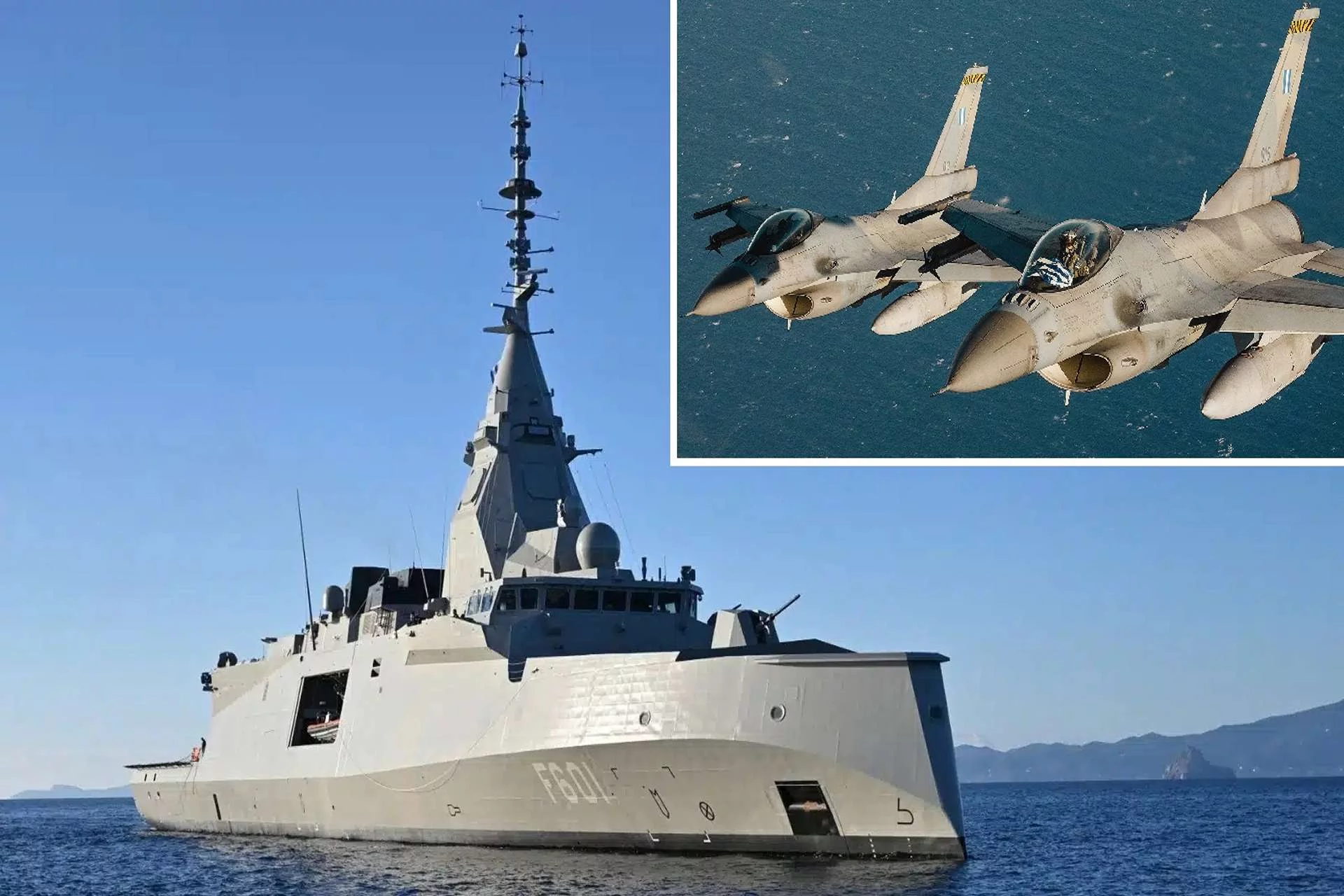
Greece's strategic decision to deploy naval assets and F-16s to Cyprus signals a profound shift in the Eastern Mediterranean's role in the escalating Iran conflict, repricing risks across oil,...
The escalating Iran conflict has broadened its geographical and strategic scope, drawing Greece into a more explicit military posture. Athens' recent dispatch of frigates and F-16 fighter support to Cyprus, coupled with renewed communication between Greek and Cypriot leadership, signifies a revival of the Joint Defense Doctrine. This move fundamentally alters the market's perception of risk, extending the conflict's perimeter westward into the Eastern Mediterranean.
Greece's Strategic Shift: A New Era for Eastern Mediterranean Security
Earlier today, Greece's national security council authorized the deployment of the frigate Kimon and a second frigate equipped with anti-drone capabilities, supported by F-16 fighters, to Cyprus. This decisive action is more than a symbolic gesture; it reasserts the long-dormant Joint Defense Doctrine, which posits that the defense of Cyprus is inextricably linked to Greece's own security. This means that if the regional war threatens Cypriot territory or the broader Eastern Mediterranean, Greece is prepared for active military intervention.
This strategic repositioning compels markets to reassess geopolitical risks. The conflict is no longer confined to the Gulf and Levant but has expanded to include the Eastern Mediterranean as a potential live operational theater. Cyprus, strategically located at the crossroads of major trade routes, NATO military infrastructure, and intelligence hubs, now trades as a forward security zone rather than a relatively insulated logistics platform. This repricing impacts every major asset class, as military planners, insurers, traders, and investors adjust their risk models to this widened perimeter.
Market Implications Across Asset Classes
Oil: Geopolitical Premium Sustained by Expanding Military Geometry
The movement of Greek naval and air assets towards Cyprus, while not directly altering oil supply, significantly impacts the market's perception of strategic risk around shipping lanes and surveillance in the Eastern Mediterranean corridor. If the conflict necessitates military hardening from the Gulf all the way to Cyprus, investors will assign a higher probability to prolonged regional instability. This sustains a geopolitical premium in Brent and WTI crude oil prices. Crude oil prices, in particular, remain highly sensitive to such geopolitical shifts.
Gold: The Ultimate Safe Haven as Conflict Widens
Gold, the preferred safe-haven asset, benefits substantially from this kind of geopolitical escalation. A Greek naval and air deployment signals to the market that the crisis is not merely a localized Middle East battlefield story but is compelling formal defense responses from European states bordering the conflict zone. This adds a critical layer of geopolitical seriousness, bolstering safe-haven demand for gold price, even in the absence of direct attacks on Cyprus. The dynamic underscores why investors flock to Gold Price Forecast: Geopolitical Risk Fuels Safe Haven Demand during uncertain times.
Forex: Euro's Exposure to Regional Security Dynamics
The immediate reaction in forex markets typically involves a classic risk-off sentiment: a stronger dollar, a firmer Swiss franc, and a defensive tone in the yen. However, the expanding risk perimeter stretching to Cyprus and the Eastern Mediterranean introduces a specific European dimension. Investors will closely observe whether the euro begins to absorb a regional-security discount, reflecting proximity to the conflict, military posture, and trade-route relevance. This is because markets price in these factors long before actual economic damage materializes. For Greece and Cyprus specifically, the financial impact might be more evident in sovereign spreads and insurance costs rather than direct forex movements.
Shipping and Aviation: Heightened Risk and Operational Adjustments
The shipping industry, critically dependent on the Eastern Mediterranean's strategic waterways, will react strongly. Greece's decision to send major naval assets towards Cyprus directly informs the shipping and insurance markets that this area is now considered an active protection zone. Freight and marine insurance premiums are very responsive to military posture, often increasing well before any actual attacks occur. Similarly, the deployment of F-16s sends a clear signal to airlines and route planners: Eastern Mediterranean airspace and military readiness levels may need immediate adjustment. While not necessarily leading to widespread flight disruptions overnight, aviation risk managers will intensify their scrutiny, impacting the aviation sector and potentially the Europe-Asia Travel Disruption: Iran-US War Rewrites Global Logistics.
Credit Markets and Defense Spending: A Longer-Term Perspective
Credit markets will interpret this military movement as a sign of prolonged regional instability. Unlike mere verbal statements, tangible military deployments are harder to disregard. This, combined with sustained oil strength and pressure on trade routes, will likely lead credit investors to view the entire regional complex as structurally more fragile. Consequently, sovereign and quasi-sovereign spreads will widen, reflecting the increased fiscal, strategic, and insurance-related risks. Furthermore, this revival of the Cyprus defense doctrine augurs a longer cycle of defense procurement, anti-drone investment, and naval modernization, benefiting defense-linked stocks and specialized security suppliers as they react to the unfolding events.
The Widened Strategic Perimeter
It is crucial to understand that Greece's actions do not imply immediate entry into direct conflict. Instead, they signify that the Iran war has escalated to a point where active military positioning around Cyprus is deemed necessary, thereby widening the strategic perimeter. For investors, this means Cyprus is once again a frontline-security consideration. British bases, NATO-linked territory, energy routes, sea lanes, and intelligence networks are increasingly integrated into a single, complex conflict map. The Iran war is reshaping defense logic across the Eastern Mediterranean, not just the Gulf. This dynamic highlights the critical nature of Commodities as Policy Assets: Geopolitics & Inflationary Pressures.
Observing how Greek and Cypriot officials continue to articulate their joint defense strategy, whether allied states reinforce the Eastern Mediterranean more visibly, and how marine insurers and shipping operators adjust their risk assessments will be crucial in the coming sessions. The continued premium on oil and gold, alongside the outperformance of defense stocks against lagging tourism and transport sectors, will serve as key indicators of how the market is repricing this new geopolitical reality. The euro dollar live exchange rate will also reflect lingering uncertainty. This is no longer merely a Middle East crisis; it is a Mediterranean security event with profound global market consequences, impacting everything from the EURUSD price live to the Middle East War Rewrites Market Rules: Oil, Gold, & Forex Reprice Global Risk.
Frequently Asked Questions
Related Analysis
 Featured
AI Rights Trade: Why Claude's Consciousness Comments Could Hit Tech Stocks
Anthropic's recent comments regarding AI model consciousness and welfare signal a potential paradigm shift that could impact tech stocks, cloud service providers, and the entire AI business model,...
 Featured
Hormuz Strait Closure: Global Wallet Shock & Oil to $100 Outlook
The effective closure of the Strait of Hormuz due to geopolitical tensions is rapidly shifting from a military concern to a global economic crisis, threatening to send oil prices past $100 and...
 Featured
Iran-US War: Global Markets Reprice After "14 Countries Hit" Event
A dramatic escalation in the Middle East, with Iran reportedly striking targets across 14 countries, has sent shockwaves through global financial markets, forcing a swift re-evaluation of risk...
 Featured
No Flights Out: Iran-US War Shatters Gulf's Luxury Mobility Trade, Repricing Key Markets
The recent disruption of major Gulf airports due to the Iran-US war signals a profound shift beyond mere travel inconvenience, fundamentally repricing oil, gold, forex, stocks, shipping, and...