
Iran Regime-Symbol Crackup: Market Repricing Crude Oil and Gold
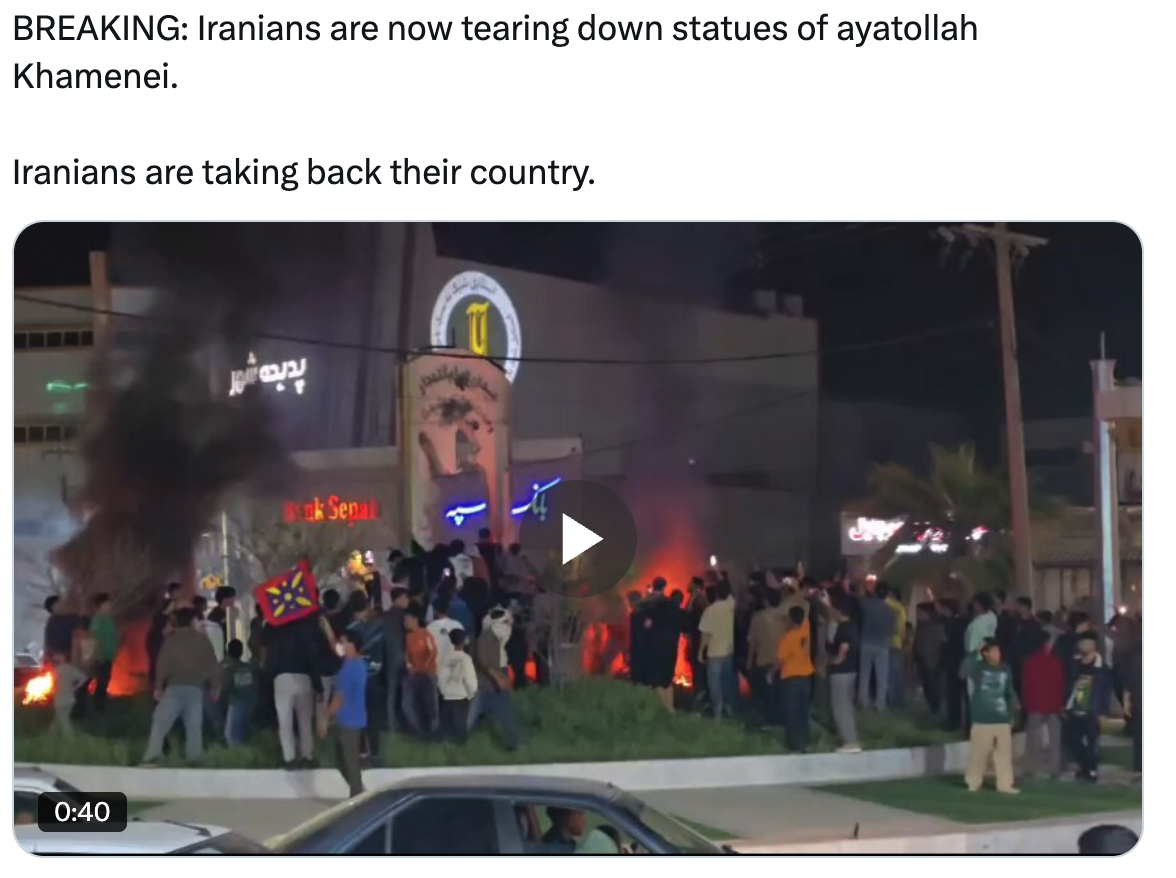
Viral clips of regime symbols being toppled in Iran signal a potential shift from military conflict to a legitimacy crisis, prompting markets to reprice risk across oil, gold, and other key assets.
The Middle East is volatile, but the market's focus has intensified on a new, nuanced aspect of the Iran narrative: the symbolic defiance against the regime. Recent viral videos depicting crowds attacking or tearing down figures associated with the Islamic Republic suggest a deeper internal instability that could dramatically reshape market dynamics for crude oil and gold, and global risk assets more broadly.
While reports on whether a Khamenei statue torn down is accurate vary, with stronger evidence pointing to the toppling of Ayatollah Ruhollah Khomeini’s statue in southern Iran and general celebrations after alleged news of Khamenei's death, the core market implication remains the same: the perceived legitimacy of the regime is under scrutiny. This goes beyond traditional conflict, introducing unforeseen variables that financial markets, typically adept at pricing conflict, struggle to quantify.
From War Story to Legitimacy Crisis: The Market Re-evaluation
Markets typically react to conflict with a familiar pattern: oil and gold price live movements showing upward pressure, safe havens firming, and risk assets weakening. However, when conflict begins to intertwine with internal state weakness, the situation becomes far more complex. The moment citizens move from merely observing war to actively attacking symbols of the regime itself, the question shifts from military strategy to regime stability. This critical threshold prompts a complete re-evaluation of Iran breaking news today's impact.
Regimes, including the Islamic Republic, project permanence through symbols. Statues, portraits, murals, and public iconography are designed to instill a sense of immovability. When these symbols begin to fall, it signals that fear barriers are breaking down, a development far more significant to investors than mere vandalism. This marks a pivotal change in the trading landscape.
Implications for Crude Oil and Gold Markets
The immediate and most sensitive asset to this evolving narrative is oil. Crude oil trading thrives on stability and predictability within critical energy regions. A stable, centralized regime can carefully calibrate its escalation surrounding the Strait of Hormuz, Gulf shipping, and proxy actions. However, a regime simultaneously under external military pressure and internal symbolic attack becomes unpredictable. It might lash out more aggressively to assert strength, or it could lose control over the pace and coherence of its actions. Both scenarios are inherently bullish for geopolitical risk premiums in crude oil.
Consequently, Brent and WTI crude oil benchmarks don't require an actual supply collapse to react; the market merely needs to perceive that the command structure around a vital energy chokepoint is becoming less predictable. Additionally, gold benefits even more cleanly from this kind of uncertainty. Gold is not solely a hedge against war; it serves as a hedge against political fracture, a loss of institutional continuity, and a market's inability to discern where true authority resides. If regime symbols are falling and the public visibly tests the state, gold becomes the natural liquid asset for traders seeking exposure to fear without direct regional credit or equity risk. Investors closely monitoring the gold price war will find this dynamic particularly relevant.
Forex, Equities, and Broader Market Impacts
Forex Reactions: Dollar, Franc, Yen, and EM Currencies
Forex markets typically express second-order effects. The initial reaction usually involves a flight to safety, strengthening the US dollar, Swiss franc, and Japanese yen. As the regime-legitimacy story deepens, markets look beyond the immediate safe-haven spike. Emerging-market currencies with weak external balances or significant energy import exposure could face pressure. While oil-linked currencies might initially benefit from rising crude prices, they may struggle if the crisis broadens into a global growth concern. In the Gulf, currency pegs often mask underlying stress, which manifests in sovereign spreads, CDS, bank funding conditions, and the performance of confidence-sensitive assets. This nuance is crucial; the stability of Gulf currencies should not be mistaken for the absence of stress, the real instability often showing up in these less visible metrics. For instance, the EURUSD price live reaction would be keenly watched for broader FX sentiment.
Equities, Banks, and Property: Sector Rotation and Geopolitics
Equities would likely experience violent rotations. Energy, defense, and selected commodity exposures could outperform, while airlines, travel, consumer cyclicals, logistics-sensitive businesses, and Gulf financial names might struggle. The more compelling equity story, however, isn't just sector rotation. It's whether investors begin to price in a distinct outcome for Iran, one that transcends prolonged conflict to encompass a potential state-transition event. If this possibility gains traction, regional equities would trade on political order and capital flight psychology rather than conventional earnings metrics. Forex trading platforms will reflect these shifts in real-time. Banks and property, core to regional confidence, would be especially impacted. While some Gulf assets might initially benefit from safe-haven flows due to Iran's internal shakiness, a wider war footprint across shipping lanes and commercial centers could offset this by increasing broader regional risk premiums, leading to uneven market reactions.
Shipping, Insurance, Aviation, and Credit Markets
The collapse of political symbols translates into tangible real-economy stress in shipping and insurance. A regime under internal pressure might use maritime disruption or proxy actions to reassert deterrence. Regardless, insurers and ship operators must price this heightened risk, leading to elevated war-risk premiums, freight costs, and increased planning expenses for goods traversing the region. These costs directly impact inflation, global supply chains, and business confidence. Aviation and tourism are also vulnerable. If the perception of the Middle East shifts from contained conflict to multi-country instability with signs of regime rupture, travelers react by avoiding the region, thereby negatively impacting airlines, airports, hospitality, and event-driven economies. Credit markets act as a truth detector. If oil and gold prices rise while credit remains calm, investors are treating the symbolic defiance as dramatic but not systemic. However, if spreads widen, especially in vulnerable sectors or regional issuers, it signals a deeper confidence and funding shock.
Rates and Crypto: Geopolitical Overlays
Rates markets would grapple with the classic war-growth-inflation conflict, now layered with political risk. Rising oil prices elevate inflation risk, while political disorder tightens financial conditions and erodes confidence. This creates a push-pull dynamic that sustains rates volatility, complicating central bank pricing and making both bond bulls and bears potentially correct at different times. Crypto markets would initially behave as macro beta. Initial uncertainty, a stronger dollar, and deleveraging pressures could weigh on crypto prices. However, if the narrative broadens to include sanctions, capital flight, and the search for alternative financial rails, some crypto assets could see a reversal. The initial move, however, would still be liquidity-driven. The euro dollar live price for example would offer clues into the broader market's risk appetite.
What Now for Investors?
The crucial takeaway for investors is that the falling statues are not important for their inherent artistic value, but for what they reveal about public sentiment. When crowds dismantle symbols of authority during active conflict, it suggests a population no longer passively fearful. It points to a potential fracture in internal legitimacy, triggered by external shocks. The euro to USD live rate could show immediate responses to global perceived risk.
Monitoring upcoming signals is critical: a potential Khamenei dead latest confirmation, further attacks on regime symbols, stricter internet blackouts, increased visible control by the Revolutionary Guards, wider anti-regime protests, clearer or more confused succession messaging, escalated proxy actions, or heightened danger in the Strait of Hormuz. These factors will determine whether this remains a war-premium story or evolves into one of the most significant regime-risk trades in recent history. Such an evolution would entail broader cross-asset implications: higher oil and gold prices, firmer safe-haven FX, more expensive shipping and insurance, wider Gulf risk premiums, softer airline and tourism sectors, more cautious regional credit, and equities trading markedly on political order rather than conventional valuations. Therefore, the viral clips matter immensely; it's not the statues themselves, but the breaking of fear that represents the true trade.
For those tracking market movements, the {BASE} {QUOTE} chart live will be a vital tool, providing real-time insights into how these geopolitical shifts are absorbed. Traders and investors should consider these elements when looking at the {BASE}{QUOTE} price live to make informed decisions. Observing the {BASE} {QUOTE} realtime data will be key to understanding market sentiment and potential shifts, with the {BASE} {QUOTE} live chart offering immediate visualizations of price action. Examining the {BASE} to {QUOTE} live rate, especially in the context of emerging markets, can provide additional clues for strategic adjustments. Stay updated with the {PAIRCODE} price live data, and the {NICKNAME} analysis to anticipate potential market changes.
Frequently Asked Questions
Related Analysis
 Featured
AI Rights Trade: Why Claude's Consciousness Comments Could Hit Tech Stocks
Anthropic's recent comments regarding AI model consciousness and welfare signal a potential paradigm shift that could impact tech stocks, cloud service providers, and the entire AI business model,...
 Featured
Hormuz Strait Closure: Global Wallet Shock & Oil to $100 Outlook
The effective closure of the Strait of Hormuz due to geopolitical tensions is rapidly shifting from a military concern to a global economic crisis, threatening to send oil prices past $100 and...
 Featured
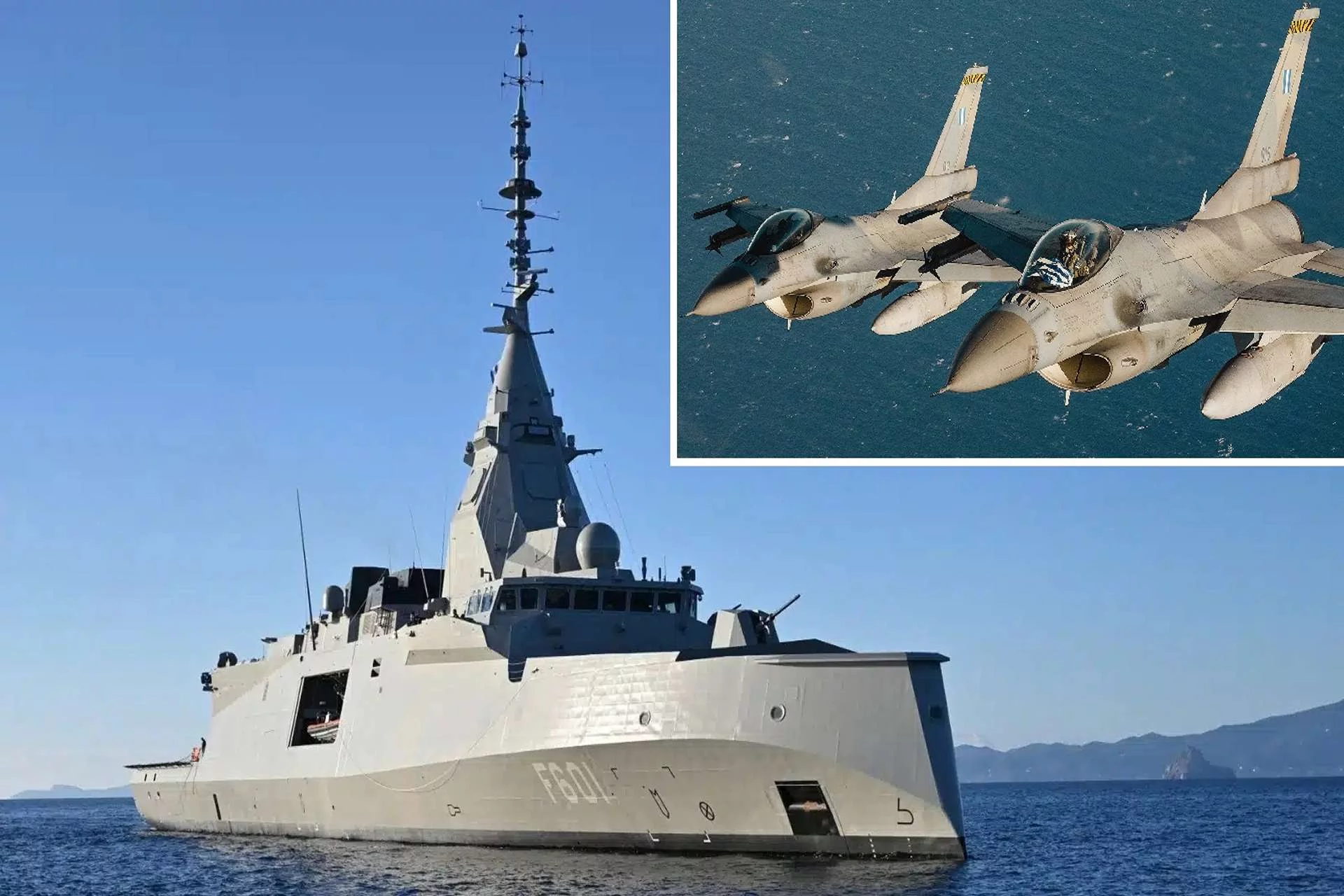
Greece Revives Cyprus Defense Doctrine, Reshaping Iran War Map
Greece's strategic decision to deploy naval assets and F-16s to Cyprus signals a profound shift in the Eastern Mediterranean's role in the escalating Iran conflict, repricing risks across oil,...
 Featured
Iran-US War: Global Markets Reprice After "14 Countries Hit" Event
A dramatic escalation in the Middle East, with Iran reportedly striking targets across 14 countries, has sent shockwaves through global financial markets, forcing a swift re-evaluation of risk...